
Reviewed · GHANAIAN NAMING CEREMONY EXPERIENCES
Traditional naming ceremony For African Diasporas in Kumasi
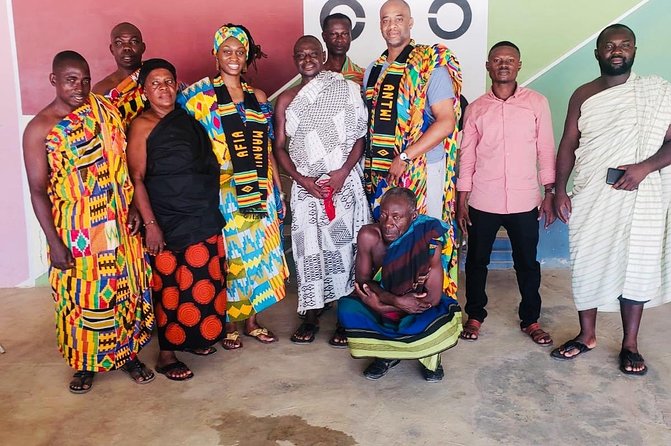
A traditional Ghanaian naming ceremony gives this Kumasi outing its heart. You share your date of birth, receive a Ghanaian name, and take part in a private welcome ceremony with the Adanwomase community while dressed in Ghanaian cloth. I especially like the personal ceremony and the chance to connect it with a cocoa farm and kente workshop.
I also like that the $175 price covers transport, lunch, water, entrance fees, and guiding. Bilson, the guide praised for his patience and care, has even made unusual efforts to help visitors reach the tour on time. The main consideration is the seven-hour commitment, plus the fact that the ceremony is meaningful and personal rather than a quick sightseeing stop.
Key points at a glance
- A name based on your birth date: Share your date of birth and receive a Ghanaian name as part of the ceremony.
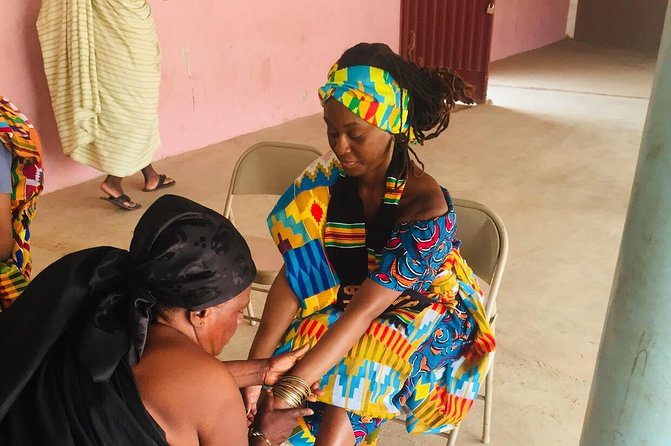
- Private time with the Adanwomase community: Only your group takes part, allowing the ceremony to feel personal rather than staged for a crowd.
- Ghanaian cloth is part of the welcome: You are adorned in cloth tailored for you as a child of the earth.
- Cocoa and kente add useful context: The day includes a cocoa farm visit and a kente weaving workshop.
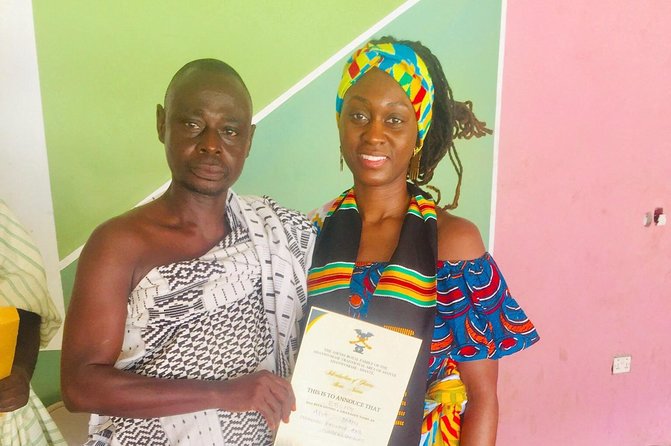
- A certificate records the occasion: You receive a certificate of recognition after the naming ceremony.
- A practical all-inclusive price: Transport in an air-conditioned vehicle, fuel, lunch, bottled water, entrance fees, and guiding are included.
Why the naming ceremony matters
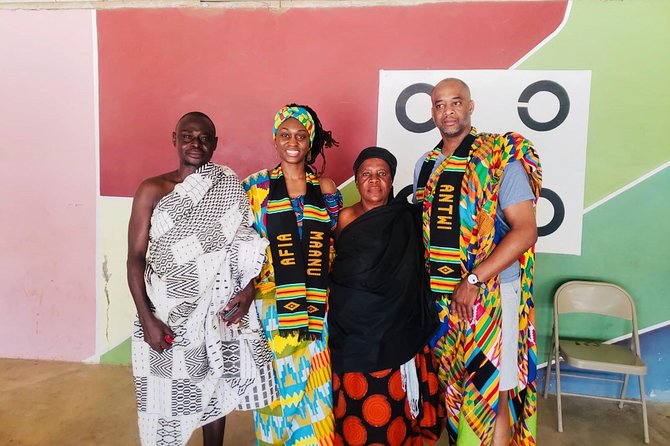
In Ghana, a naming ceremony traditionally takes place within the first few days of a child’s birth. This outing adapts that custom for people of the African diaspora who were not born in Africa but want a formal connection with Ghanaian culture and community.
That distinction matters. You are not simply watching a performance or collecting a souvenir. You provide your date of birth and receive a name through a traditional process. The name becomes the central keepsake, while the certificate gives you a physical record of the occasion.
I would approach this part of the day with respect and an open mind. The ceremony has personal meaning, especially if you have been exploring family roots, African identity, or the relationship between Ghana and the wider African diaspora. It is also perfectly reasonable to take part because you value cultural learning, even if you do not know your ancestry.
The private format helps. Your group is the only group participating, so the ceremony can be shaped around your presence rather than folded into a large tour schedule. That makes it easier to ask questions and to take in the moment without a crowd pressing behind you.
More naming ceremony experiences:
- The Ancestral Naming Ceremony and Home Coming Experience
★ 5.0 · 30 reviews - Naming Ceremony and Heritage Homecoming Experience for Diasporas
★ 4.5 · 15 reviews - Traditional Naming Ceremony and Boat Cruise Experience
★ 5.0 · 15 reviews
Leaving Kumasi for Adanwomase
The tour begins at 9:30 a.m. at Lancaster Kumasi City on Rain Tree Street, Lesley Opoku-Ware Drive, and returns to the same meeting point at the end of the day. Pickup is offered, but you should confirm the exact arrangement when booking rather than assume that every hotel transfer is automatic.
Transport is provided in an air-conditioned vehicle, with fuel, bottled water, and guiding included. That is important in Kumasi, where a private vehicle saves you from arranging several separate rides between the city and the cultural stops.
The seven-hour duration gives the outing a full-day feel without making it an overnight commitment. You should still leave your morning open and avoid booking another fixed activity too soon afterward. The day includes several separate parts, and the ceremony itself should not feel rushed.
Bilson Tours Gh operates the experience, and Bilson is the guide named in the available feedback. His role appears to go beyond driving from one stop to another. He has been singled out for patience, warmth, and efforts to help people reach the ceremony, including one case where he was willing to make a much longer journey to ensure a participant could attend. That suggests useful flexibility, though you should still communicate clearly about meeting times and pickup plans.
Receiving your Ghanaian name
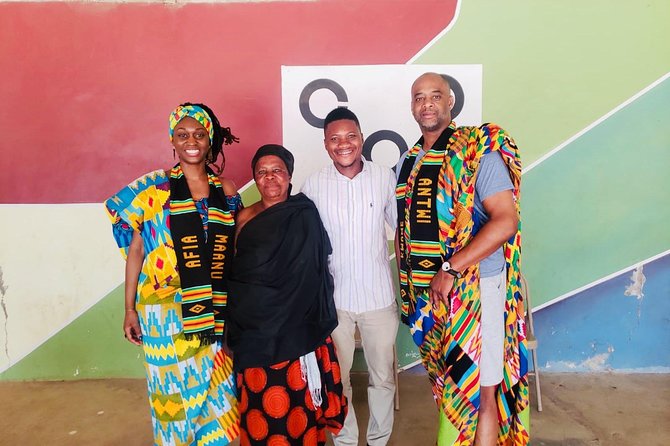
At Adanwomase, you go through the traditional naming process. You provide your date of birth, and a Ghanaian name is selected for you. The tour information describes this as receiving a name as a child of the earth, a phrase that gives the ceremony a strong sense of belonging and welcome.
The exact order and length of each part are not specified, so allow the local hosts to guide the pace. You may hear an explanation of the ceremony’s origins and place in Ghanaian life before the naming takes place. This is a good time to listen closely and ask questions that help you understand the meaning behind the custom.
The private setting is especially useful here. You can focus on the words, gestures, and people involved without trying to keep up with a large group. If you are visiting as a family, the occasion may also give relatives a shared moment that feels more substantial than a standard photo stop.
The experience has been warmly received by members of the African diaspora who wanted a stronger personal connection to Ghana. That does not mean the ceremony will answer every question about ancestry or family origins. It offers a cultural welcome and a traditional name, not genealogical research. Keep that distinction in mind when deciding what you want from the day.
Ghanaian cloth and the ceremony setting
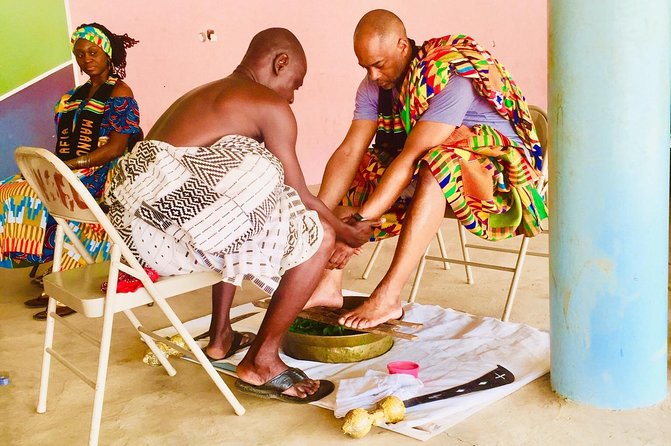
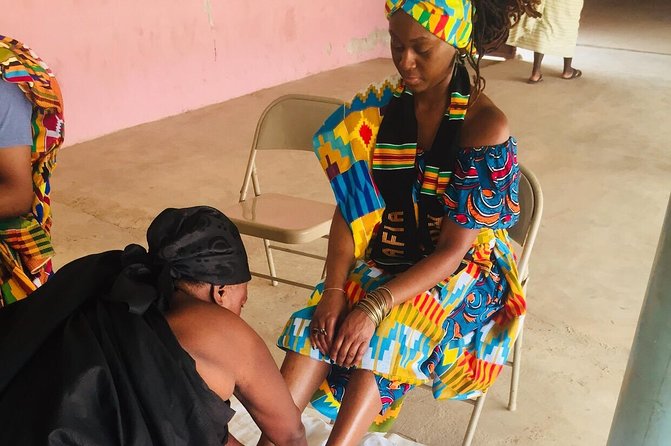
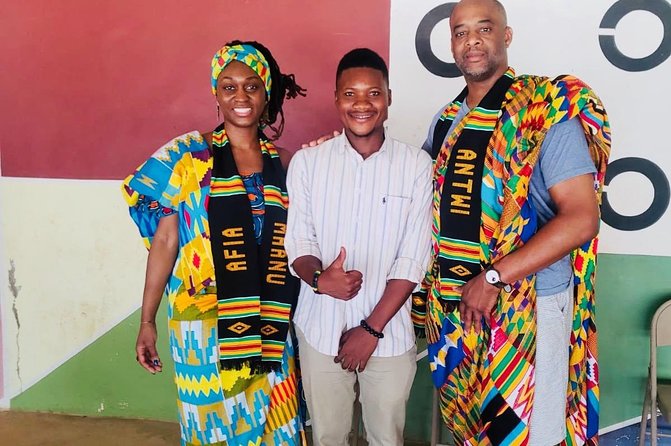
You are adorned in Ghanaian cloth tailored for you as part of the ceremony. Clothing here is not just decoration. It helps mark the occasion and makes the naming feel like a formal event rather than an informal village visit.
Because the cloth is prepared for the ceremony, wear something comfortable underneath and avoid clothing that makes changing or dressing awkward. The tour does not specify the exact style, color, or fitting process, so ask Bilson what to expect before the day if clothing details matter to you.
The cloth also gives you a visual reminder of the experience after you leave. Along with the certificate and name, it helps turn the ceremony into something you can remember through photographs and family stories. Buying personal items is not included, so any additional cloth or crafts you want to take home will be at your own expense.
The village welcome is another important part of the day. The Adanwomase community and royal family have been described as gracious and inclusive toward people from the diaspora. That welcome is a major reason to choose this outing over a simple cultural demonstration. You are given a place in the ceremony, not only a seat on the sidelines.
A few more Ghana days to weigh up
- Bonwire Namimg Ceremony and Kente Tourist Center
★ 5.0 · 40 reviews - Tour Kumasi City Like a Local
★ 4.5 · 34 reviews - Kumasi City Tour
★ 5.0 · 8 reviews - Kumasi City Tour
★ 4.5 · 7 reviews
Kente weaving in Adanwomase
The kente weaving workshop adds a hands-on craft element to the day. Kente is closely associated with Ghana, and seeing how it is woven gives you a better sense of the time and skill behind the cloth than looking at finished fabric in a shop.
The supplied details do not specify whether you weave a full piece yourself or receive a demonstration, so ask your guide about the level of participation. Either way, the workshop gives useful context for the cloth used during the naming ceremony.
I like this pairing because the naming ceremony is centered on identity, while kente connects that identity to a visible Ghanaian craft. One is personal and ceremonial. The other shows the work of local makers and the care that goes into fabric.
Do not treat the workshop as a guaranteed shopping stop. You can buy your own items if you wish, but purchases are not included in the tour price. If you are interested in textiles, bring room in your luggage and confirm what is available on the day.
Visiting a cocoa farm
The cocoa farm visit offers another way to understand Ghana through a local product. You will have the chance to see cocoa in a farm setting and taste fresh cocoa as part of the day.
That tasting is a small but memorable detail. Chocolate sold abroad often hides the agricultural work behind it. A farm visit brings the crop closer to its source and gives the day a useful link between Ghanaian land, local production, and the finished foods familiar around the world.
The information provided does not state how long you spend at the farm or describe the exact activities there. You should expect a cultural visit rather than a full agricultural course. If you want detailed information about growing, harvesting, or processing cocoa, ask Bilson during the tour.
Taken together, the farm and weaving workshop keep the day from becoming a ceremony-only outing. You get several different views of local life, with the naming ceremony remaining the main reason for the visit.
What the $175 price includes
At $175 per person, this is not the cheapest way to spend a day around Kumasi. The value depends on whether you want the private naming ceremony, not simply transport to a village.
The price includes:
- Air-conditioned vehicle
- Fuel surcharge
- Bottled water
- Lunch
- Entrance fees
- Tour guiding service
- Private participation for your group
- Ghanaian naming ceremony
- Certificate of recognition
- Ghanaian cloth adornment
- Cocoa farm and kente weaving visits
Those inclusions make the price easier to assess. You are paying for a personalized cultural program with transport and meals already arranged, rather than adding separate admission charges and a private driver on your own.
Lunch is included, which removes one practical decision during a seven-hour outing. The menu is not specified, so anyone with dietary restrictions should ask about food arrangements before booking.
The private format also carries real value for a ceremony. A cheaper group tour might cover more sights but give you less time with the people conducting the naming. Here, the ceremony is the center of the day, and the other visits support it.
On the other hand, this price may feel high if you mainly want to see kente weaving or cocoa farming. Those stops are useful additions, but the name, ceremony, and personal welcome are what justify the cost.
Who will get the most from this experience
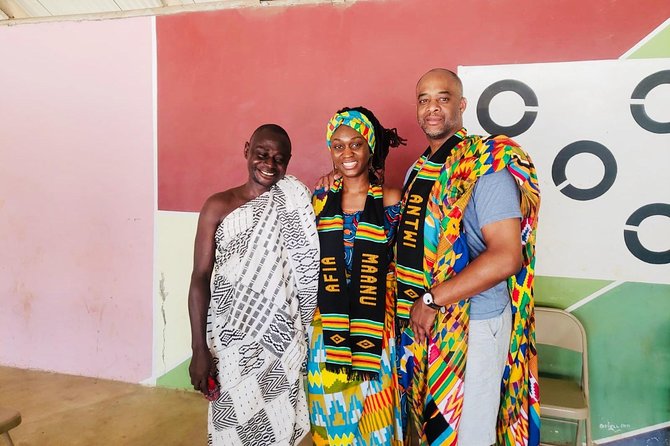
I would recommend this tour most strongly to African-American and Caribbean visitors seeking a personal connection with Ghana. It is also suited to anyone interested in Ghanaian customs and willing to participate respectfully in a ceremony that carries real cultural meaning.
It works well for:
- Solo visitors wanting a private welcome
- Couples marking a special trip
- Families creating a shared cultural memory
- Diaspora visitors exploring identity and connection
- Repeat visitors to Ghana looking for something more personal than standard sightseeing
- People interested in textiles, cocoa, and local traditions
The tour may not suit you if you want a tightly timed sightseeing itinerary with many major Kumasi attractions. It is also not the right choice if you prefer to observe quietly without taking part. The naming ceremony asks for your date of birth and your active participation.
The experience is private, but that does not mean every moment is controlled around your preferred schedule. Community ceremonies and local visits can move at a natural pace. I would choose this day for meaning and contact, not speed.
Practical planning for the day
Start time is 9:30 a.m., and the activity ends back at the meeting point. Confirmation is received at booking, and most people can participate according to the supplied tour information.
Wear comfortable clothing suitable for a full day of visits. Since Ghanaian cloth is used during the ceremony, ask in advance about what you should wear underneath and whether any preparation is needed.
Keep your date of birth readily available. It is the key personal detail used in the naming process, and having it ready avoids needless searching during the ceremony.
You should also plan for changing weather. The activity requires good weather, and poor conditions can lead to a different date or a full refund. Free cancellation is available up to 24 hours before the 9:30 a.m. start time. Canceling or changing the booking within 24 hours does not qualify for a refund.
The meeting point is clear, but pickup details deserve one direct message to the operator. If you are not starting at Lancaster Kumasi City, confirm where Bilson will meet you and when. His willingness to help with difficult travel arrangements is encouraging, but a clear plan is still the safest approach.
My take on the personal value
The strongest part of this outing is its sense of recognition. A name based on your birth date, clothing prepared for the ceremony, a certificate, and a welcome from the Adanwomase community create a series of connected moments. None of these items alone would justify a full day, but together they give the visit shape.
I also appreciate the balance between ceremony and local activities. The cocoa farm and kente workshop keep the day grounded in everyday work and regional products. You are not left with only a formal ritual that may be hard to place in context.
The main limitation is that the available details do not give a minute-by-minute schedule or explain exactly how much time is spent at each stop. If you need precise timings, ask before you book. You should also remember that the certificate recognizes your participation, but it is not a legal or genealogical document.
Bilson’s personal approach is another reason this experience may work well for first-time visitors to Kumasi. The positive accounts describe him as patient and committed, including an effort to help someone make a long journey to the tour. That kind of care matters when a day depends on reaching a village outside the city and participating in a ceremony at a fixed time.
Should you book this Kumasi naming ceremony?
Book it if you want a private, meaningful connection to Ghanaian culture and you are comfortable being part of the ceremony yourself. The combination of a Ghanaian name, traditional cloth, community welcome, kente, cocoa, lunch, and private transport offers good value for someone seeking more than sightseeing.
Think twice if your main goal is a short tour, a bargain price, or a detailed genealogy service. This is a seven-hour cultural occasion, and its value comes from participation and personal meaning.
For African diaspora visitors, especially those returning to Ghana with questions about belonging, the ceremony may become the central memory of a Kumasi stay. For everyone else, it offers a respectful introduction to a naming tradition, provided you arrive ready to listen, take part, and let the local hosts set the pace.
FAQ
Where does the tour start and end?
The tour starts at Lancaster Kumasi City, Rain Tree Street, Lesley Opoku-Ware Drive, Kumasi, Ghana. It ends back at the same meeting point.
What time does the experience begin?
The stated start time is 9:30 a.m. The activity lasts approximately seven hours.
How is the Ghanaian name chosen?
You provide your date of birth, and you receive a Ghanaian name through the traditional naming process.
Is the tour private?
Yes. Only your group participates in this private tour or activity.
What is included in the $175 price?
The price includes an air-conditioned vehicle, fuel surcharge, bottled water, lunch, entrance fees, and tour guiding service. The ceremony, certificate, cloth adornment, cocoa farm visit, and kente weaving visit are also part of the experience.
Can I cancel for a full refund?
Yes. You can cancel at least 24 hours before the local start time for a full refund. Cancellations or changes made less than 24 hours before the start time are not refunded. If poor weather cancels the experience, you will be offered another date or a full refund.
Just added around Ghana
- Accra: Tafi Kente Village, Monkey Sanctuary &Wli Waterfalls★ 4.5 · 4 reviews
- 2 Days (1 night) Elephants Safari at Mole Park with Round – trip flights★ 5.0 · 4 reviews
- Full-Day Wli water Falls and Monkey Sanctuary Private Tour★ 5.0 · 4 reviews
- 3 Days Zaina Luxury Experience Mole Safari★ 5.0 · 5 reviews
- 4 Days Safari to Mole park and Wechiau Hippos★ 5.0 · 19 reviews
- A Taste of West Africa – Ghana Togo & Benin★ 5.0 · 5 reviews
- Quad Biking and Waterfalls Adventure★ 5.0 · 5 reviews
- Hike Mount Afadjato and Visit Wli Falls and Monkey Sanctuary★ 4.8 · 5 reviews
Ghanaian Naming Ceremony Experiences, compared.

The Ancestral Naming Ceremony and Home Coming Experience
Read our review →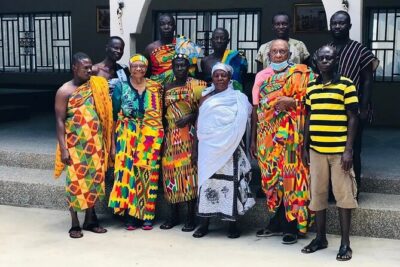
Naming Ceremony and Heritage Homecoming Experience for Diasporas
Read our review →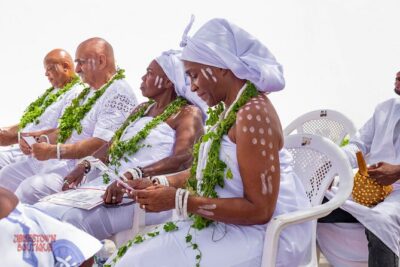
Traditional Naming Ceremony and Boat Cruise Experience
Read our review →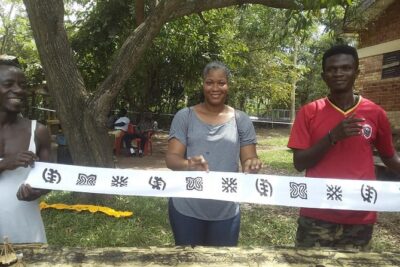
Kumasi Heritage Tours And Naming Ceremony In A Day
Read our review →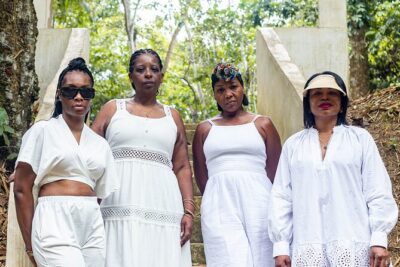
Naming Ceremony, Assin Manso Slave River and Cape Coast Castle
Read our review →Browse the lists this tour appears in