
Reviewed · KUMASI TOURS
Kumasi Culture and Heritage Tours
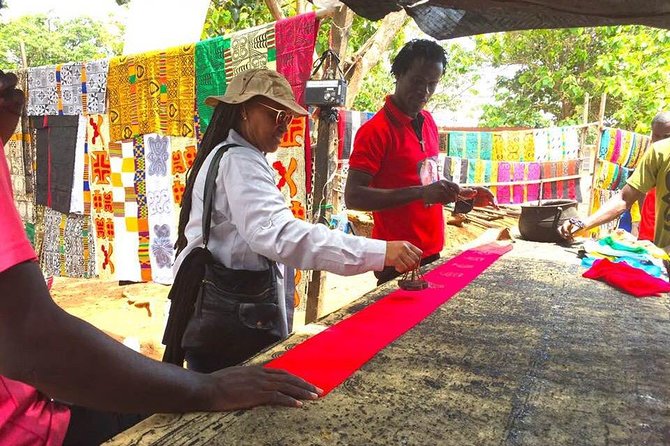
The most hands-on part of this Kumasi tour takes place at Ntonso, where you can choose a fabric color and stamp Adinkra symbols yourself. The dye is made by pounding the bark of the buddy tree, and each symbol carries a message tied to Ghanaian customs, wisdom, farewell, or remembrance.
I like the way the tour connects kente weaving at Bonwire with Adinkra printing at Ntonso, rather than treating Kumasi culture as something you only observe behind glass. I also like that lunch, drinks, water, admission, and an air-conditioned vehicle are included.
The main consideration is the price: $140 per person is a serious outlay for six hours, especially for a solo booker. It makes more sense if you value a private outing, hotel pickup, practical demonstrations, and a guide who can explain the meaning behind what you see.
Key points to know before booking
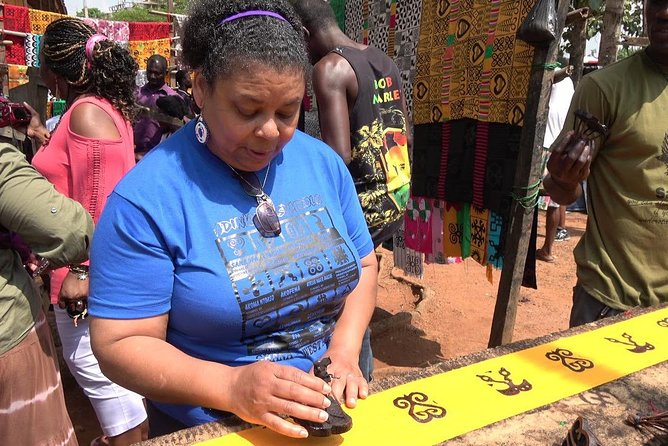
- Ntonso is the hands-on highlight: Choose a color, select Adinkra symbols, and stamp fabric yourself.
- Bonwire connects you with kente: See where kente weaving began in the Kumasi area and try the craft in a practical way.
- The symbols carry serious meaning: Adinkra designs can express wisdom, sorrow, farewell, and remembrance.
- Yaw and Bilson are names associated with the guiding: The tour is operated by Bilson Tours Gh, and the guide’s explanations are central to the day.
- The six-hour plan is private: Only your group takes part, with pickup at Lancaster Kumasi City at 9:30 a.m.
- The price covers the basics: Admission, lunch, drinks, bottled water, transport, and guide service are included, but personal purchases are extra.
Why kente and Adinkra make a strong Kumasi pairing
Kumasi is one of Ghana’s best places to connect craft with local identity. This tour focuses on two art forms that look beautiful but also carry stories, social meaning, and memory.
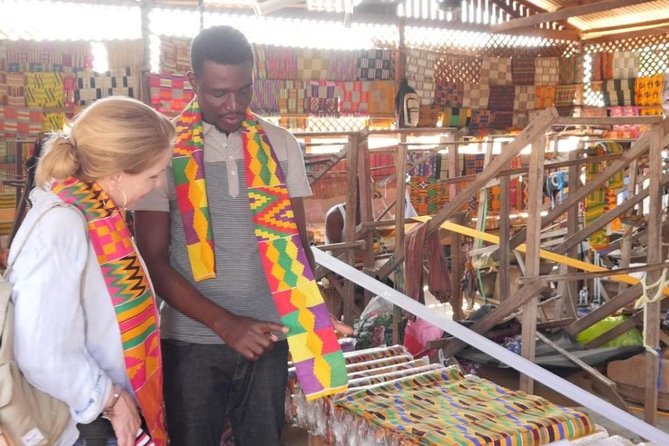
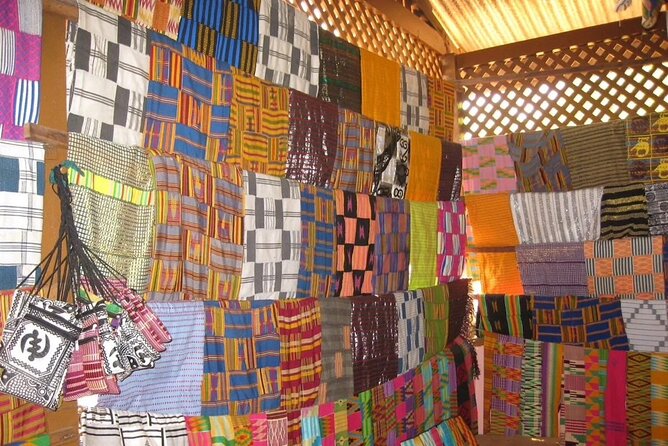
At Bonwire, the focus is kente. The area is presented as the place where kente weaving began in Kumasi, giving the fabric a clear connection to place rather than reducing it to a souvenir-shop purchase. You get a chance to watch the process and try weaving in a way that makes the finished cloth easier to understand.
At Ntonso, the emphasis shifts from woven pattern to stamped symbol. Adinkra designs are used on fabric, furniture, buildings, pottery, and other objects. The day gives you a chance to learn what the symbols communicate, then make a small piece yourself.
I like this combination because it balances explanation and action. You are not simply told that Ghanaian textiles matter. You see how they are made, hear why the designs matter, and try part of the work with your own hands.
More history visits around Kumasi:
- Experience the Beauty, History and the Culture Of Accra in a Day
★ 5.0 · 323 reviews - Ghana Heritage Tours – Beyond The Return
★ 5.0 · 36 reviews - 10 Days Ghana Cultural and Heritage Trip
★ 5.0 · 31 reviews
Starting at Lancaster Kumasi City at 9:30 a.m.
The stated meeting point is Lancaster Kumasi City on Rain Tree Street, Lesley Opoku-Ware Drive, in Kumasi. Pickup is offered, and the tour returns to the meeting point at the end.
A 9:30 a.m. start gives you a useful morning departure without requiring an extremely early alarm. Since the tour lasts about six hours, you should expect to finish in the afternoon. The exact order and time spent at each stop may depend on road conditions, demonstrations, and the pace of your private group.
The air-conditioned vehicle matters in Kumasi’s heat. You will be moving between stops rather than spending the whole day on foot, and the included bottled water and drinks make the transport portion easier.
This is a private activity, so only your group participates. That gives you more room to ask questions or spend longer on a craft demonstration. It also means the $140 price is best judged against the number of people in your party. For one person, it is expensive. For several people sharing a private vehicle and guide, the value improves.
Bonwire and the practical side of kente
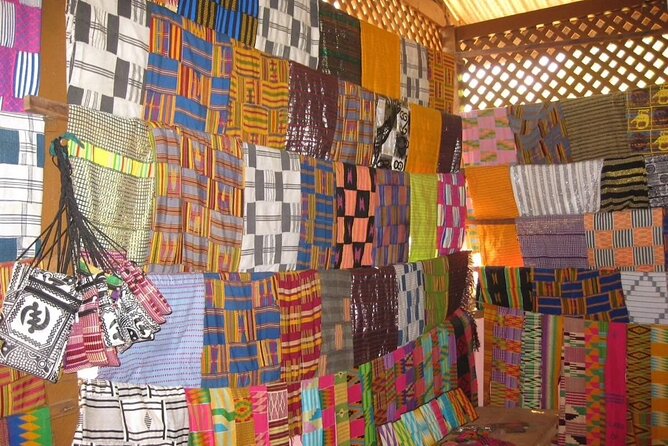
Bonwire is the kente stop, and it gives the tour its strongest link to Kumasi’s textile traditions. The focus is not only on seeing finished cloth. You are introduced to the weaving process and can try working with the craft yourself.
Kente is often admired for its bold colors and carefully arranged patterns, but a short practical demonstration helps you notice the labor behind it. The weaving is not a quick decorative trick. It takes control, repetition, and patience, and trying it yourself gives you a better sense of that effort.
The tour information describes the opportunity to weave like a local. Keep your expectations sensible: this is a short cultural visit, not a full weaving course. You will gain a useful introduction rather than master the loom in one morning.
Bonwire is also the right place to think about buying cloth. Personal purchases are not included, so you should budget separately if you want kente or other handmade goods. Take time to compare colors, patterns, and workmanship instead of buying the first piece placed in front of you.
The practical benefit of having a guide here is context. A guide such as Yaw or Bilson can help explain what you are looking at and connect the craft to local customs. The strongest part of this stop is the combination of demonstration, explanation, and the chance to try the work.
Ntonso Adinkra village and your own stamped fabric
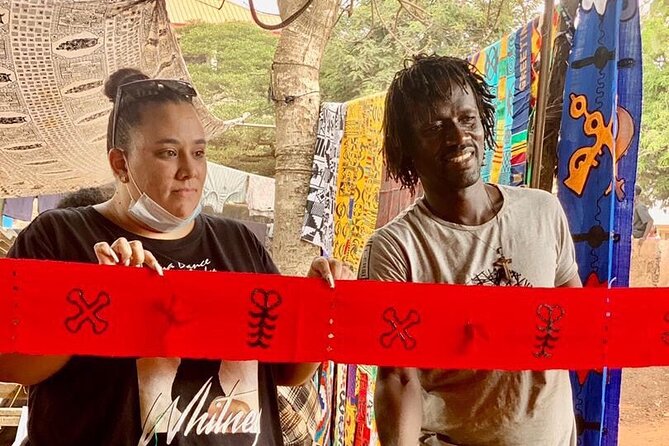
Ntonso is the most distinctive stop on the route. It is described as the homeland of Adinkra symbols, and the visit focuses on how the designs are made and what they mean.
The process begins with the dye. The bark of the buddy tree is pounded to produce it, giving the craft a clear connection to local materials. You can choose your preferred fabric color, pick symbols, and stamp the cloth yourself.
That activity is simple enough for most people to join, but it is not meaningless decoration. Adinkra symbols communicate messages and wisdom. Some have been used to express sorrow or to say farewell to someone who has died. The designs may also appear carved into furniture and buildings, or painted onto pottery.
This is where the guide’s explanation matters most. Without context, the symbols can look like attractive geometric marks. With an explanation, you begin to see them as a visual language tied to Ghanaian customs and personal messages.
I would pay close attention before choosing a design. Ask what each symbol means, then select one that has some connection to your trip or the person who will receive the cloth. The activity becomes more memorable when you understand the message you are stamping.
The process may leave dye on your hands or clothing, though the supplied details do not specify protective equipment. Wear practical clothing you will not worry about. The tour does not state how large the finished fabric will be or whether it is shipped, so ask your guide about those details on the day.
A few more Kumasi days to weigh up
- Bonwire Namimg Ceremony and Kente Tourist Center
★ 5.0 · 40 reviews - Tour Kumasi City Like a Local
★ 4.5 · 34 reviews - Traditional naming ceremony For African Diasporas in Kumasi
★ 5.0 · 10 reviews - Kumasi City Tour
★ 5.0 · 8 reviews
Museums, markets, and the broader Kumasi setting

The tour description also refers to museums and markets in Kumasi that highlight kente, Adinkra, and other traditional pastimes. The detailed activity notes give the most attention to Bonwire and Ntonso, so you should confirm the exact museum and market stops if those are important to you.
That flexibility may be useful. Kumasi has a lot to take in, and a private guide can adjust the day around the main craft visits. You may prefer more time with the textiles, or you may want a wider look at the city’s cultural displays and shopping areas.
The trade-off is that a six-hour tour cannot cover every part of Kumasi in depth. If you want a full museum program, an extended market visit, and long craft workshops, this outing may feel too short. If you want a focused introduction with transport and meals handled, the length is more manageable.
What the included lunch and transport really add
Lunch is included, along with bottled water and drinks. That sounds like a small detail, but it keeps the day moving. You do not need to leave the cultural route to find a meal, and you can spend your attention on the demonstrations.
The meal itself is not described, so do not book this expecting a specific dish or a special restaurant. If you have dietary needs, ask in advance. The available information confirms lunch is included but does not specify menu choices.
Admission fees are also included. This makes the $140 easier to assess because several routine expenses are already bundled into the price. You are paying for the private vehicle, guide service, entrance, food, and drinks as well as the cultural visits.
Your own purchases are not covered. Set aside extra money for kente, Adinkra cloth, or other items from the craft areas. Buying directly from makers can be one of the rewarding parts of the day, but it is optional and separate from the tour cost.
The guide can make or break a culture tour
A textile and heritage tour depends heavily on the guide. The craft itself may be impressive, but the meaning behind it is what turns a quick stop into a useful cultural lesson.
The experience is operated by Bilson Tours Gh, and Yaw and Bilson are names connected with the guiding. The available details describe the guide as caring and strong on explanations, particularly during the practical demonstrations. You should expect the guide to explain the history of kente, the meaning of Adinkra symbols, and how the materials are used.
This is also a good tour for questions. Ask why one symbol is used for farewell, where a particular design is placed, or how the dye is prepared. The private format should make those conversations easier than on a large coach outing.
Do remember that a guide’s style can vary from one day to another. The tour is built around interpretation, so if you prefer to move quickly and shop independently, the explanations may feel like a slower pace. I see that as a benefit for most people booking a culture-focused experience, but it is worth knowing before you reserve.
Who will get the most from this six-hour outing?
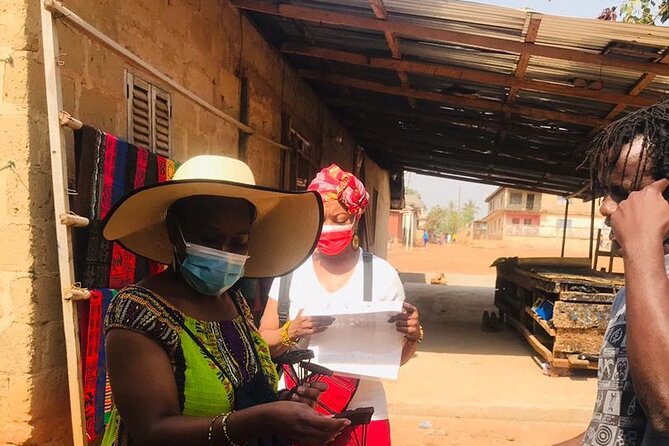
I would recommend this tour to you if you want more than photographs of Ghanaian textiles. It suits first-time visitors to Kumasi, people interested in craft, and anyone who likes a practical activity tied to local meaning.
Families may appreciate the stamping activity because it gives children something direct to do, although the available information does not specify a minimum age. The private setting can also help groups with different interests move at a comfortable pace.
It is a good fit if you want transport arranged and prefer not to work out the route between Kumasi, Bonwire, and Ntonso yourself. Pickup, lunch, and drinks remove several small decisions from the day.
I would think twice if your main aim is bargain shopping. Purchases are not included, and the $140 price is aimed at a guided private experience rather than a simple ride to a market. I would also hesitate if you want a long, specialist workshop in either weaving or dye production. This is an introduction to both traditions within one half-day, not an apprenticeship.
Booking, weather, and cancellation details
Confirmation is received when you book, and most people can participate. No special accessibility details are provided, so contact the operator if you have mobility, medical, or dietary concerns.
The tour requires good weather. If poor weather causes cancellation, you will be offered another date or a full refund. You can cancel for a full refund up to 24 hours before the 9:30 a.m. start time. Cancellations or changes made within 24 hours are not refunded or accepted, and all cut-off times use Kumasi local time.
Should you book the Kumasi Culture and Heritage Tour?
Book it if you want a focused introduction to Kumasi’s textile traditions, especially if stamping your own Adinkra cloth appeals to you. The strongest reasons to go are the hands-on work at Ntonso, the kente connection at Bonwire, and the convenience of private transport, lunch, drinks, and guide service.
At $140 per person, it is not the cheapest way to see Kumasi. The value improves when several people share the private outing and when you would otherwise need to arrange transport, admission, meals, and separate craft visits yourself.
For a short visit to Kumasi, I think this is a sensible choice. You leave with more than a shopping bag: you understand why a symbol can express farewell, how dye is made from local material, and how kente is connected to place and practice.
FAQ
How long does the Kumasi Culture and Heritage Tour last?
The tour lasts approximately six hours.
What time does the tour start?
The stated start time is 9:30 a.m.
Where does the tour begin?
It begins at Lancaster Kumasi City, Rain Tree Street, Lesley Opoku-Ware Drive, Kumasi, Ghana.
Where does the tour end?
The activity ends back at the meeting point.
Is pickup available?
Yes. Pickup is offered, and the tour uses an air-conditioned vehicle.
What is included in the price?
The price includes entrance fees, an air-conditioned vehicle, lunch, bottled water, drinks, and tour guide service.
Can I cancel for a refund?
Yes. You can cancel at least 24 hours before the start time for a full refund. Cancellations within 24 hours are not refunded. If poor weather causes the operator to cancel, you will be offered another date or a full refund.
Just added around Kumasi
- Discover kumasi Tours★ 5.0 · 3 reviews
- Kumasi City Tour★ 4.5 · 3 reviews
- Kumasi: City Tour★ 5.0 · 3 reviews
- Full Day Tour with Traditional Naming Ceremony in Kumasi★ 5.0 · 4 reviews
- Traditional Naming Ceremony For African Americans In Kumasi★ 5.0 · 5 reviews
- Lake Bosomtwe Boat Cruisely and Kumasi City Tours★ 4.5 · 6 reviews
- One day tour at Kumasi★ 5.0 · 6 reviews
- Kumasi City Tour★ 4.5 · 7 reviews
Kumasi Tours, compared.
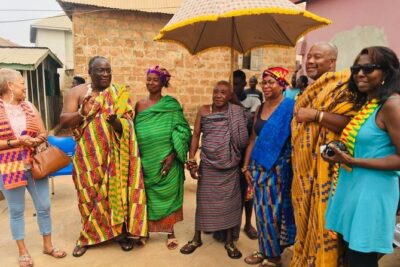
Bonwire Namimg Ceremony and Kente Tourist Center
Read our review →
Traditional naming ceremony For African Diasporas in Kumasi
Read our review →
Lake Bosomtwe Boat Cruisely and Kumasi City Tours
Read our review →
Traditional Naming Ceremony For African Americans In Kumasi
Read our review →
Full Day Tour with Traditional Naming Ceremony in Kumasi
Read our review →Browse the lists this tour appears in