
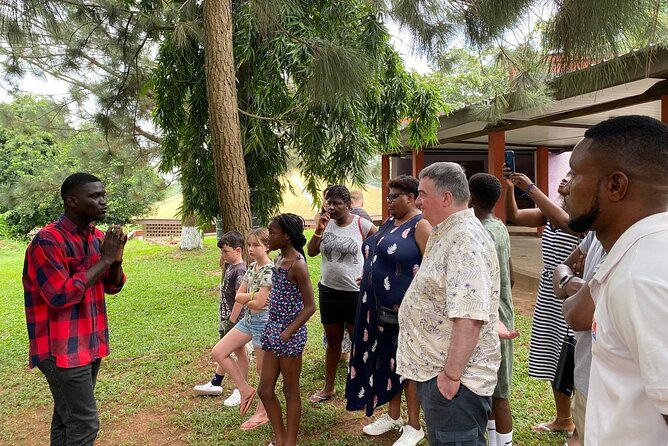
Reviewed · KUMASI TOURS
Kumasi City Tour
Kumasi’s story comes alive through four very different stops: a sword tied to Asante unity, former royal buildings, old household objects, and a market with about 11,000 stalls. The tour gives you a useful introduction to the city in one half-day, with time to see both formal heritage sites and everyday commerce.
I like the private format, since your group can focus on questions that interest you rather than follow a large crowd. I also like the mix of royal history and Kejetia Market, where Kumasi feels less like a museum and more like a working city. The main consideration is the pace: four one-hour stops leave little room for a slow visit or extended shopping.
Key points about the Kumasi City Tour
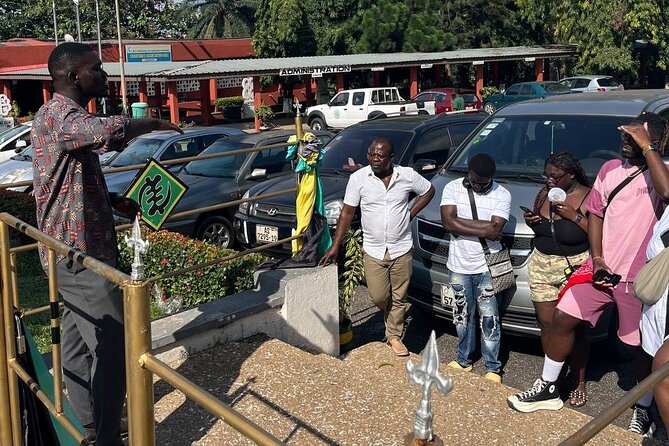
- The Okomfo Anokye Sword Site marks the place where a priest is said to have planted a sword to unite the Asante people.
- Manhyia Palace Museum occupies a former royal residence used by three Asante kings.
- Prempeh II Museum presents palace-style architecture, royal bath and kitchen displays, and a mysterious sealed bag.
- Kejetia Market contains about 11,000 stalls and receives roughly 44,000 visitors each day.
- Private transportation and admission fees are included in the $65 price per person.
- Free cancellation is available up to 24 hours before the scheduled start, subject to the weather policy.
Why this four-hour Kumasi tour works
Kumasi is the capital of the Ashanti Region and the heart of Asante culture in Ghana. You can spend days trying to understand its royal past, but this tour gives you a tidy half-day route through several important places.
The appeal is the contrast. At the sword site, you hear a founding story linked to unity. At the museums, you see objects connected with kings and court life. At Kejetia, you leave royal rooms behind and enter the daily business of Kumasi.
I would think of this as an introductory tour rather than a slow, specialist study of Asante culture. Each stop is scheduled for about one hour, so the guide must keep the visit moving. That structure suits you if you want a clear first look at the city and its past, especially during a short stay.
The $65 price includes private transportation, admission fees, and all taxes. That makes the cost easier to judge than a bare guide fee, since you are not expected to buy separate entrance tickets at each site. Personal shopping and hotel accommodation are not included.
The private setup is useful for couples, families, and small groups with different interests. You can ask for more explanation at the museums or spend less time at a site that does not hold your attention. The tour is also listed as suitable for most participants and is near public transportation.
A few more Kumasi days to weigh up
- Bonwire Namimg Ceremony and Kente Tourist Center
★ 5.0 · 40 reviews - Tour Kumasi City Like a Local
★ 4.5 · 34 reviews - Traditional naming ceremony For African Diasporas in Kumasi
★ 5.0 · 10 reviews
Okomfo Anokye Sword Site and the story of unity
The first stop is the Okomfo Anokye Sword Site, linked to Okomfo Anokye, the legendary priest of the Asantes. According to the story presented here, he planted a sword in the ground as a sign of unity and as part of the beginning of the Asante kingdom.
The sword has remained in place. The story even includes an attempt by the late heavyweight boxer Muhammad Ali to uproot it, which gives the site a memorable human detail. You do not need to know every part of Asante political history to understand the basic idea: this is a physical object connected with a larger story about bringing people together.
Plan for about one hour here. The value comes less from the size of the site than from the meaning attached to it. A guide can explain the tradition and place the sword within the wider story of Asante identity.
This is also a good point to ask questions. You may want to know how the kingdom developed, why the priest matters, or how the sword is treated today. Since the tour is private, you have more freedom to shape the conversation than you would on a fixed group outing.
The only caution is that visitors expecting a large historic complex may find the stop more focused than expansive. It is a symbolic site, not a full museum. Give it time for the story, then continue with realistic expectations.
Manhyia Palace Museum and royal power
The Manhyia Palace Museum adds a different kind of context. The building was constructed by the British as compensation when an Asante king returned from exile in Seychelles. The Asantes rejected the offer as a gift and instead paid the British before using the building as a palace.
That detail says a great deal about political dignity and the relationship between the Asante court and British authorities. The building is not simply an old residence. Its story includes exile, negotiation, and the choice to take control of the arrangement.
Three Asante kings used the building as their palace before it became a museum in 1996. The conversion was carried out under Otumfuo Opoku Ware II, an Asante king. Inside, you can expect displays connected with the past centuries of Asante royal life.
Allow about an hour. You will get the most from this stop if you pay attention to the building itself as well as the objects inside. The former palace gives the exhibits a setting that helps you picture court life more clearly than a modern display hall would.
The museum is likely to be one of the strongest stops for anyone interested in leadership, diplomacy, and the role of the Asante monarchy. It is also a useful counterpoint to the sword site. The sword presents a founding symbol, while Manhyia Palace shows how royal authority was housed and remembered.
Prempeh II Museum’s unusual royal objects
The Prempeh II Museum continues the royal story in a smaller, more object-focused setting. Its architecture is designed to resemble a traditional Asante palace, so the building itself becomes part of the visit.
The displays include items associated with Asante life as far back as the 16th century. Particularly unusual pieces include an ancient royal bathing setup, a kitchen setup, and a mysterious bag made by the legendary priest Okomfo Anokye. The bag is said not to have been opened.
These objects are valuable because they move the story beyond kings’ names and political events. A bath arrangement and kitchen equipment can tell you about daily routines, court customs, and the material side of palace life. They may also help younger visitors connect with the past more easily than a long historical explanation.
Again, the planned time is one hour. I would treat this stop as a companion to Manhyia Palace Museum rather than expect it to cover entirely different ground. The two museums both deal with royal heritage, but the Prempeh II Museum places more weight on objects and palace-style design.
The mysterious bag is the kind of detail that stays with you after the tour. It also shows how Asante history includes legend and spiritual tradition alongside documented royal objects. Listen closely to the guide’s explanation, since the meaning of such an item may not be obvious from the display alone.
Same departure point, a completely different day out:
- Kumasi City Tour
★ 5.0 · 8 reviews - Kumasi City Tour
★ 4.5 · 7 reviews - Lake Bosomtwe Boat Cruisely and Kumasi City Tours
★ 4.5 · 6 reviews - One day tour at Kumasi
★ 5.0 · 6 reviews
Kejetia Market with 11,000 stalls
Kejetia Market changes the mood completely. It is described as the largest open-air market in West Africa, with about 11,000 stalls and roughly 44,000 people visiting each day. Most of the traders are women.
You will spend about an hour here, which is enough to get a strong sense of the scale but not enough to explore every section. Kejetia is not a tidy final photo stop. It is a working market, and the noise, movement, crowds, and commercial activity are part of what makes it important.
This is where you see Kumasi as a living center rather than only a place of royal memory. The market gives context to the city’s role in trade and everyday life. It also gives you a chance to observe how women shape the commercial life of the market.
Personal shopping is not included in the tour price. If you plan to buy something, bring that expectation into the visit without assuming the schedule allows for a long negotiation or a careful search through every stall. Ask your guide how much time you can reasonably use for shopping before you stop to browse.
Kejetia may be the most demanding part of the tour for anyone who dislikes crowds or busy public spaces. It is also the stop most likely to feel immediate and unscripted. Stay attentive to the group and your belongings, and listen to the guide’s instructions.
Local transportation and the private format
Private transportation is included, but local transportation may also be used during the experience. That can make the outing feel more connected to ordinary city life than a tour conducted entirely inside a private vehicle.
The practical benefit of private transport is simple: your group returns to the meeting point at the end, and you do not need to arrange separate rides between the four stops. The tour begins and ends in Kumasi, with pickup offered.
Because the activity is private, only your group participates. That gives you room to ask about Asante customs, royal succession, the museums, or the market without worrying about holding up a large party. It also makes the tour easier to enjoy at your own pace, within the four-hour framework.
A message is sent soon after booking to help reassure you about the arrangement. The provider is Here Is Kumasi Tours. Communication has been associated with Maclean, so keep an eye on your booking messages for the practical details of your pickup.
The tour is normally booked about five days ahead. That is useful planning guidance, although confirmation is received at booking. If the exact pickup point matters to you, confirm it before the day begins, since the general meeting location is Kumasi rather than a named hotel.
Is $65 a fair price?
At $65 per person, the tour is not the cheapest way to wander through Kumasi, but the price includes several things that can otherwise add up. You receive private transportation, entrance fees, and a guide for four major stops.
The value is strongest when you want interpretation. The sword site and the two museums carry stories that are not always obvious from the buildings or objects alone. A guide helps connect the priest, the Asante kings, British exile, royal household items, and the market into one understandable visit.
The value is weaker if you prefer to spend an entire morning in one museum or shop at Kejetia without a fixed schedule. You are paying for a planned route and private service, not unlimited time at each location.
For a small group, the private format can make the price more attractive because the experience is designed around your party. For a solo visitor, the per-person cost deserves closer thought. The included admissions and transport still help, but the main benefit is the convenience and local explanation.
A private half-day tour is also a sensible choice if you have limited time in Kumasi. You can cover the city’s main Asante-focused stops without spending part of your visit working out transport between them.
Who should book this Kumasi experience?
I would recommend this tour to first-time visitors who want a structured introduction to Kumasi. It suits anyone interested in Asante kings, traditional authority, Ghanaian history, and the relationship between historic sites and modern city life.
Families may appreciate the variety. Children who lose interest in museums have a symbolic sword site and a huge market to break up the indoor exhibits. The royal bath, kitchen display, and sealed bag may also provide memorable points for discussion.
It is a good fit for visitors who prefer private touring and want to ask questions freely. The tour also suits people who enjoy using local transportation as part of the experience, rather than seeing a city only through a private vehicle.
I would hesitate to recommend it to you if your main goal is shopping. Kejetia receives only about one hour, and personal purchases are outside the tour price. It is also not ideal if you dislike a brisk schedule or want long, quiet museum visits.
The overall rating is 4.3 from three published ratings, with particular praise for local transportation and the chance to learn about Asante culture. One detailed account also valued an Asante funeral ceremony as a high-learning experience, but that ceremony is not listed as a guaranteed part of this four-hour route. Do not book expecting one unless it is specifically confirmed.
Booking, cancellation, and weather details
Confirmation arrives at the time of booking, and free cancellation is available until at least 24 hours before the start time. Canceling later than that means the payment is not refunded, and changes made inside the same 24-hour window are not accepted.
The cut-off follows Kumasi local time. This matters if you are booking from another country or changing plans across time zones.
The experience requires good weather. If poor weather forces cancellation, you will be offered another date or a full refund. Since the route includes an outdoor sword site and an open-air market, check the forecast and keep your schedule flexible.
Final verdict: book it for context, not a rushed checklist
Book this Kumasi City Tour if you want one private half-day that connects Asante legend, royal buildings, historic objects, and present-day commerce. The strongest feature is the range of the route, especially the shift from Manhyia Palace to Kejetia Market.
The $65 price is reasonable when you value private transport, included admission, and a guide who can explain what you are seeing. Just remember that each stop receives about one hour. You will gain a broad introduction, not an exhaustive study.
If you want a practical first look at Kumasi and the Asante past, I would book it. If you want extended shopping time, a slow museum visit, or a full-day cultural program, ask for a longer or more specialized arrangement before paying.
FAQ
How long is the Kumasi City Tour?
The tour lasts approximately four hours.
How much does the tour cost?
The price is $65 per person.
Is transportation included?
Yes. Private transportation is included, and local transportation may also be used during the experience.
Are entrance fees included?
Yes. All fees and taxes are included in the tour price.
Is the tour private?
Yes. Only your group participates in this private activity.
Where does the tour start and end?
The tour starts in Kumasi, Ghana, and ends back at the meeting point.
Which sites are included?
The route includes the Okomfo Anokye Sword Site, Manhyia Palace Museum, Prempeh II Museum, and Kejetia Market.
Is hotel accommodation included?
No. Hotel accommodation is not included.
Can I shop at Kejetia Market?
Personal shopping is not included in the tour price. The market visit lasts about one hour.
What happens if bad weather cancels the tour?
If poor weather causes cancellation, you will be offered a different date or a full refund. You can also cancel for a full refund up to 24 hours before the start time.
Just added around Kumasi
- Kumasi Culture and Heritage Tours★ 4.5 · 3 reviews
- Discover kumasi Tours★ 5.0 · 3 reviews
- Kumasi: City Tour★ 5.0 · 3 reviews
- Full Day Tour with Traditional Naming Ceremony in Kumasi★ 5.0 · 4 reviews
- Traditional Naming Ceremony For African Americans In Kumasi★ 5.0 · 5 reviews
- Lake Bosomtwe Boat Cruisely and Kumasi City Tours★ 4.5 · 6 reviews
- One day tour at Kumasi★ 5.0 · 6 reviews
- Kumasi City Tour★ 4.5 · 7 reviews
Kumasi Tours, compared.

Bonwire Namimg Ceremony and Kente Tourist Center
Read our review →
Traditional naming ceremony For African Diasporas in Kumasi
Read our review →
Lake Bosomtwe Boat Cruisely and Kumasi City Tours
Read our review →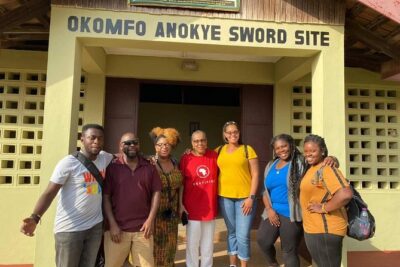

Traditional Naming Ceremony For African Americans In Kumasi
Read our review →
Full Day Tour with Traditional Naming Ceremony in Kumasi
Read our review →
Browse the lists this tour appears in