
Reviewed · GHANAIAN NAMING CEREMONY EXPERIENCES
Naming Ceremony and Heritage Homecoming Experience for Diasporas
The heart of this experience is a real Ghanaian naming ceremony, led by a respected elder and held in a village or local community rather than staged in a hotel. You share the date you were born, receive a Soul Name linked to that day, and are given a local name with its meaning.
I like the personal ritual and the warm welcome from the community. I also like the traditional drumming, dancing, cloth, beads or Kente stole, and certificate, which give the day a lasting physical record. The main consideration is that the setting may feel more rural and communal than some visitors expect, so come ready for a genuine village ceremony rather than a polished indoor presentation.
Key points to know before you book

- Your birth date shapes the ceremony: You provide your date of birth so the community can identify your Ghanaian day name, known here as your Soul Name.
- The ceremony takes place in a community setting: Expect a rural Ghanaian village or a community in Accra, not necessarily a formal venue in the city.
- An elder leads the welcome: A respected community elder conducts the naming and recognition ritual.
- Music and movement are part of the event: Traditional drumming and dancing help mark your arrival and welcome.
- You receive meaningful keepsakes: Depending on the ceremony, these may include beads or a Ghana Kente stole, along with a certificate of recognition.
- It is a private experience: Only your own group takes part, with pickup offered from Kotoka International Airport and return to the meeting point.
A heritage welcome that begins with your name
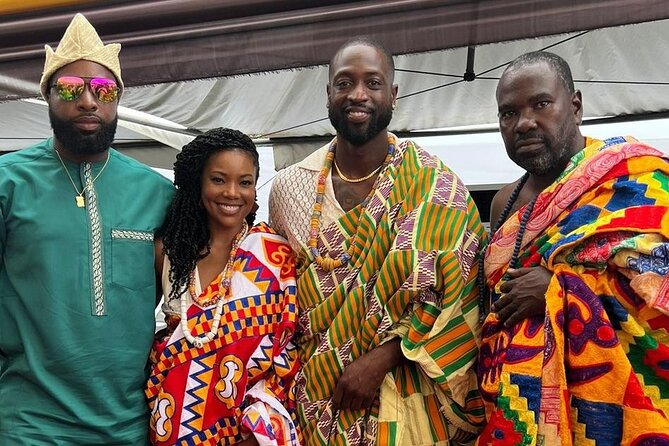
This experience is built around a simple but powerful idea: your name carries a place in the community. In Ghanaian tradition, the day of the week on which you were born can help determine a day name. The ceremony gives you a chance to learn that identity and receive another local name chosen with meaning.
For members of the African American and Caribbean diasporas, the ritual can carry added weight. It offers a formal welcome to Ghana and a way to connect with African heritage through people, music, words, and ceremony. You do not simply watch a cultural performance from the side. You take part in a community event designed to recognize you.
That difference matters. A stage show may explain a custom, but this ceremony asks you to stand within it. You share your birth date, listen to the elder, accept the name, and receive a welcome from people who treat the occasion as a social connection.
The ceremony is also open to anyone interested in Ghanaian tradition. You do not need to arrive with family ties or a detailed knowledge of Ghana. The point is to be received, introduced, and connected through the ritual.
More naming ceremony experiences:
- The Ancestral Naming Ceremony and Home Coming Experience
★ 5.0 · 30 reviews - Traditional Naming Ceremony and Boat Cruise Experience
★ 5.0 · 15 reviews - Kumasi Heritage Tours And Naming Ceremony In A Day
★ 5.0 · 11 reviews
Starting at Kotoka Airport at 7:00 am
The stated meeting point is Kotoka International Airport in Accra, with a 7:00 am start. Pickup is offered, and the activity ends back at the meeting point. That arrangement is useful if you are arriving in Accra and want a planned cultural outing without working out transport to an unfamiliar community yourself.
The early start deserves attention. You will need to be ready at the airport meeting point in the morning, and the full experience can last about five to eight hours. The naming ceremony itself is listed at roughly three hours, but driving, introductions, preparation, and the return journey account for the wider time range.
I would keep the rest of your day flexible. The exact length can depend on where the ceremony takes place, since the setting may be a rural village or a community in Accra. This is not the best choice if you need to return at a precise hour for another booking.
Because the activity is private, your group will not be combined with strangers. That gives the day a more personal feel and may make it easier to ask questions or take part at your own pace. It also means the ceremony is centered on your group rather than a large crowd.
Arriving in a rural village or Accra community
The setting is one of the most important parts of the experience. You may be welcomed in a rural Ghanaian village, or the ceremony may take place within a community in Accra. The exact location affects the feel of the day.
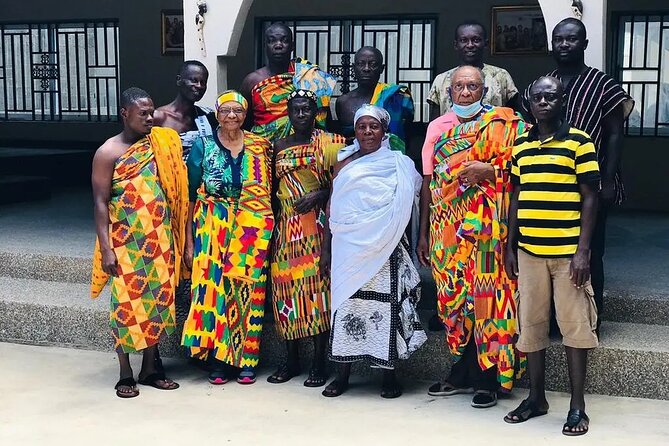
A rural ceremony offers a closer look at traditional community life. You may meet elders and older women from the village, and the welcome can feel less like a scheduled attraction and more like an introduction to a living group. That is especially meaningful if your main reason for booking is a sense of return to African roots.
The tradeoff is comfort and predictability. A village setting may not match the indoor ceremony some people picture when they hear naming ceremony. One person expected a different format and was surprised that the event took place in an actual village. That is useful advice: read the setting as part of the experience, not as a minor detail.
An Accra community may be easier to reach and feel more familiar to visitors staying in the city. Still, the activity description makes clear that the aim is a traditional welcome, not a standard city sightseeing stop. Ask about the expected setting when you book if the location matters greatly to you.
The community setting also shapes your role. You are not only receiving a name from an individual guide. You are being introduced to a group, with the elder serving as the person who formally conducts the ceremony.
The naming ritual and your Soul Name
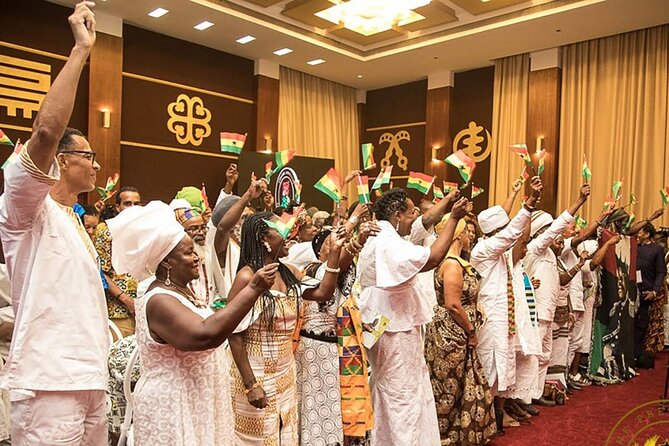
The central moment begins with your date of birth. This information is used to identify the day on which you were born and your related Soul Name. You also receive a local Ghanaian name with a meaning.
The name is more than a souvenir. It gives the ceremony a personal focus and connects your birth identity with a Ghanaian naming tradition. If you are booking as a couple, family, or small private group, each person can have an individual moment within the larger event.
The elder’s role is important. The ceremony is conducted by a respected older figure known for moral standing in the community. That places the naming in the hands of someone recognized locally, rather than making it feel like a generic activity delivered by a host.
You should listen closely to the explanation of your name. The experience is not only about receiving a certificate or cloth. The meaning attached to the name is the part you will likely want to remember and share later.
The available information does not spell out every step of the ritual, so you should avoid arriving with a fixed script in mind. The broad process is clear: you give your birth date, take part in traditional naming, receive community recognition, and are welcomed through music and ceremony.
More history visits around Accra:
- Experience the Beauty, History and the Culture Of Accra in a Day
★ 5.0 · 323 reviews - Ghana Heritage Tours – Beyond The Return
★ 5.0 · 36 reviews - 10 Days Ghana Cultural and Heritage Trip
★ 5.0 · 31 reviews - Cape Coast Historical Day Tour
★ 5.0 · 24 reviews
Drumming, dancing, and the community welcome
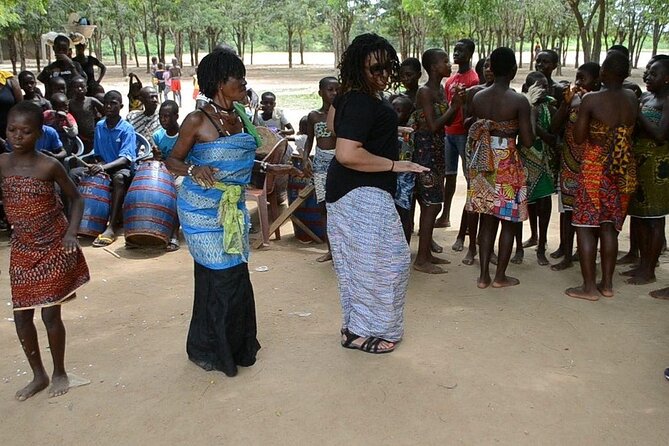
Traditional drumming and dancing accompany the event. These elements give the ceremony its public, joyful character and make it feel like a welcome rather than a quiet administrative exchange.
You may be invited to join in. The activity description presents the drumming and dancing as part of the ceremony with local people, so expect participation to matter more than simply watching from a chair. If you are shy about dancing, remember that the point is connection, not performance skill.
The presence of the community is one of the strongest features here. The welcome involves elders and other local people, with the ceremony offering a chance to build ties with the community. That can be particularly moving for people seeking a direct relationship with Ghana rather than a quick cultural display.
At the same time, a community ceremony has its own rhythm. It may not move with the tight timing of a commercial show. The five-to-eight-hour overall estimate allows for this slower pace, along with transport. Give yourself room to listen, respond, and enjoy the welcome without checking the clock every few minutes.
Cloth, beads, Kente, and your certificate
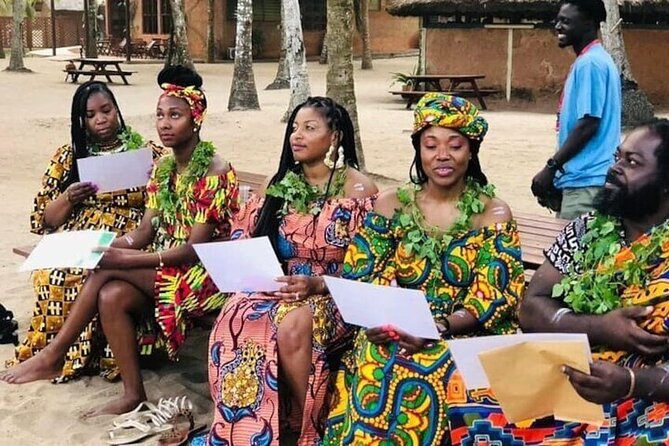
The ceremony includes a gift from the community. This may be beads or a Ghana Kente stole designed with Welcome to Ghana. You also receive a certificate of recognition.
These items add value because they connect the emotional event with something you can take home. A certificate records the naming and welcome in a formal way. Beads or Kente provide a tangible reminder of the community and the ceremony.
The description does not guarantee one particular gift for every booking. If the stole matters to you, confirm what your ceremony will include before paying. The wording indicates that the gift may vary, so treat the beads or Kente as possible inclusions rather than a guaranteed choice.
The cloth is also part of the ceremony itself. You may be adorned with Ghanaian cloth as part of the recognition ritual. That gives the event a visual and ceremonial quality, while the certificate provides a written record afterward.
I would bring a secure way to carry the certificate flat. This is practical advice rather than a stated tour rule, but paper keepsakes are easier to preserve when they are not folded into a crowded bag.
What the private format means for you
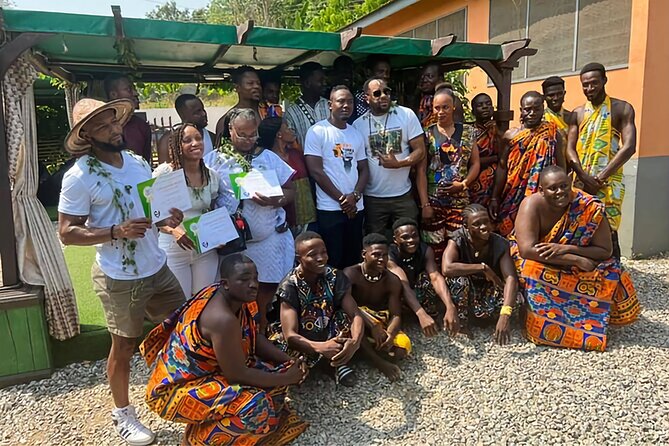
This is a private tour or activity. Only your group participates, which is a major advantage for families, couples, and diaspora groups who want a more personal welcome.
A private format can also help if the ceremony is emotionally important. You have more space to respond without feeling that you are performing for a busload of strangers. The host can focus on your group’s names, birth dates, and questions.
The drawback is that the experience may depend more on the size and mood of your own group. A small group may have an intimate ceremony, while a larger private party may create a more social event. The supplied details do not give a maximum group size, so ask before booking if you need a specific arrangement.
The private format does not mean the ceremony is isolated. The welcome takes place with a Ghanaian community and its elder, so you still meet local people and take part in the wider event.
Is $265 a fair price?
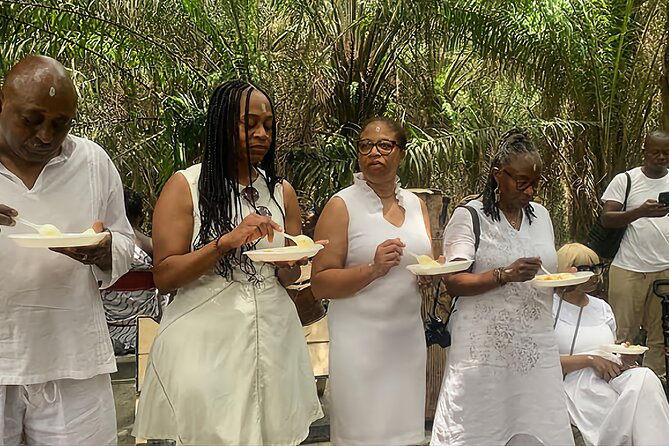
At $265 per person, this is not a low-cost sightseeing outing. Its value depends on what you want from your day in Accra.
You are paying for more than a name. The experience includes a private arrangement, pickup offered from Kotoka Airport, a traditional ceremony, community participation, drumming and dancing, a local name with meaning, a possible bead or Kente gift, a certificate, and return to the meeting point. The long five-to-eight-hour window also suggests that transport and time with the community are part of the package.
I see the price as easier to justify for someone who places real value on heritage, recognition, and a personal ceremony. For a visitor seeking the cheapest introduction to Ghanaian culture, it may feel expensive compared with a museum, market visit, or short city tour.
The best comparison is not simply the number of hours. Ask what kind of memory you want to buy. This experience gives you a formal connection to a community and a name tied to your birth date. That is a different product from sightseeing, and its value is personal rather than purely practical.
Group discounts are offered, which may make the price more workable for families or organized diaspora groups. Since the activity is private, a group can also share the setting while keeping the ceremony focused on its members.
Who will appreciate this experience most
I would recommend it most strongly to people with a serious interest in Ghanaian heritage, African diaspora identity, and local cultural traditions. It is also a good fit for anyone who wants a ceremonial welcome rather than a standard list of city sights.
You are likely to enjoy it if you:
- Want to receive a Ghanaian name connected to your birth date
- Prefer meeting a community and elder to watching a staged performance
- Are comfortable with a rural setting or an informal community venue
- Value personal keepsakes such as a certificate, beads, or Kente
- Have enough time for a morning start and a five-to-eight-hour outing
- Are traveling privately with family, friends, or a small group
I would think twice if you need a highly predictable schedule, expect a polished indoor event, or mainly want quick sightseeing in central Accra. The village setting is part of the appeal, but it may surprise anyone who has imagined a formal ceremony in a city venue.
Service animals are allowed, the activity is near public transportation, and most people can participate. Confirmation is received at booking. You can cancel for a full refund up to 24 hours before the start time, but changes or cancellations inside that period are not accepted.
Practical ways to prepare
Bring your exact date of birth. It is central to the naming process, and you should not rely on guessing the day of the week yourself.
Wear clothing that lets you participate comfortably in drumming, dancing, and any cloth-adornment portion of the ceremony. The provided information does not set a dress code, so you should follow the operator’s instructions if they send additional guidance after booking.
Keep your morning open from the 7:00 am pickup through the return. The ceremony portion is about three hours, but the complete activity can take five to eight hours.
Approach the event with respect and patience. You may be welcomed by a number of community members, including elders and older women from the village. Listen when the elder explains the name and ceremony, and take part when invited.
If you are booking because of family or ancestral connections, decide in advance what you hope to learn or express. The ceremony may give you a name and a welcome, but the meaning you bring to that moment will shape the day.
Should you book the Ghana naming ceremony?
Book it if you want a personal heritage experience with a formal welcome, a Ghanaian name, traditional music, and contact with a local community. The rural setting, elder-led ritual, and private format make it more meaningful than a quick cultural stop for the right person.
Book with care if you expect a polished indoor event or a tightly timed city tour. The most important practical point is to accept the village or community setting as part of the ceremony. At $265, the experience makes sense when the name, recognition, keepsakes, and human connection matter to you.
For a diaspora visitor returning to Ghana, this can be a memorable way to begin that relationship. For other visitors, it is a substantial but distinctive cultural outing, best chosen for its personal meaning rather than its sightseeing efficiency.
FAQ
Where does the naming ceremony take place?
It takes place in a rural Ghanaian village or a community in Accra. The exact setting can vary, so confirm the location if this is important to your plans.
What time does the experience start?
The stated start time is 7:00 am at Kotoka Airport in Accra, Ghana.
How long does the activity last?
The complete experience lasts approximately five to eight hours. The naming ceremony portion is listed as about three hours.
What do I receive during the ceremony?
You receive a Soul Name based on the day you were born, a local Ghanaian name with a meaning, and a certificate of recognition. A community gift may include beads or a Ghana Kente stole with Welcome to Ghana written and designed on it.
Is this a private tour?
Yes. Only your own group participates in this private activity.
Can I cancel for a full refund?
Yes. You can cancel at least 24 hours before the experience start time for a full refund. Cancellations or changes made less than 24 hours before the start time are not accepted for a refund.
Just added around Accra
- Experience Aburi Botanical Gardens And Boti Water Falls In A Day.★ 5.0 · 3 reviews
- Experience Cape Coast Castle and Kakum National Park★ 4.5 · 3 reviews
- Accra city tour★ 4.5 · 3 reviews
- 7days/6nights Eco Tourism★ 5.0 · 3 reviews
- Half-Day City Tour of Accra★ 5.0 · 3 reviews
- 3 Days Accra City Tour & Cape Coast Tour★ 4.5 · 3 reviews
- Local Ghanaian Food Tasting Tours★ 5.0 · 3 reviews
- Accra Zoo, Canopy Walk and Botanical Gardens Private Tour★ 5.0 · 3 reviews
Ghanaian Naming Ceremony Experiences, compared.

The Ancestral Naming Ceremony and Home Coming Experience
Read our review →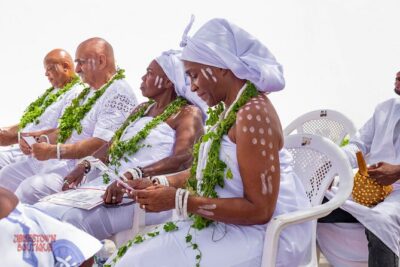
Traditional Naming Ceremony and Boat Cruise Experience
Read our review →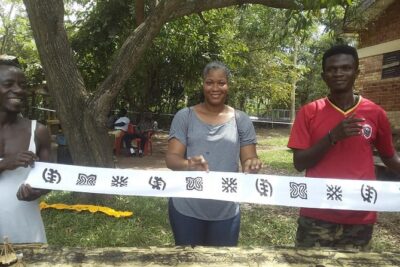
Kumasi Heritage Tours And Naming Ceremony In A Day
Read our review →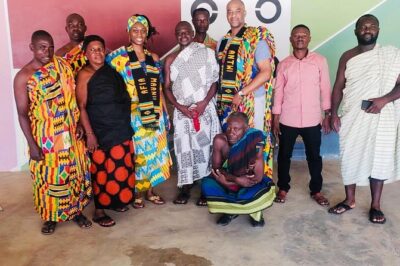
Traditional naming ceremony For African Diasporas in Kumasi
Read our review →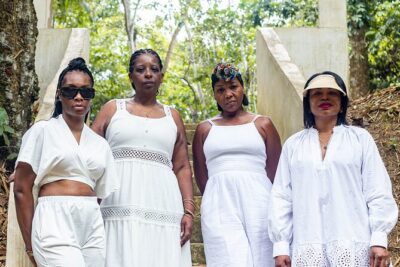
Naming Ceremony, Assin Manso Slave River and Cape Coast Castle
Read our review →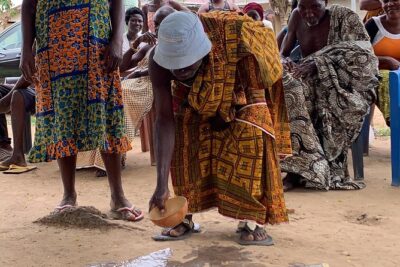
Cultural Village Tour: Traditional Naming Ceremony
Read our review →
Traditional Naming Ceremony For African Americans In Kumasi
Read our review →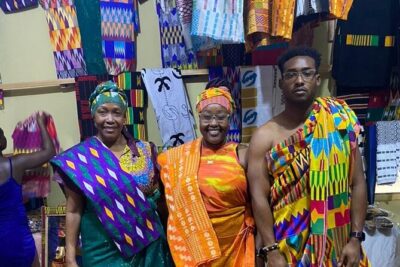
Full Day Tour with Traditional Naming Ceremony in Kumasi
Read our review →Browse the lists this tour appears in