
Reviewed · KUMASI TOURS
Kumasi City Tour
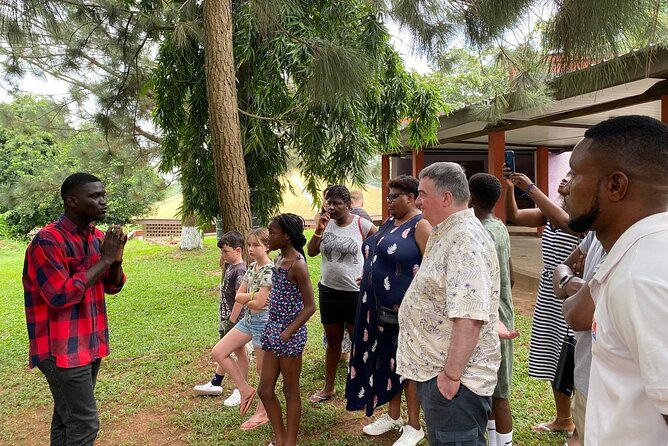
Kumasi’s story comes alive through royal regalia, war relics, and sacred symbols on this four-hour city tour. You move from the former seat of the Asante kingdom to military history and the famous sword linked to Okomfo Anokye, with a local guide explaining what you are seeing in clear English.
I like the small-group limit of 15 people, which should make it easier to ask questions and hear the guide. I also like that admission is included at every listed stop, so the $60 price covers more than a drive past the sights.
The main point to check is the meeting information. The tour lists Manhyia Palace as the starting point, while the stops are presented with Kumasi Fort first and Manhyia Palace second. Confirm the exact pickup and walking or driving order before setting out.
Key points at a glance
- Four major Kumasi sights in about four hours: Plan roughly one hour at each listed attraction.
- Royal Asante history: Manhyia Palace Museum and Prempeh II Museum focus on kings, court life, symbols, and ceremonial objects.
- Military context: Kumasi Fort houses the Ghana Armed Forces Museum, with weapons, flags, vehicles, photographs, and wartime artifacts.
- A sacred landmark: The Okomfo Anokye Sword Site centers on the famous sword said to be fixed in the ground.
- Small-group format: No more than 15 people are accepted, helping keep the tour personal.
- Simple booking terms: Pickup is offered, mobile tickets are accepted, and cancellation is free up to 24 hours before the start time.
Four hours tracing Kumasi’s royal and military past
This is a history-focused introduction to Kumasi, the center of Asante culture. Rather than trying to cover every corner of the city, the tour concentrates on four places that explain power, belief, warfare, and royal life.
That focus works well for a first visit. You get a useful framework for understanding the Asante Kingdom, then see objects connected to that story in museums and memorial sites. The experience is not built around long shopping stops or a packed entertainment schedule. It is best for you if museums, local traditions, and historical explanation matter more than checking off a large number of city neighborhoods.
The advertised starting time is 8:00 am, and the full visit lasts about four hours. That is a manageable block of time, especially if you have only part of a day in Kumasi. Pickup is offered, and the tour is near public transportation, but the exact pickup arrangement should be confirmed when you book.
The group can have up to 15 people. That is not a private tour, but it is small enough to avoid the feel of a large coach group. A five-star rating from eight submitted ratings, along with praise for clear English and strong knowledge of the places visited, suggests that the guide’s explanations are a central part of the experience. No guide name is provided, so you should not expect a particular named host.
A few more Ghana days to weigh up
- Bonwire Namimg Ceremony and Kente Tourist Center
★ 5.0 · 40 reviews - Tour Kumasi City Like a Local
★ 4.5 · 34 reviews - Traditional naming ceremony For African Diasporas in Kumasi
★ 5.0 · 10 reviews
Kumasi Fort and the Ghana Armed Forces Museum
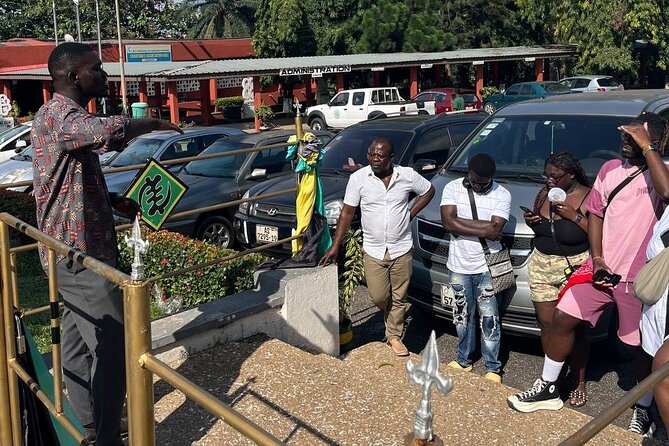
The first listed attraction is Kumasi Fort, home to the Ghana Armed Forces Museum. Allow about an hour here. The museum presents military equipment and artifacts connected with the British Asante War of 1990 and the Second World War, as well as Ghana’s broader path from colonial rule to the present day.
The collection includes weapons, flags, decorations, armored vehicles, portraits, and photographs. That mix gives you several ways into the subject. A photograph can show the human side of a conflict, while a weapon or vehicle makes the scale of military change easier to grasp.
I would pay close attention to the guide’s explanations here. Military museums can become a parade of objects without much meaning, especially when the labels are brief. A good explanation can connect the equipment to Ghana’s political history and help you understand why Kumasi was important in the struggle between the Asante state and British power.
The reference to the British Asante War of 1990 appears unusual and may reflect a date error in the supplied information. Ask the guide to clarify the conflict and date during the visit. That is a small but useful precaution for anyone interested in accurate historical detail.
The museum may appeal most to visitors who want more than royal stories. It adds a national and colonial context to the day. The possible drawback is that military collections can feel less immediately personal than a royal residence, so you may want to spend your time listening to the historical connections rather than simply scanning the displays.
Manhyia Palace Museum and the Asante court
Manhyia Palace Museum is one of the main reasons to choose this tour. The palace was associated with the Asante royal court, and the museum contains artifacts, war talismans, and other objects linked to the kingdom.
The museum opened in 1995 during the Silver Jubilee celebrations connected with the ascension of the Golden Stool. That detail matters because the Golden Stool is not just a decorative object in Asante culture. It represents the authority and unity of the Asante people, so the museum’s opening was tied to an important royal anniversary.
The collection is described as modest in size, but that can be an advantage during a short city tour. You will not spend half a day trying to absorb a giant museum. Instead, you can focus on why each object matters and ask questions as you go.
Expect a stop that works best with interpretation. War talismans and court objects may not explain themselves to someone seeing them for the first time. The guide’s role is to give you the cultural setting, explain the link between royal authority and tradition, and help you read the objects as more than old possessions.
The palace setting also gives the day a sense of place. You are not only looking at displays behind glass. You are connecting the objects to the royal institution that shaped Kumasi’s identity.
One practical detail deserves attention: Manhyia Palace is listed as the meeting point, yet it appears as the second stop in the stated order. Since the tour also lists Kumasi Fort first, confirm whether you should meet at the palace and then travel to the fort, or begin at the fort after pickup. This should not prevent you from booking, but it is worth clearing up.
Prempeh II Museum and everyday royal objects
The Prempeh II Museum is smaller than a major national museum, but the personal nature of its collection makes it worthwhile. The building is designed to resemble an Asante chief’s residence, with a front courtyard and walls decorated with traditional carved symbols.
Here you can see items associated with King Prempeh II. The collection includes war clothing, ceremonial garments, jewelry, protective talismans, personal bathing and dining accessories, furniture, royal emblems, and brass weights used to measure gold.
Those objects help you picture court life in a direct way. Clothing shows how ceremony and status were presented. Furniture and dining items bring royal life down to a human scale. Brass gold weights connect the museum to commerce and craftsmanship, not only to kingship.
The personalized tour included with admission is especially useful at this stop. The museum is compact, so the quality of the explanation will shape your visit more than the number of exhibits. You can ask about the carved symbols, the meaning of the protective objects, and the difference between ceremonial and everyday items.
I would not come here expecting a large, modern exhibition with extensive written material. The reward is closer contact with a concentrated collection. If you enjoy small museums where the guide provides the thread between objects, this may be one of the most satisfying stops of the morning.
The stated endpoint is the Prempeh II Jubilee Museum. That is convenient if the tour finishes here, but you should confirm the final arrangement if you need to return to your hotel or reach another appointment. The provider is SiBer Tours Ghana, and pickup is offered, though the supplied information does not specify the exact return transport.
Same departure point, a completely different day out:
- The Cape Coast Day Tour
★ 5.0 · 525 reviews - Experience the Beauty, History and the Culture Of Accra in a Day
★ 5.0 · 323 reviews - The Cape Coast Tour
★ 5.0 · 177 reviews - From Accra: Cape Coast, Elmina Castle & Kakum Park Day Tour
★ 4.6 · 144 reviews
The Okomfo Anokye Sword Site
The Okomfo Anokye Sword Site is the day’s most distinctive landmark. Its small museum contains the sword associated with Okomfo Anokye, the spiritual leader traditionally linked with driving the sword into the ground so it could not be removed.
The site is important because it brings belief and political identity together. The sword is not presented simply as an old weapon. Its story is tied to the foundation and continuity of the Asante kingdom, making the place a useful counterpoint to the military museum and royal collections.
The museum is small, and the visit is scheduled for about an hour. That may feel generous if you only want to see the sword itself. Use the extra time to ask the guide about the tradition surrounding Okomfo Anokye and how the site fits into Kumasi’s larger story.
This stop also helps keep the tour from becoming a sequence of palace objects. You see a place connected with spiritual authority, not only royal ceremony or military conflict. For anyone interested in how history, religion, and public memory overlap, it is a key part of the route.
The supplied meeting information places the end of the tour at the Prempeh II Jubilee Museum, while the listed itinerary puts the sword site last. That is another reason to confirm the order before the morning begins. The details may simply reflect a different route sequence, but clear instructions will make the day easier.
What the $60 price gets you
At $60 per person, this is not the cheapest way to see Kumasi’s sights independently. The value depends on how much you want a guide to explain the connections between the places.
You receive about four hours of touring, admission to all four listed attractions, and a group capped at 15 people. Those inclusions matter. If you visited the museums on your own, you would need to manage directions, opening arrangements, entrance fees, and the historical background yourself. Here, the price packages those tasks into one morning.
The strongest value is likely for a first-time visitor who wants a clear introduction to Asante culture. You can see royal artifacts, military material, and a sacred site without spending days arranging separate visits. The tour also gives you a chance to ask questions in real time, which is often more useful than reading short labels.
The value is weaker if you prefer to move slowly through museums or spend long periods photographing individual objects. Four hours for four stops means the schedule is fairly tight. You may have about an hour at each place, but travel between sites and the pace of the group will affect how much time you actually spend inside.
The experience description also points to local music, traditional street food, and the sounds and aromas of the city. These details help set the mood, but the listed itinerary does not identify a dedicated food tasting or music performance. Book this primarily for the museums and cultural explanation, and treat those city sensations as part of the surroundings rather than guaranteed activities.
Who should book this Kumasi tour
I would recommend this experience to you if you have limited time in Kumasi and want a well-organized introduction to Asante history. It suits history enthusiasts, culture-focused visitors, and anyone who prefers a local guide to explain objects and customs.
It is also a good fit if you value a smaller group. With a maximum of 15 people, you have a better chance of hearing the guide and asking about details that catch your attention. The praise for clear English is encouraging for visitors who want historical information explained without a language barrier.
Families and mixed-interest groups may also find the route manageable because the subjects change from stop to stop. Military vehicles and weapons offer one point of interest, royal clothing and furniture offer another, and the sword site adds a spiritual and legendary element.
I would hesitate if your main goal is shopping, street food, or a broad tour of modern Kumasi. Kejetia Market is mentioned in the general description, but it is not included among the four detailed stops. Confirm whether the market is part of your actual route before booking if it is a must-see for you.
You should also think about the compact museum format. The appeal lies in context and meaning, not in huge halls filled with hundreds of displays. Without paying attention to the guide, some exhibits may feel quickly viewed.
Timing, meeting details, and cancellation
The tour begins at 8:00 am and lasts approximately four hours. Starting early gives you a useful half-day plan, leaving the rest of the day open, but you need to be ready at the stated time.
Pickup is offered, and the experience is near public transportation. The main meeting point is listed as Manhyia Palace, with Prempeh II Jubilee Museum given as the endpoint. Because the stop order contains some inconsistency, confirm the exact starting location, pickup time, and final stop after booking.
Confirmation is provided at the time of booking, and a mobile ticket is accepted. Most people can participate, according to the supplied information. The tour has a maximum of 15 participants, and a minimum number is required for confirmation, so the operator may need enough bookings before the tour is fully confirmed.
You can cancel for a full refund up to 24 hours before the local start time. Cancellations or changes made inside that 24-hour window are not accepted for a refund. That policy is fairly flexible, but keep the local time in mind if your plans change.
Should you book the Kumasi City Tour?
Book it if you want four focused hours of royal, military, and spiritual history with admission included and a guide who can explain the meaning behind the objects. The small group, clear-English guiding, and compact route make the $60 reasonable for a first look at Kumasi.
Before paying, confirm two things: the exact route, since the meeting point and stop order do not line up perfectly, and whether Kejetia Market is truly included. If those details suit your plans, this is a practical choice for getting historical bearings without spending a full day arranging separate visits.
FAQ
How long does the Kumasi City Tour last?
The tour lasts approximately four hours.
What time does the tour start?
The listed start time is 8:00 am.
Where does the tour meet?
The listed starting point is Manhyia Palace, P93P+M2Q, Palace, Kumasi, Ghana.
Where does the tour end?
The listed endpoint is Prempeh II Jubilee Museum, P929+HXX, Kumasi, Ghana.
Is pickup available?
Yes. Pickup is offered, but the exact pickup details should be confirmed after booking.
Which attractions are included?
The listed stops are Kumasi Fort and the Ghana Armed Forces Museum, Manhyia Palace Museum, Prempeh II Museum, and the Okomfo Anokye Sword Site.
Are admission tickets included?
Yes. Admission tickets are included for each of the four listed stops.
How many people can join the tour?
The tour accepts a maximum of 15 participants.
Is the tour available by mobile ticket?
Yes. A mobile ticket is offered.
What is the cancellation policy?
You can cancel up to 24 hours before the experience start time for a full refund. Cancellations or changes made less than 24 hours before the start are not accepted for a refund.
Just added around Ghana
- Accra: Tafi Kente Village, Monkey Sanctuary &Wli Waterfalls★ 4.5 · 4 reviews
- 2 Days (1 night) Elephants Safari at Mole Park with Round – trip flights★ 5.0 · 4 reviews
- Full-Day Wli water Falls and Monkey Sanctuary Private Tour★ 5.0 · 4 reviews
- 3 Days Zaina Luxury Experience Mole Safari★ 5.0 · 5 reviews
- 4 Days Safari to Mole park and Wechiau Hippos★ 5.0 · 19 reviews
- Quad Biking and Waterfalls Adventure★ 5.0 · 5 reviews
- Hike Mount Afadjato and Visit Wli Falls and Monkey Sanctuary★ 4.8 · 5 reviews
- Discover Cape Coast and Elmina Castle with Kakum★ 5.0 · 5 reviews
Kumasi Tours, compared.

Bonwire Namimg Ceremony and Kente Tourist Center
Read our review →

Traditional naming ceremony For African Diasporas in Kumasi
Read our review →
Lake Bosomtwe Boat Cruisely and Kumasi City Tours
Read our review →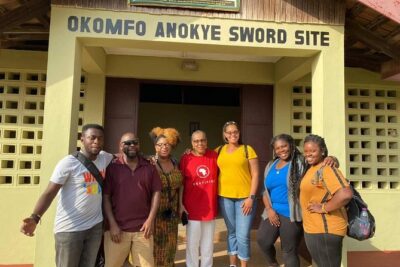
Browse the lists this tour appears in