
Reviewed · KUMASI TOURS
Bonwire Namimg Ceremony and Kente Tourist Center
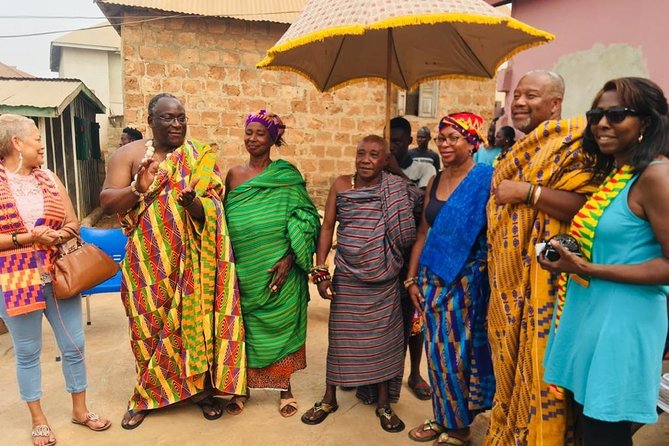
Bonwire gives you two meaningful ways to meet Ghanaian culture in one outing: you can try weaving Kente cloth and then receive an Akan name at the village palace. The ceremony is led by the chief and Queen-mother, with prayers, village leaders, and a certificate to take home.
I like the personal scale of this private tour, and I like that it connects a hands-on craft with a living cultural tradition rather than treating Bonwire as a quick photo stop. The possible drawback is the price: at $180 per person, it makes the most sense if you value private transport, a local meal, and close guidance more than a low-cost sightseeing trip.
Key points to know before you book
- Bonwire is tied to Kente cloth: You learn about the village’s place in Kente production and try weaving the cloth yourself.
- The Akan ceremony is led by village authorities: The chief, Queen-mother, and other leaders pray for you and give you a traditional name.
- You receive a certificate: Your new Akan name is recorded on a certificate included with the experience.
- Solomon and Kwame may handle your day: Solomon is identified as the guide and Kwame as the driver in the available booking feedback.
- The tour is private: Only your own group takes part, with an air-conditioned vehicle and pickup offered.
- You get lunch and bottled water: A local meal is included, while alcoholic drinks and dinner are not.
Why Bonwire makes a strong cultural stop from Kumasi
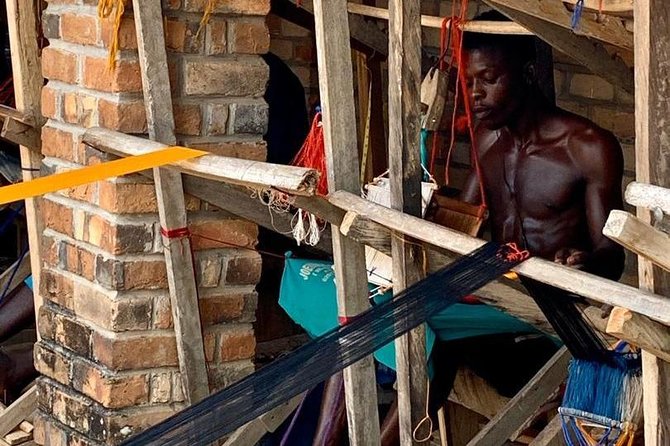
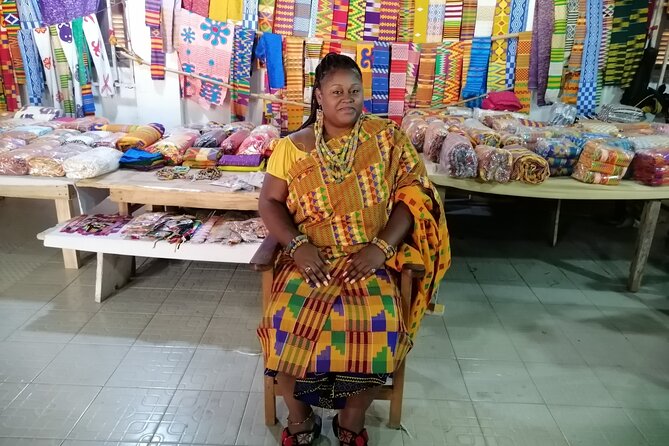
The most appealing part of this outing is its connection to ordinary cultural practice. You are not only looking at finished cloth behind glass. At the Bonwire Kente Weaving Centre, you sit down and try the craft yourself, with an explanation of what the cloth means and why Bonwire is associated with its creation.
That small act changes the visit. Kente can look intricate and effortless when it hangs in a shop, but weaving gives you a better sense of the work behind each strip. You will not become a master weaver in one session, but you will leave with a clearer idea of how much care goes into the patterns and construction.
The visit also gives you a break from Kumasi’s city traffic and noise. Bonwire is a village setting, and this private half-day format lets you spend time there without being folded into a large group. If you want photographs, conversation, and a calmer pace, that matters.
The tour is advertised at about five hours and thirty minutes. The Bonwire stop itself is listed at three hours, so the remaining time likely covers the journey, pickup, and meal. I would keep the whole half day open rather than schedule another fixed activity immediately afterward.
A few more Ghana days to weigh up
- Tour Kumasi City Like a Local
★ 4.5 · 34 reviews - Traditional naming ceremony For African Diasporas in Kumasi
★ 5.0 · 10 reviews - Kumasi City Tour
★ 5.0 · 8 reviews
Trying your hand at Kente weaving
The weaving centre is the practical heart of the first part of the experience. You are shown how Kente is woven and given a chance to operate the loom or work through the process under instruction. The supplied details do not promise a finished piece to take away, so you should view this as a hands-on lesson rather than a guaranteed craft purchase.
That distinction is useful. The value here is in understanding the method and meaning of Kente, not simply collecting a souvenir. You can look closely at the cloth, ask questions through your guide, and see how the finished patterns begin as deliberate work at the loom.
Kente has a strong place in Ghanaian cultural identity, and Bonwire is presented as the village where the famous cloth was invented. The centre therefore gives context to something you may already have seen in photographs, shops, ceremonies, or formal clothing elsewhere in Ghana.
I would wear comfortable clothes and avoid bringing anything that makes it awkward to sit and work with your hands. The experience is described as soothing, which fits the slower rhythm of craft work. Still, the exact weaving setup and amount of time at the loom are not specified, so the pace may depend on your group and the centre’s schedule.
This stop is especially well suited to you if you prefer doing something over simply looking. Children and adults may find the activity engaging, although the tour information only says that most people can participate. It does not provide a specific minimum age or detailed accessibility information.
Receiving an Akan name at Bonwire Palace
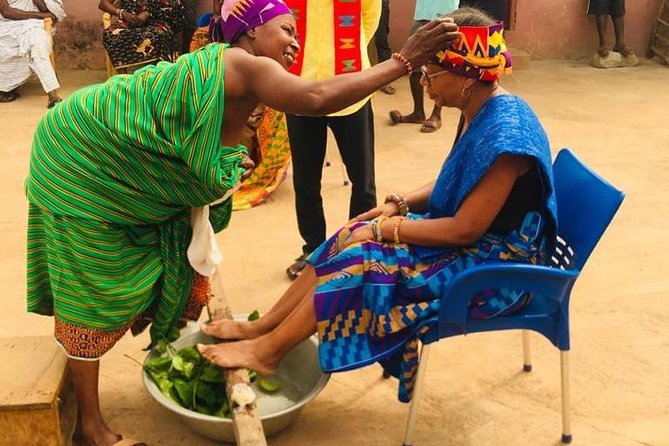
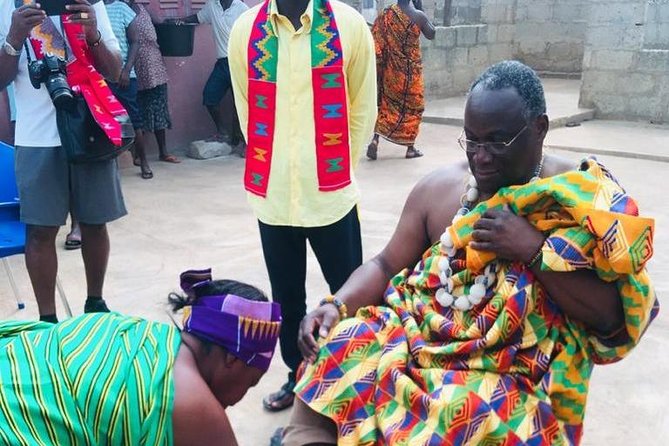
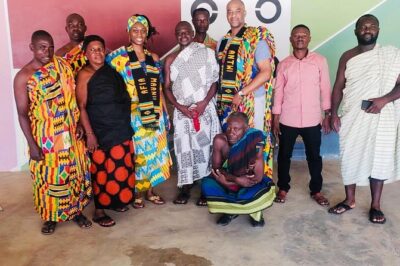
The second major part takes place at Bonwire Palace. Here, the chief and village leaders, along with the Queen-mother, conduct an Akan naming ceremony for you. They pray for you and assign a traditional name connected to Akan custom, then provide a certificate with your new name.
This is more personal than a standard cultural demonstration. You are not watching a staged performance from the edge of a crowd. Your own group takes part, and the ceremony gives the visit a clear point of connection between you and the local community.
The certificate is a practical keepsake, but the ceremony itself is the more important part. A name carries meaning, family ties, and spiritual significance in Akan culture. The information provided does not explain how each name is selected or whether you can request a particular type of name, so you should approach this as a traditional designation rather than a name-shopping exercise.
You may want to ask your guide about the meaning of your name after the ceremony. The tour description promises the name and certificate, but it does not promise a written explanation beyond what is given during the visit. A little curiosity from you can help turn the moment into a fuller cultural exchange.
The presence of the chief and Queen-mother also gives the ceremony a formal setting. Dress and behavior should be respectful. The available information does not specify a dress code, so modest, comfortable clothing is the sensible choice.
What the private format adds
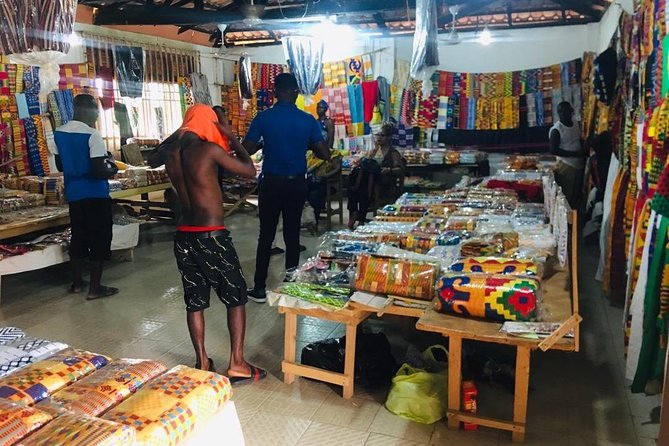
This is a private activity, meaning only your group participates. That gives you more control than a large coach tour. You can ask questions as they come up, spend more time understanding the weaving, and discuss the ceremony with your guide without competing with a crowd.
Pickup is offered, and transport is in an air-conditioned vehicle. The tour begins at Kwame University according to the supplied description, while the booking details also indicate pickup is available. Confirm the exact pickup point and time when you book, since the information gives both a starting reference and a pickup option rather than one single meeting instruction.
The guide and driver named in the available feedback are Solomon and Kwame. Solomon is described as the guide and Kwame as the driver, with particular praise for their attention, care, professionalism, and understanding of the area. The same account says they collected a group from the airport after an early arrival in Kumasi, which suggests that airport pickup may be possible in some arrangements, but you should confirm that directly rather than assume it is included for every booking.
The private format also affects the price. At $180 per person, this is not a bargain-basement village visit. You are paying for a dedicated vehicle, guide, pickup service, included fees, a ceremony, water, and lunch. For one person, or for a small group, the cost may feel high. For a group that would otherwise need to arrange a car, driver, guide, and separate cultural visits, the package may be easier to justify.
Same departure point, a completely different day out:
- The Cape Coast Day Tour
★ 5.0 · 525 reviews - Experience the Beauty, History and the Culture Of Accra in a Day
★ 5.0 · 323 reviews - The Cape Coast Tour
★ 5.0 · 177 reviews - From Accra: Cape Coast, Elmina Castle & Kakum Park Day Tour
★ 4.6 · 144 reviews
Lunch, timing, and the practical details
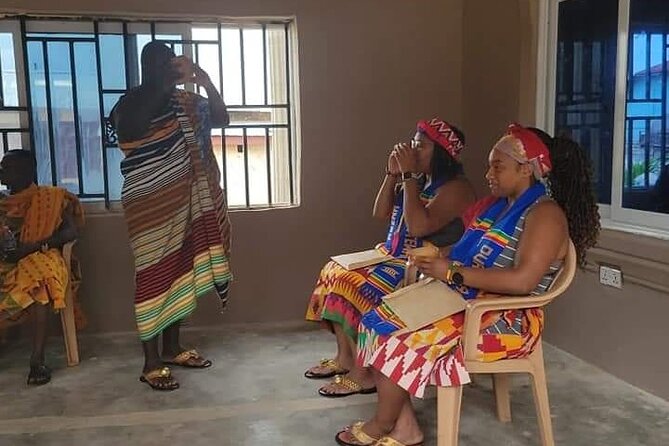
A local meal is included, which is helpful during a five-and-a-half-hour outing. The information does not name the dish or restaurant, so do not book this expecting a specified menu. Think of lunch as a convenient part of the day and a chance to try local food, not the main reason to choose the tour.
Bottled water is also included. Alcoholic beverages and dinner are not, so plan accordingly if you want drinks beyond water or if your day continues into the evening.
The experience is offered with a mobile ticket, and confirmation is received at the time of booking. It is listed as operating on Mondays between 7:00 AM and 9:30 PM for the stated availability period. That broad opening window does not mean the experience lasts all day. Your confirmed start time will determine the actual schedule.
The weather policy matters because this is an outdoor and village-based outing. If poor weather forces cancellation, you are offered another date or a full refund. You can cancel for a full refund up to 24 hours before the start time. Inside that 24-hour window, payment is not refunded and changes are not accepted.
Service animals are allowed, and the tour is near public transportation. Most people can participate, but the supplied details do not describe step-free access, seating arrangements, or specific support for mobility needs. If those points matter to you, ask before paying.
Who will get the most from this experience
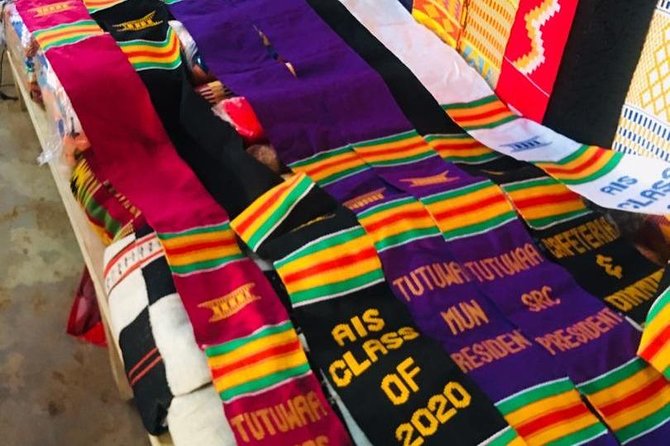
I would recommend this outing to you if you want cultural contact with a clear personal element. The naming ceremony gives the day emotional weight, while the weaving lesson keeps it active and grounded. Families, couples, small groups, and solo visitors who prefer private guiding are the best match.
It also suits anyone who wants to bring home more than photographs. The certificate is a tangible reminder, and the new Akan name can give you a story to share long after the visit. The value comes from participation and conversation, not from checking off a long list of sights.
You may want to choose another activity if your main goal is Kumasi’s urban attractions, markets, or a packed schedule of landmarks. This tour leaves the city for a village setting and spends substantial time on two focused cultural experiences. It is not designed as a fast-moving highlights tour.
The $180 cost deserves a close look. Since lunch, water, transport, taxes, the ceremony certificate, and admission are included, you are not paying only for entry to Bonwire. You are paying for a private arrangement and a guide who can manage the day. The price is easier to defend for two or more people sharing the experience, though the listed charge is still per person.
The perfect booking date is worth considering too. The activity is commonly reserved about 12 days ahead, so I would not leave it until the last morning of your Kumasi stay, especially if you need a particular pickup time or have a fixed travel schedule.
My call on the Bonwire naming ceremony
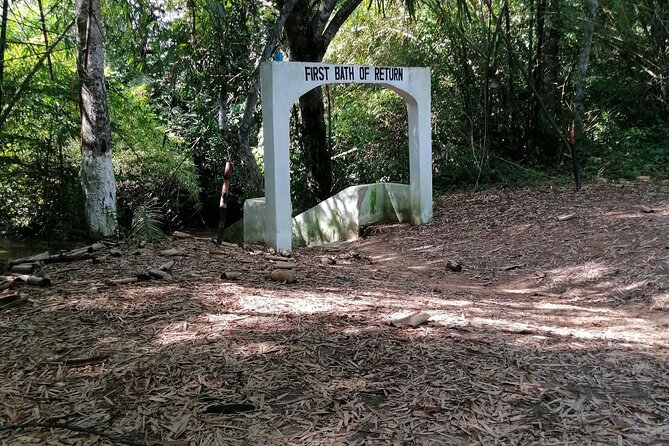
Book this experience if you want a quiet, personal encounter with Ghanaian culture and like the idea of taking part rather than standing back. The combination of Kente weaving and an Akan naming ceremony is unusual, and the chief, Queen-mother, certificate, local meal, and private transport give the half day a clear sense of purpose.
I would pause only if $180 per person is beyond your comfort zone or if you prefer independent, low-cost travel. For everyone else, the strongest reasons to book are the intimate format, the chance to work with Kente cloth, and the ceremony that gives you a traditional Akan name. Confirm the pickup point, timing, and any accessibility needs before booking, then keep the rest of the day flexible.
FAQ
How long does the Bonwire naming ceremony experience last?
The experience lasts approximately five hours and thirty minutes. The Bonwire portion is listed as three hours, with the rest of the time allowing for transport and the included meal.
What is included in the price?
The price includes an air-conditioned vehicle, all fees and taxes, bottled water, a local meal, and a certificate showing your new Akan name.
Is pickup available?
Yes. Pickup is offered, and the description identifies Kwame University as the starting point. Confirm your exact pickup location and time when booking.
Is this a private tour?
Yes. Only your group participates in this private activity.
What happens during the Akan naming ceremony?
The chief, Queen-mother, and village leaders pray for you and give you a traditional Akan name. You receive a certificate with the name on it.
Can I cancel for a full refund?
Yes. You can cancel at least 24 hours before the experience start time for a full refund. Cancellations or changes made less than 24 hours in advance are not accepted for a refund. If poor weather causes the tour to be canceled, you are offered another date or a full refund.
Just added around Ghana
- Accra: Tafi Kente Village, Monkey Sanctuary &Wli Waterfalls★ 4.5 · 4 reviews
- 2 Days (1 night) Elephants Safari at Mole Park with Round – trip flights★ 5.0 · 4 reviews
- Full-Day Wli water Falls and Monkey Sanctuary Private Tour★ 5.0 · 4 reviews
- 3 Days Zaina Luxury Experience Mole Safari★ 5.0 · 5 reviews
- 4 Days Safari to Mole park and Wechiau Hippos★ 5.0 · 19 reviews
- Quad Biking and Waterfalls Adventure★ 5.0 · 5 reviews
- Hike Mount Afadjato and Visit Wli Falls and Monkey Sanctuary★ 4.8 · 5 reviews
- Discover Cape Coast and Elmina Castle with Kakum★ 5.0 · 5 reviews
Kumasi Tours, compared.
Traditional naming ceremony For African Diasporas in Kumasi
Read our review →
Lake Bosomtwe Boat Cruisely and Kumasi City Tours
Read our review →
Browse the lists this tour appears in