
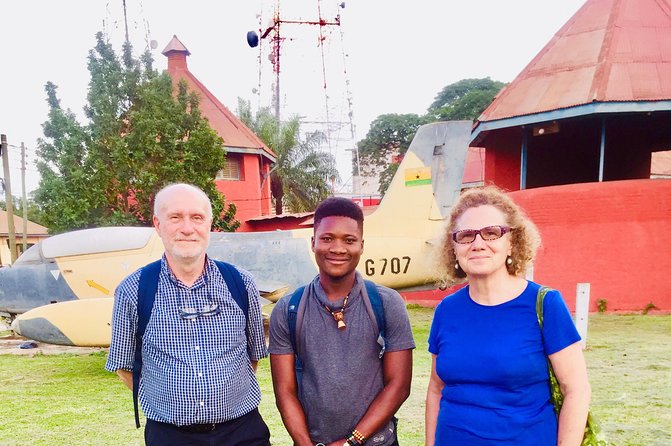
Reviewed · KUMASI TOURS
Tour Kumasi City Like a Local
Kumasi’s story comes alive through its royal sites, crowded markets, and everyday street scenes. This private five to six-hour city tour takes you from the Ashanti royal past at Manhyia Palace to the enormous Kejetia Market, with local food and transport included.
I like the strong historical focus, especially the chance to connect the Ashanti Empire with Yaa Asantewaa, King Osei Tutu I, and the Golden Stool. I also like the personal touch from Bilson, who has helped visitors move through Kumasi by taxi, tro-tro, tuk-tuk, and on foot.
The main drawback is that transport between stops may not always feel neatly organized. You may use several kinds of local transport, and one past experience felt more like a walking tour than expected. That can be part of the local flavor, but it is worth knowing before you book.
Key points to know before booking
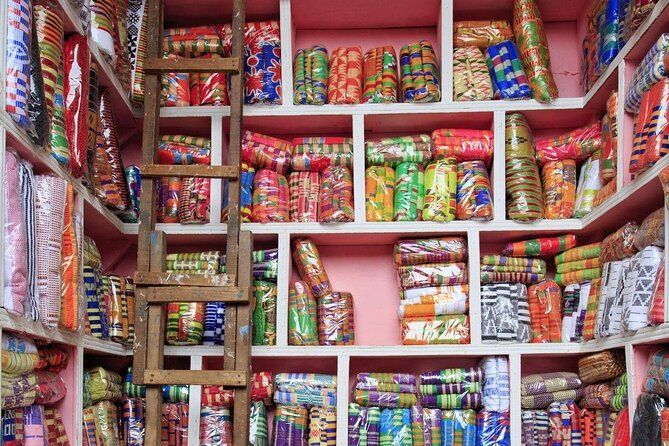
- See four major Kumasi sights: The route includes Manhyia Palace Museum, Okomfo Anokye Sword Site, Prempeh II Museum, and Kejetia Market.
- Meet Kumasi through a private guide: Only your group takes part, and Bilson can tailor the pace and local contact to your interests.
- Connect with Ashanti history: Palace objects, royal clothing, gold items, the Golden Stool story, and the role of Yaa Asantewaa give the tour real historical weight.
- Eat local food: Lunch is included, giving you a taste of Kumasi cuisine rather than just a look at the city.
- Expect flexible local transport: Cars, taxis, tro-tros, tuk-tuks, and walking may all come into play between stops.
- Allow room for the market: Kejetia is huge, crowded, and absorbing. It is not a quick photo stop.
Why Kumasi is worth seeing with a local guide
Kumasi is Ghana’s second-largest city and the historic center of Ashanti power. It is also known as the Garden City because many flower species originated in the area. This tour does not focus on a formal botanical garden, though. Its view of Kumasi comes through royal buildings, sacred sites, public markets, food, and conversations along the way.
That mix is useful because Kumasi can be hard to read at first. The city is large, active, and full of movement. A guide gives you a thread to follow, explaining why certain places matter instead of leaving you to look at them as isolated sights.
Bilson Tours Gh operates this as a private activity, so your group does not share the guide with a larger busload. That matters in a market, where a large group would be awkward. It also gives you a better chance to ask questions about Ashanti customs, local transport, food, and daily life.
Bilson is the guide most closely associated with the experience. His strengths are a warm manner, care with guests, city knowledge, and a willingness to adjust the day. He has also helped people visit Kente villages farther outside Kumasi, though that is an extra possibility rather than a guaranteed part of this route.
A few more Ghana days to weigh up
- Bonwire Namimg Ceremony and Kente Tourist Center
★ 5.0 · 40 reviews - Traditional naming ceremony For African Diasporas in Kumasi
★ 5.0 · 10 reviews - Kumasi City Tour
★ 5.0 · 8 reviews
Manhyia Palace Museum and the Ashanti royal story
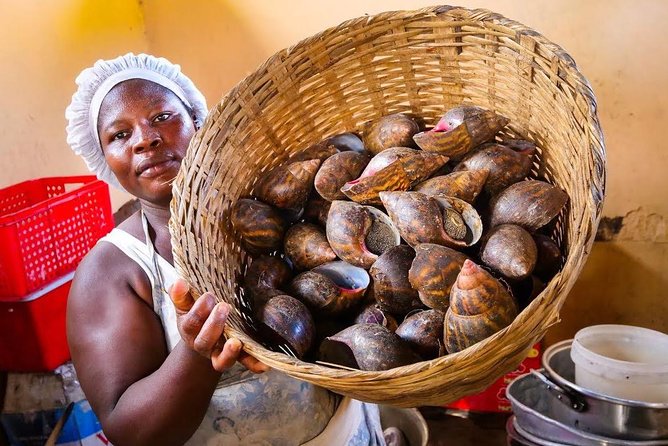
The first stop is Manhyia Palace Museum, with about an hour set aside for the visit. You begin with a video about Ashanti history, then move through rooms containing original objects from the royal world.
This is the best place to get the basic story before seeing the other sites. The guide can explain the importance of the Ashanti Empire, the role of the king, and the place of the royal stool in Ashanti culture. Yaa Asantewaa, remembered as a war queen, is also part of the story.
The museum is near the open field used for the Akwasidae gathering, when traditional chiefs meet every six weeks. The timing of that ceremony is important: the tour does not promise that you will see it, but the nearby setting helps you understand that Manhyia is more than a museum building.
I like beginning here because it gives the rest of the day a framework. Without this introduction, the sword site and royal artifacts could feel like separate curiosities. After Manhyia, they become pieces of one connected account of power, belief, and resistance.
The museum visit is structured and fairly focused. If you want long, quiet time with every object, an hour may feel short. If you want an efficient introduction to Kumasi and Ashanti traditions, the timing works well.
Okomfo Anokye Sword Site and the Golden Stool
The Okomfo Anokye Sword Site brings you to one of the most important origin stories of the Ashanti nation. Here, you learn about King Osei Tutu I, regarded as the founder of the Ashanti nation, and the chief priest Okomfo Anokye.
The story says that the Golden Stool descended into Osei Tutu I’s lap and became a central symbol of Ashanti unity. At the site, a sword is said to have been driven into the ground by Okomfo Anokye almost 300 years ago. Tradition holds that no one can pull it out.
That legend gives the stop its power. You are not simply looking at an old object. You are visiting a place tied to the creation story of a nation and to the spiritual authority of its leaders.
The visit lasts about an hour and includes admission. Your guide’s explanation is especially important here, since the meaning is not obvious from the physical site alone. Ask questions if you want to understand the difference between the Golden Stool story and the sword tradition.
The stop may appeal most to people who enjoy oral tradition, sacred history, and the way legends shape national identity. If your interest is limited to architecture or scenery, this may be a quieter and more interpretive hour.
Prempeh II Museum and royal objects
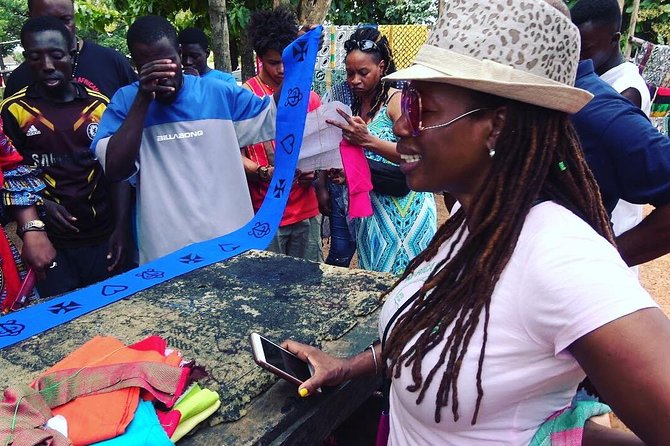
The Prempeh II Museum continues the royal theme with a more personal look at Ashanti court life. The building was constructed to resemble an Ashanti chief’s house, which gives the displays a setting that fits the subject.
The collection includes items linked to King Prempeh II: war attire, ceremonial clothes, jewelry, protective amulets, bathing and dining equipment, furniture, royal insignia, and gold-weighing pieces. These objects help you picture the practical side of royal life, not just its formal ceremonies.
I find this kind of museum useful because small objects often explain a culture better than grand statements. Clothing shows status and ceremony. Amulets point to protection and belief. Dining and bathing equipment reveal ordinary routines inside an extraordinary household.
The scheduled visit is about an hour. You will get more from it if you let the guide explain what each type of object meant. The museum is not simply a room of attractive artifacts. It presents authority through clothing, ritual, household goods, and symbols.
Some displays may be more engaging to you than others. That is normal on a city tour with several museums. The advantage here is the range: you are not seeing only weapons or only ceremonial pieces.
Same departure point, a completely different day out:
- The Cape Coast Day Tour
★ 5.0 · 525 reviews - Experience the Beauty, History and the Culture Of Accra in a Day
★ 5.0 · 323 reviews - The Cape Coast Tour
★ 5.0 · 177 reviews - From Accra: Cape Coast, Elmina Castle & Kakum Park Day Tour
★ 4.6 · 144 reviews
Kejetia Market, Kumasi’s great public hub

Kejetia Market is the most street-level part of the day. From a distance, its huge rusting roofs can look almost unreal, covering a market often described as the largest in West Africa. It has about 11,000 stalls and at least four times as many people working there.
Inside, the market can feel disorienting. It is crowded, noisy, and packed with goods and movement. That is precisely why a guide helps. Bilson can keep you oriented while explaining how the central market fits into Kumasi life.
You are scheduled to spend about an hour here, but the pace may depend on the conditions on the day. A short visit gives you a useful first look. A longer walk lets you notice more of the market’s structure and the work taking place around you.
Do not expect a polished shopping center. Kejetia is a working market, and the atmosphere can be intense. Keep your belongings secure, stay close to your guide, and ask before photographing people or merchandise. The tour includes the market visit, but purchases are your responsibility.
This stop also shows the difference between seeing Kumasi from a vehicle and seeing it on foot. You may pass through stalls, walk through busy sections, and encounter the practical rhythms of buying and selling. Some people will love that direct contact. Others may find the crowd and noise tiring.
One useful point to clarify at the start is how much market time you want. A past experience praised the local contact but wished for more explanation of the market’s inner workings. Tell your guide if you want more history, more shopping time, or more observation of daily work.
Local lunch and a taste of Kumasi
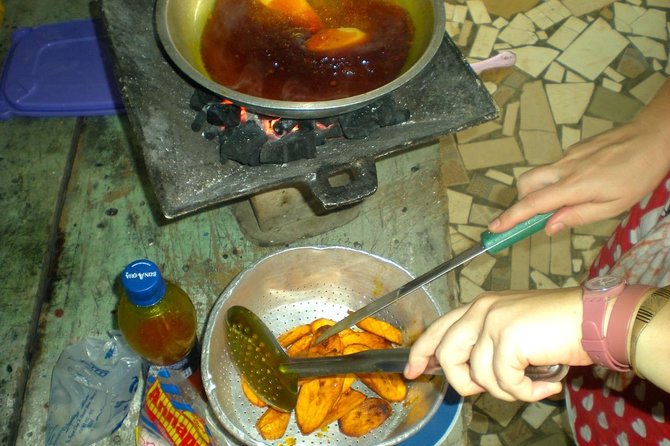
Lunch is included, and it is one of the better features for anyone who wants more than sightseeing. Food gives you another way into the city, especially when your meal is part of the day’s local experience rather than an afterthought.
The exact dish and venue are not specified, so you should not book this expecting a particular menu. You can expect local Kumasi cuisine as part of the package, with your guide helping you understand what you are eating.
One practical point is atmosphere. A past meal took place in a setting where the music was loud enough to make conversation difficult. If you want to ask questions over lunch, say so. The meal can still be enjoyable, but the setting may be more social and noisy than quiet.
Because lunch is included with transportation, entry fees, and guiding, the $80 price has reasonable value for someone who wants an organized introduction. You are paying for access and interpretation, not just four admission tickets. The value is strongest for a first visit, especially if you would otherwise need to arrange several short rides and work out the city’s historic sites yourself.
The price is less compelling if you prefer to move slowly, choose your own restaurants, or spend most of the day shopping. In that case, a private guide may still help, but this fixed route could feel too structured.
Getting around Kumasi during the five-hour route

Transportation is included, but the day may use more than one method. People have experienced taxis, tro-tros, tuk-tuks, and walking as they moved from one place to another. That can give you a more genuine sense of Kumasi than staying in one private vehicle all day.
It can also make the logistics less smooth. One past experience noted that the guide did not have a personal vehicle, while another described the day as involving a good deal of walking. The operator apologized for vehicle problems, so you should be ready for some flexibility.
Ask at pickup how the transport plan will work. That simple question can help you understand how much walking is expected and whether the group will use public transport or hired vehicles between stops.
The tour offers hotel pickup, and confirmation is provided when you book. It is near public transportation, though the experience itself includes arranged transport. Most people can participate, but the combination of market walking and changing vehicles may be tiring for anyone who has difficulty walking or standing for long periods.
The total time is listed as approximately five to six hours. Since each of the four main stops is planned for about one hour, the remaining time is used for lunch, transfers, and walking. Traffic and market conditions can affect the exact pace.
What the guide adds to the day
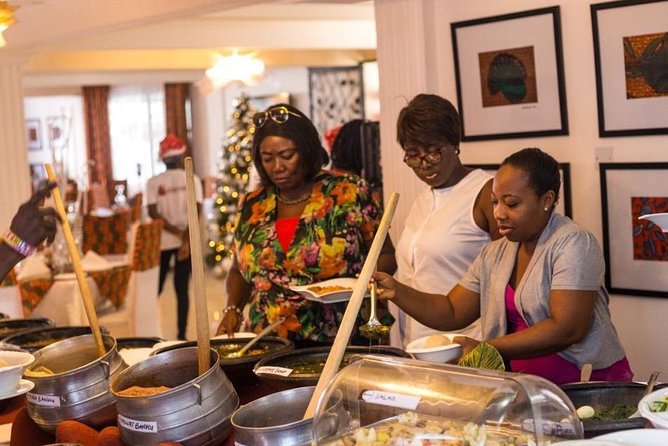
The best reason to choose this tour is the guide. The route itself is easy to list, but the meaning of the sites is harder to grasp without local explanation.
Bilson has been praised for being kind, polite, friendly, and attentive. He has taken photographs at the sites and near the market, helped an older participant while walking, and adjusted the experience to suit different interests. Those details suggest a guide who pays attention to the people in front of him, not just the clock.
At the same time, the quality of the day depends partly on what you ask for. Some experiences felt highly personal and full of useful explanation. Another wanted more detail about local life and the market’s inner workings. I would arrive with questions ready: How does the Akwasidae gathering work? What does the Golden Stool represent? How do people use Kejetia? What should I know before trying the local food?
The private format makes those questions easier. You can ask for more history at the museums, more time at the market, or a slower pace if your group needs it.
Who should book this Kumasi tour?
I would recommend this experience to a first-time visitor who wants a broad introduction to Kumasi in one day. It suits people interested in Ashanti history, royal traditions, local food, and everyday city life.
It is also a good fit if you want company while handling a large market and unfamiliar transport. The private setup is useful for couples, families, or small groups that want a guide focused on them.
You may want a different plan if you dislike crowds, loud places, changing vehicles, or walking between stops. The tour is not designed as a quiet museum circuit. Kejetia is intense, and the transport may feel improvised at times.
The experience may also suit visitors who want to add a Kente connection. Bilson has helped people reach Kente villages outside Kumasi, but that extension is not part of the stated four-stop route, so arrange it separately rather than assuming it is included.
Booking value, timing, and cancellation
The cost is $80 per person. That includes transportation, entrance fees, lunch, and guide service. For a private five to six-hour tour covering four major sites, that is a fair package, particularly when you consider the time saved arranging separate admissions and rides.
The tour is commonly booked about 20 days ahead, so planning early is sensible if your Kumasi dates are fixed. Mobile tickets are offered, and pickup is available.
Free cancellation applies when you cancel at least 24 hours before the start time. Inside that window, the payment is not refunded and changes are not accepted. The experience requires good weather. If poor weather causes cancellation, you receive a different date or a full refund.
Should you book Tour Kumasi City Like a Local?
Book it if you want Kumasi explained through its royal sites, sacred traditions, food, and market life, with Bilson or another local guide helping you make sense of the city. The strongest parts are the private format, the Ashanti focus, the included lunch and admissions, and the chance to use ordinary local transport.
Go in expecting flexibility rather than polished sightseeing logistics. You may walk more than expected, change vehicles, and find the market noisy. If that sounds like a fair trade for seeing a more everyday side of Kumasi, this $80 tour is a practical and worthwhile introduction.
FAQ
Where does the tour take place?
The tour takes place in Kumasi, Ghana.
How long does the experience last?
The tour lasts approximately five to six hours.
Is hotel pickup available?
Yes. Pickup is offered.
Is this a private tour?
Yes. Only your group participates in the private activity.
Which sites are included?
The route includes Manhyia Palace Museum, Okomfo Anokye Sword Site, Prempeh II Museum, and Kejetia Market.
Are entrance fees included?
Yes. Entrance fees are included in the tour price.
Is lunch included?
Yes. Lunch featuring local food is included.
Is transportation included?
Yes. Transportation is included, though the day may involve different local methods such as taxis, tro-tros, tuk-tuks, and walking.
Can most people participate?
Most people can participate. The tour may involve walking and movement through a crowded market.
What is the cancellation policy?
You receive a full refund if you cancel at least 24 hours before the start time. Cancellations or changes within 24 hours are not accepted for a refund. If poor weather causes the operator to cancel, you can choose another date or receive a full refund.
Just added around Ghana
- Accra: Tafi Kente Village, Monkey Sanctuary &Wli Waterfalls★ 4.5 · 4 reviews
- 2 Days (1 night) Elephants Safari at Mole Park with Round – trip flights★ 5.0 · 4 reviews
- Full-Day Wli water Falls and Monkey Sanctuary Private Tour★ 5.0 · 4 reviews
- 3 Days Zaina Luxury Experience Mole Safari★ 5.0 · 5 reviews
- 4 Days Safari to Mole park and Wechiau Hippos★ 5.0 · 19 reviews
- Hike Mount Afadjato and Visit Wli Falls and Monkey Sanctuary★ 4.8 · 5 reviews
- Discover Cape Coast and Elmina Castle with Kakum★ 5.0 · 5 reviews
- 9 Day Ghana Wildlife and Culture Tour★ 5.0 · 5 reviews
Kumasi Tours, compared.

Bonwire Namimg Ceremony and Kente Tourist Center
Read our review →
Traditional naming ceremony For African Diasporas in Kumasi
Read our review →
Lake Bosomtwe Boat Cruisely and Kumasi City Tours
Read our review →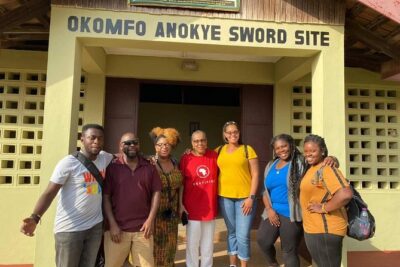
Browse the lists this tour appears in