
Reviewed · CAPE COAST & ELMINA CASTLE TOURS
10 Days Trip to Cape Coast and Elmina Castles from Accra
The emotional center of this 10-day Ghana heritage tour is the coast, where Elmina Castle, Cape Coast Castle, and Assin Manso connect the history of West Africa with the painful story of the transatlantic slave trade. Yet the trip begins in Accra and continues to Kumasi, so you get more than a castle visit. You see Ga neighborhoods, Ashanti traditions, royal museums, craft villages, forests, and modern Ghana in one carefully packed journey.
I like the combination of private transportation and a small group capped at 10 people. I also like the human touch built into the program, from the welcome at the airport to the memorial ceremony by the sea and the chance to meet artisans in Ahwiaa, Ntonso, and Bonwire. The main caution is pace. Long drives, early starts, museums, ceremonies, and festival events can make this a tiring trip, especially if you prefer relaxed mornings.
Key points to know before booking
- Elmina and Cape Coast Castles: Walk through two major coastal sites tied to European trade and the captivity of Africans before shipment overseas.
- Ashanti culture in Kumasi: Visit Manhyia Palace Museum, the Prempeh II Jubilee Museum, and craft villages making wood carvings, Adinkra cloth, and Kente.
- PANAFEST and Emancipation Day: The schedule is built around cultural events, but exact performances and ceremonies depend on the festival calendar.
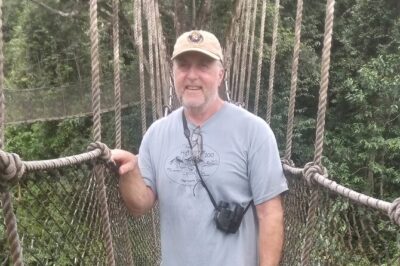
- Kakum’s canopy walkway: Choose between a forest-floor walk and a high walkway with seven bridges more than 150 feet above the ground.
- Small-group service: Private transport and a maximum of 10 participants allow room for questions and some adjustment to the group’s needs.
- A full package: Hotels, airport transfers, daily breakfast, nine dinners, bottled water, entrance fees, guides, and ground transport are included.
Starting in Accra with a proper welcome
Your trip begins at Kotoka International Airport. After immigration, baggage collection, and customs, you meet the cultural guide and transfer to your Accra hotel. The guide stays with you for the duration of the tour, which gives the journey a consistent voice instead of handing you to a new escort in each city.
The first evening is deliberately light. After check-in, you receive an Akwaaba welcome and a briefing on the days ahead. Dinner is included, and the rest of the evening is yours to rest. That pause matters after an international flight, since the next morning begins with an orientation on Ghanaian history, customs, safety, and health.
The package includes round-trip airport and hotel transfers, so you do not need to arrange a taxi after landing or find your way back to the airport at the end. A day-room is also provided on the final day before your airport transfer, a useful detail if your flight leaves later in the day.
Other visits to the Cape Coast and Elmina castles:
- The Cape Coast Day Tour
★ 5.0 · 525 reviews - The Cape Coast Tour
★ 5.0 · 177 reviews - From Accra: Cape Coast, Elmina Castle & Kakum Park Day Tour
★ 4.6 · 144 reviews
Accra’s story, from Black Star Square to Jamestown
Day two gives you a quick but meaningful introduction to Accra. The visit to the W.E.B. Du Bois Centre places Ghana within the wider Pan-African movement. Du Bois, an American scholar and activist, chose to spend his final years in Ghana, and the center honors that connection.
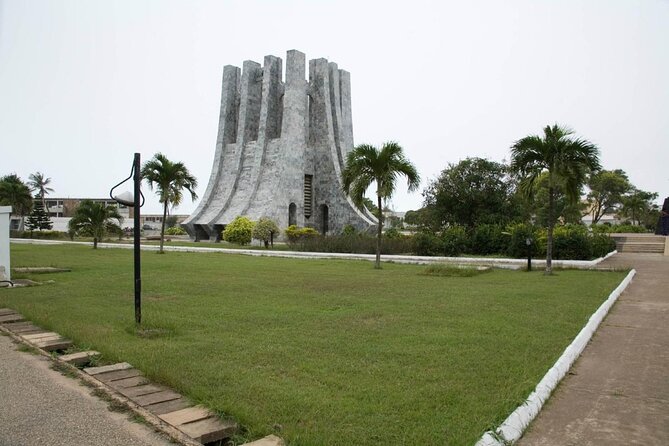
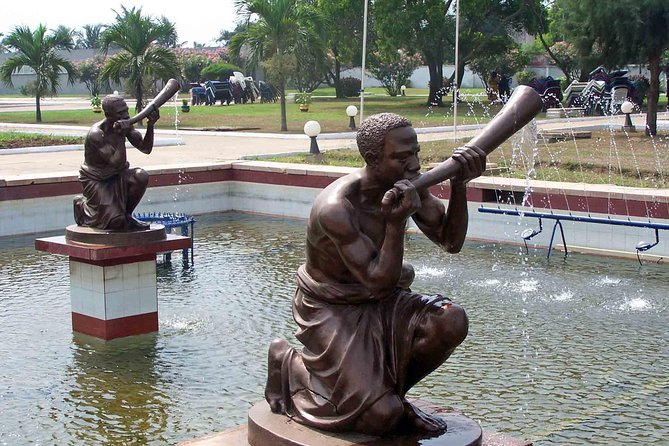
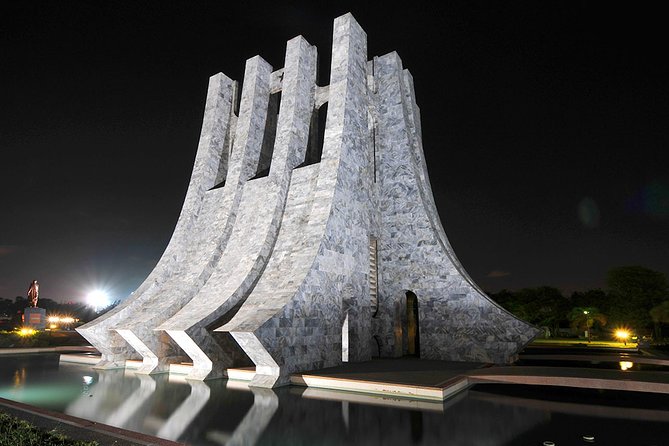
At Independence Square, you see the flame of African Liberation, lit by Kwame Nkrumah in 1961. The nearby Black Star Square is tied to Ghana’s independence and national identity. The Kwame Nkrumah Memorial Park then brings the story closer to the man who led Ghana to independence and is buried there.
I like this opening because it gives you political and cultural context before the trip reaches the castles. You are not simply moving from monument to monument. You are learning how Ghana presents its own past, its independence, and its place in Africa.
The day also takes you into Jamestown, one of Accra’s old coastal communities. Here, the contrast with newer Accra is sharp. You see the fishing community and lighthouse, along with Brazil House, a building connected to the return of Afro-Brazilian families to Ghana. The visit can feel visually striking, but remember that Jamestown is a working neighborhood, not a polished museum district. Follow your guide’s advice about photography and respectful behavior.
The published stop length is about two hours, but the full day includes several sites and an orientation. Ask your guide how the timing will be handled, especially if you want enough time at both the memorial park and Jamestown.
Kumasi and the living traditions of the Ashanti
After breakfast and checkout on day three, you travel to Kumasi, the historic seat of the Ashanti Empire. The drive shifts the focus from Ghana’s capital and coast to the Akan world of central Ghana. The Ashanti are the largest Akan ethnic group in Ghana, and their political and artistic traditions remain a major part of national culture.
At the National Centre for Culture, you visit the Prempeh II Jubilee Museum and see working studios connected to brass making, pottery, and batik. This is one of the tour’s better choices because you are not limited to display cases. The craft studios help show how objects are made and why these skills still matter.
Day four is the strongest cultural day of the itinerary. At Ahwiaa, woodcarvers make royal stools, walking sticks, and fertility dolls. You can purchase carved items, but take time to ask about the symbols and intended use before shopping. A carving is more meaningful when you know what it represents.
At Ntonso, artisans hand-stamp patterns onto cotton to produce Adinkra textiles. These symbols carry messages about values, wisdom, leadership, and daily life. The tour gives you a chance to see the process rather than simply buying a finished cloth in a shop.
Bonwire is known for handwoven Kente. Watching the weavers work on traditional looms gives you a better sense of why Kente costs more than a mass-produced printed fabric. If you plan to buy, ask your guide about quality, sizing, and how to pack the cloth for the journey home.
Manhyia Palace Museum adds the royal side of Ashanti culture. The palace museum is named for the former Asantehene, or Ashanti ruler, and helps connect the craft traditions to the political structure that supported them.
Shopping is part of these visits, but it should not overshadow them. You may feel pressure to buy, especially at craft stops. Set a budget before leaving Accra, and remember that a polite no is enough.
The long transfer from Kumasi to Elmina
Day five completes the Kumasi portion before the road turns south toward Cape Coast and Elmina. You pass colonial-era buildings and monuments connected with Ashanti history, and you drive by Kejetia Market, described as one of West Africa’s largest and most active marketplaces.
The itinerary does not list a full market visit, so treat the drive-by as a glimpse rather than a shopping stop. If you are interested in seeing more, ask whether the schedule allows time. Traffic and road conditions can affect the answer.
The drive from Kumasi to the coast is one of the tour’s practical challenges. You cover a substantial distance after several busy days, so keep water close and use the bottled water supplied each day. The private vehicle makes the transfer easier than public transport, but it does not remove the travel time.
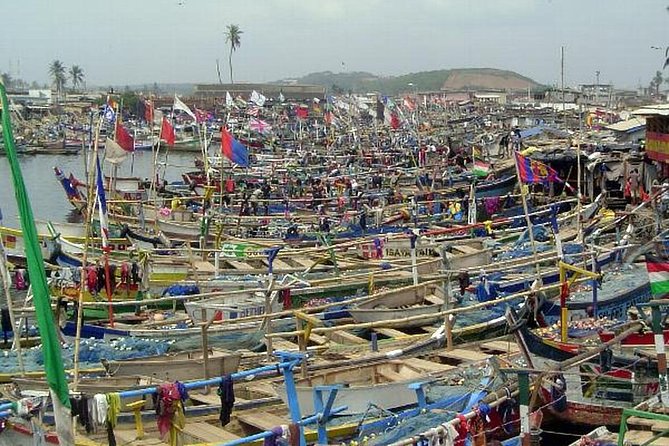
That evening, you walk through Elmina Township. At the harbor, brightly painted fishing canoes prepare for another night at sea. This is an important balance to the castle visit that follows. Elmina is not only a place of historical interpretation. It is also a living fishing town with families, work, markets, and a shoreline that remains part of daily life.
A few more Accra days to weigh up
- Experience the Beauty, History and the Culture Of Accra in a Day
★ 5.0 · 323 reviews - Accra Detailed City Tour
★ 4.5 · 118 reviews - Accra Guided City Tour Experience
★ 4.7 · 88 reviews - Accra Guided City Tour Experience
★ 5.0 · 76 reviews
Kakum National Park and the choice of two walks
Day six gives you a break from museums and memorial sites. You can stay at the hotel and use the pool or ocean, or visit Kakum National Park.
Kakum is one of Ghana’s best-known national parks and protects one of the remaining tropical forest areas in West Africa. You have two ways to see it. The forest walk covers about two kilometers and focuses on birds, butterflies, plants, and the medicinal uses of forest species. The tour also notes more than 40 mammal species in the park, including monkeys and the shy forest elephant, though a sighting is not promised.
The more famous option is the canopy walkway. It stretches about 1,000 feet across seven bridges, with platforms more than 150 feet above the ground. You get views across the treetops, but the height can be uncomfortable for some people. Choose the forest-floor walk if you would rather learn about plants and wildlife without crossing suspended bridges.
I appreciate that this choice is built into the day. Not every person wants a physically demanding activity after several days of touring. At the same time, the park visit is optional in practice, so you should confirm the exact arrangement with Continent Tours if Kakum is a priority for you.
PANAFEST activities are scheduled for the evening when available. Since festival programs can change, your guide will take you to the events operating during your visit rather than promising one fixed performance.
Elmina Castle and the memorial by the sea
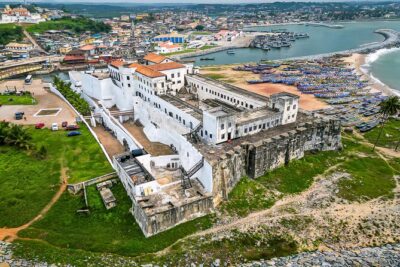
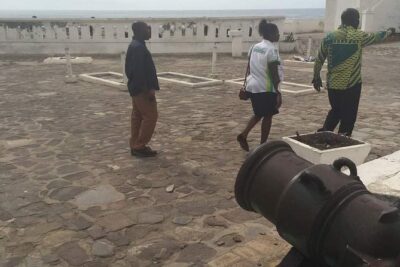
Day seven brings the tour’s most difficult visit: Elmina Castle, also known as St. George’s Castle. Built by the Portuguese, it was the first European structure constructed in sub-Saharan Africa. The castle’s rooms and grounds tell a painful story of trade, imprisonment, forced separation, and shipment across the Atlantic.
This is not a light sightseeing stop. The castle visit can be emotionally heavy, particularly when you move through the confined spaces associated with enslaved Africans. Give yourself time to listen, ask questions, and process what you see. The guide’s role matters here, and the program’s strongest praise has gone to guides such as Kwaku, Elvis, George, Joshua, Nii Solomon, and Nee for their care, clear explanations, and willingness to answer questions.
After the castle, you walk down to the beach for a memorial ceremony. Participants throw bread into the water, a wreath and candle are sent out to sea, and a moment of silence honors those who died during the Middle Passage. The ceremony adds a personal and reflective element to the visit, though you should approach it with respect rather than treating it as a photo opportunity.
Assin Manso, the river site, and Cape Coast Castle
On day eight, you travel to Assin Manso. The Slave River Site is described as the place where captured Africans were washed before being taken to the coastal castles. It was the final inland transit point before confinement and shipment to the Americas and the Caribbean.
You also see the burial site of two formerly enslaved people from the United States and Jamaica. Their remains were re-interred in 1998 during Ghana’s first Emancipation Day celebration. This makes Assin Manso an important part of the story because it connects the coastal forts to the inland capture and transport system.
The program title promises Cape Coast Castle, and the overall tour centers on both Cape Coast and Elmina. However, the day-by-day details specifically describe Elmina Castle, while Cape Coast Castle is listed in the general highlights. Confirm before booking that your dates include the Cape Coast Castle visit you expect.
PANAFEST activities continue during this part of the trip. The festival gives the historical program a present-day setting, with performances, public gatherings, and cultural events connected to African identity and the global African family. Exact activities depend on the schedule in force during your visit.
Emancipation Day and Ghana’s traditional chiefs
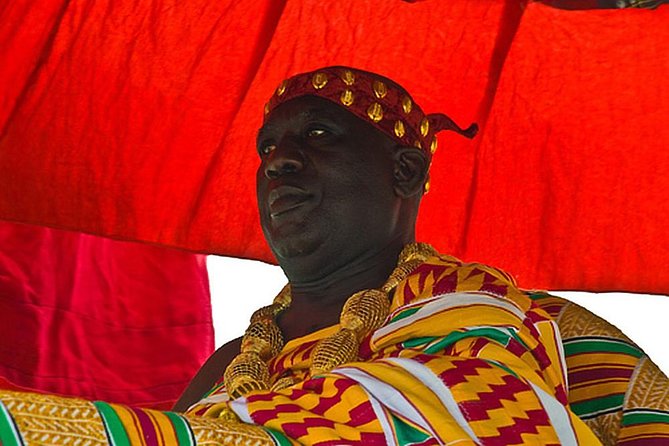
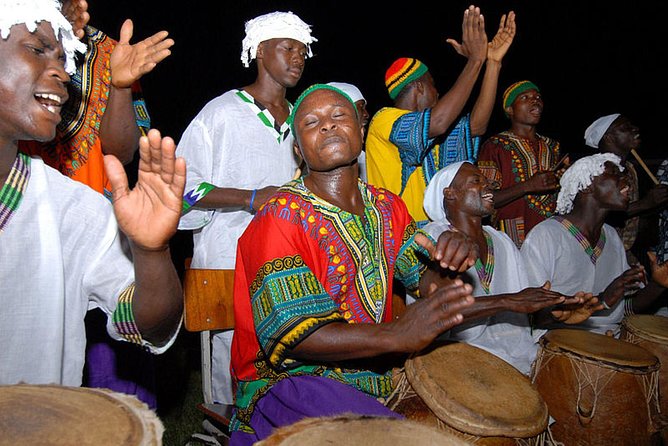
Day nine returns to Assin Manso for the opening of the Emancipation Day celebration. The Grand Durbar brings together traditional chiefs and people from the Central Region. Expect ceremonial clothing, gold jewelry, beads, drumming, and dancing.
The fontomfrom drums provide the evening’s rhythm, and the event offers a public display of Ghanaian authority and tradition. It is a different kind of historical lesson from the castles. Instead of standing inside a former prison or trading fort, you see living institutions and customs presented by the people who maintain them.
This day is highly date-dependent. If your trip does not coincide with the relevant festival and Emancipation Day calendar, the exact program may differ. Confirm the event dates before paying, especially if the ceremony is the main reason you are choosing this tour.
The farewell dinner at the hotel is included. Food is one area where you may want to set expectations carefully. Included dinners make budgeting easier, but some meals may repeat familiar Ghanaian dishes, and several meals can be spicy. If you do not eat hot food, tell the guide and hotel staff early. One useful improvement would be more vegetable variety at dinner.
What the $4,695 price really covers
At $4,695 per person, this is a premium guided trip. The value depends on how much support you want. The price includes hotels, private vehicle transport, an experienced cultural guide, airport assistance, round-trip airport transfers, daily breakfast, nine dinners, bottled water, and admission tickets where noted.
It does not include international airfare, visas, travel insurance, gratuities, unlisted meals, or personal purchases. Craft shopping can add up quickly, so build that into your budget.
For a small group, a private vehicle, a guide present throughout, and nine nights of meals, the package can make sense for someone who wants a structured heritage journey rather than assembling separate hotels, drivers, and entrance tickets. The value is weaker if you want many free afternoons or prefer to arrange your own meals and sightseeing.
The tour has a 4.8 rating from 31 ratings and a 97 percent recommendation figure. The strongest pattern is the staff service. Guides and drivers are praised for being attentive, safe, adaptable, polite, and friendly. Joshua is repeatedly singled out for helping participants adjust and handling unusual requests. That personal support is a real part of what you are paying for.
Who should book this Ghana tour?
You should consider this trip if you want a serious cultural program with strong historical focus. It suits first-time visitors to Ghana, people tracing African heritage, and anyone who wants Accra, Kumasi, and the Central Region covered in one organized route.
It also suits you if you value a guide who can explain context while you travel. The itinerary is not just a string of stops. It links independence in Accra, Ashanti power and craft in Kumasi, the coastal slave forts, Assin Manso, and present-day cultural festivals.
You may want a slower or more flexible trip if you dislike long drives, scheduled dinners, group ceremonies, or repeated hotel departures. The itinerary is full, and one past group found the pace strenuous. Ask about hotel names, exact driving times, the Cape Coast Castle visit, and the PANAFEST dates before booking.
Most participants can take part, and the group size is limited to 10. The canopy walkway requires comfort with height, but the forest-floor option provides a gentler alternative. Free cancellation is available when you cancel at least 24 hours before the local start time.
Should you book it?
Book this tour if you want Ghana presented as a connected story, from Accra’s independence landmarks to Ashanti craft traditions and the coastal sites tied to enslavement. The experienced guides, private transport, small group, and included meals remove much of the work from planning.
Skip it if your ideal vacation means unhurried days, independent dining, or choosing each stop as you go. Before booking, confirm the exact festival calendar and Cape Coast Castle visit. For the right person, this is a demanding but meaningful route, one that gives you both difficult history and the living culture of Ghana today.
FAQ
Where does the tour begin?
The tour begins at Kotoka International Airport in Accra, Ghana. Meeting assistance and airport-to-hotel transportation are included.
How long does the tour last?
The tour lasts approximately 10 days and ends back at the Accra meeting point.
What cities and regions does the tour visit?
The route includes Accra, Kumasi, Elmina, Cape Coast, and Assin Manso. It also includes Kakum National Park.
Is transportation private?
Yes. Transportation is provided in a private vehicle, with an experienced cultural guide accompanying the group for the duration of the tour.
How large is the group?
The activity has a maximum of 10 participants.
Are meals included?
Daily breakfast and nine dinners are included. Meals not listed, along with personal expenses, are not included.
What can I do at Kakum National Park?
You can choose a forest-floor nature walk of about two kilometers or cross the canopy walkway, which has seven bridges and viewing platforms more than 150 feet above the ground. You may also choose to relax at the hotel pool or ocean instead.
Is PANAFEST included every day?
The schedule includes attendance at scheduled PANAFEST activities with your guide. The exact events depend on what is scheduled during your visit.
Are flights and visas included?
No. Round-trip international flights and visas are not included. Travel insurance and gratuities for the guide and driver are also excluded.
How does cancellation work?
You can receive a full refund if you cancel at least 24 hours before the experience start time. Changes or cancellations made less than 24 hours in advance are not accepted for a refund.
Just added around Accra
- Accra: Tafi Kente Village, Monkey Sanctuary &Wli Waterfalls★ 4.5 · 4 reviews
- 2 Days (1 night) Elephants Safari at Mole Park with Round – trip flights★ 5.0 · 4 reviews
- Full-Day Wli water Falls and Monkey Sanctuary Private Tour★ 5.0 · 4 reviews
- A Taste of West Africa – Ghana Togo & Benin★ 5.0 · 5 reviews
- Quad Biking and Waterfalls Adventure★ 5.0 · 5 reviews
- 9 Day Ghana Wildlife and Culture Tour★ 5.0 · 5 reviews
- Accra Architectural Tour★ 3.9 · 5 reviews
- Cape Coast: Kakum National Park, Castles, & Hans Cottage★ 4.8 · 5 reviews
Cape Coast & Elmina Castle Tours, compared.

Cape Coast, Elmina Castle & Kakum Park Day Tour
Read our review →
The Homecoming Experience To Cape-coast And Elmina.
Read our review →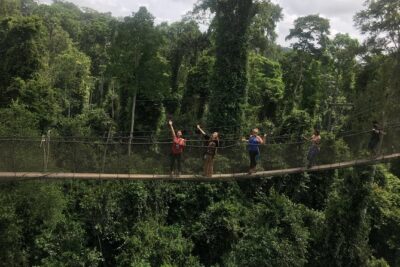
Cape Coast/Elmina Slave Dungeon and Canopy Walkway Private Tour
Read our review →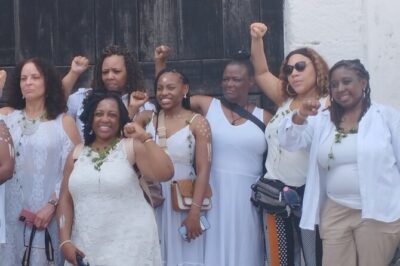
Assin Manso Slaves River and Cape Coast Castle Tour
Read our review →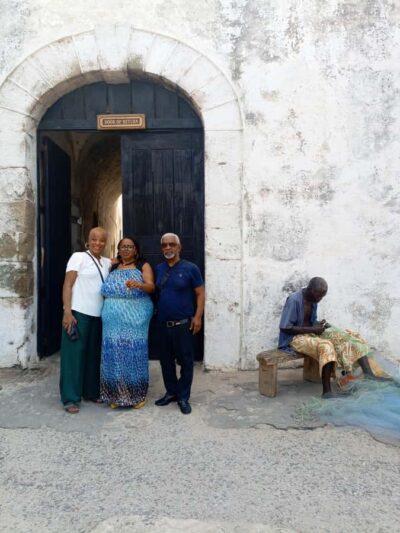
Browse the lists this tour appears in