
Reviewed · ACCRA TOURS
Accra Detailed City Tour
Accra comes into focus through its contrasts on this private city tour: museum collections, colonial forts, street markets, independence monuments, and a final hour beside the sea. The route gives you a useful first look at Ghana’s capital without asking you to plan every taxi, ticket, and stop yourself.
I especially like the mix of serious historical sites and everyday Accra at Makola Market. I also like the flexible guide-led format, with guides such as Clinton, Alex, and Kwame helping with questions, local customs, and market bargaining. The main thing to check before booking is transportation: depending on traffic and group size, you may move between stops by Uber, Yango, or local taxi rather than in a dedicated tour vehicle.
Key things to know before booking
- Seven major stops cover a lot of Accra: The National Museum, Makola Market, Independence Square, the Centre for National Culture, W.E.B. Du Bois Center, Kwame Nkrumah Memorial Park, and Labadi Beach all appear in the main route.
- Jamestown adds a walking section: You explore one of Accra’s oldest districts and see James Fort and Ussher Fort, though the exact timing is not listed.
- Your guide shapes the experience: Clinton, Alex, and Kwame are named in the supplied feedback, with praise focused on friendliness, punctuality, explanations, and help at the market.
- Traffic can change the plan: The tour may use air-conditioned Uber, Yango, or local taxis to avoid long delays, but one poor experience involved cancellations and waiting.
- Plan for heat and walking: One customer had to walk a considerable distance in the sun, so comfortable shoes, water, and sun protection matter.
- Labadi Beach is the finish: The tour ends with about an hour to sit, eat, and have a drink at Accra’s busiest beach.
Why this Accra tour works as a first look
Accra is not a city you understand from a single monument. Its story is spread across forts, markets, government squares, memorials, museums, and neighborhoods where daily life carries on around all of them.
That is the useful idea behind this tour. In roughly three to six hours, you move from Ghana’s precolonial past to the Atlantic slave trade, the independence era, Pan-African thought, modern shopping districts, and beach life. The route is broad rather than slow and specialized. You will see many places, but some stops will be brief.
The experience is private, so only your group takes part. That matters if you want to ask direct questions or adjust the pace. A group interested in Ghanaian independence may want more time at Independence Square and the Kwame Nkrumah Memorial Park. Another group may care more about textiles, instruments, and shopping at the Centre for National Culture.
The guide is an important part of the value. Clinton is praised for being attentive, engaging, and good at explaining the city. Alex is described as helpful when discussing Ghanaian figures and national identity. Kwame is noted for punctual communication and for rearranging visits when closures affected the original plan.
Those details suggest a tour that can feel personal when the guide is well matched to your interests. Still, you should not assume every stop will receive a long talk from the tour guide. At the museum and memorial sites, some interpretation may come from staff at the attraction itself.
A few more Accra days to weigh up
- The Cape Coast Day Tour
★ 5.0 · 525 reviews - Experience the Beauty, History and the Culture Of Accra in a Day
★ 5.0 · 323 reviews - The Cape Coast Tour
★ 5.0 · 177 reviews
Starting at Accra Mall and dealing with city traffic
The meeting point is Accra Mall at Plot C11, Tetteh Quarshie Interchange, on Spintex Road. The stated operating days are Monday through Saturday, with hours listed from 9:30 AM to 11:30 PM. Confirm your exact pickup time when booking because the sightseeing program itself is generally described as a daytime experience.
Traffic is not a minor detail here. Accra’s roads can slow the route, especially during peak periods, and parking near central sights may be difficult. The operator may arrange Uber, Yango, or local taxi services between stops. The supplied information says these options are air-conditioned, but one customer reported small cars without air conditioning and long waits caused by canceled ride requests.
That difference is important. Ask clearly before the tour begins:
- Is a dedicated vehicle included for your group?
- If not, who requests and pays for each ride?
- What happens if a driver cancels?
- Will walking between nearby sights replace a short vehicle ride?
The operator says the ride-hailing approach helps avoid sitting in traffic for hours and can make the four-to-six-hour route more practical. That is a reasonable local solution, but it is not the same as having a private car and driver waiting throughout the day. If secure, continuous transportation is central to your booking decision, settle this point in writing.
National Museum: the best historical starting point
The National Museum of Ghana is scheduled for about an hour, and admission is included. Opened on March 5, 1957, it is the largest and oldest of the six museums administered by the Ghana Museums and Monuments Board.
The collection gives you a broad introduction to Ghana rather than a single narrow subject. The archaeology section reaches from the Stone Age to the more recent past. The ethnography gallery includes chiefs’ regalia, musical instruments, gold weights, beads, textiles, stools, and pottery.
The gold weights are especially useful for understanding the Akan trading world. They are small, carefully made objects that once helped measure gold dust, and they connect material culture to commerce and political power. Textiles, stools, and regalia show how authority and identity are expressed through objects, not just through written records.
The museum also includes items from other parts of Africa, such as Senufo masks from Côte d’Ivoire and Zulu figures and beadwork from southern Africa. That wider collection helps place Ghana in a continental setting.
Give yourself permission to ask questions here. The museum is a place where an attentive guide can help connect objects to Ghanaian life. Some of the most useful explanations may also come from museum staff, who have been praised for their clear and kind assistance.
The drawback is time. An hour is enough for an introduction, not a careful study of every gallery. If museums are your main reason for booking, tell the guide early that you want to protect this stop from traffic delays.
Makola Market: Accra at street level

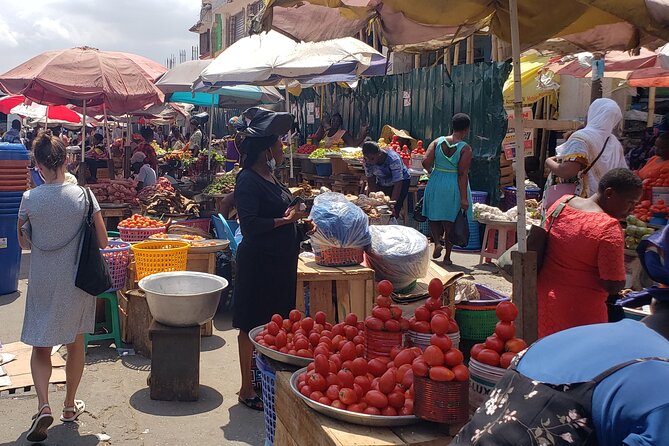
About 45 minutes is set aside for Makola Market, in central Accra. It is a large indoor and open-air market district where women traders sell a wide range of local goods.
This is the stop that gives the tour its strongest sense of present-day Accra. You can look at the goods, watch negotiations, take photographs when appropriate, and shop for something small. The point is not simply to collect a souvenir. It is to see how commerce, conversation, movement, and social life meet in the city center.
Your guide can be useful here in practical ways. One guide and driver were specifically praised for helping with bargaining. That does not mean every price should be treated as a contest. Ask what a fair price is, decide what you actually want, and keep the exchange friendly.
Forty-five minutes passes quickly. Makola can feel demanding if you are not used to crowds, noise, heat, or uneven walking conditions. Keep your valuables secure, stay near your guide, and ask before photographing people. If you want to shop seriously, you may need more time than this itinerary allows.
This is also one place where flexibility matters. If you dislike markets, you can ask to shorten the stop. If you want fabric, crafts, or food products, tell the guide what interests you instead of waiting until the end.
Same departure point, a completely different day out:
- From Accra: Cape Coast, Elmina Castle & Kakum Park Day Tour
★ 4.6 · 144 reviews - Accra Guided City Tour Experience
★ 4.7 · 88 reviews - Accra Guided City Tour Experience
★ 5.0 · 76 reviews - Accra To Cape Coast And Elmina Day Tour
★ 5.0 · 75 reviews
Independence Square and the Black Star symbols
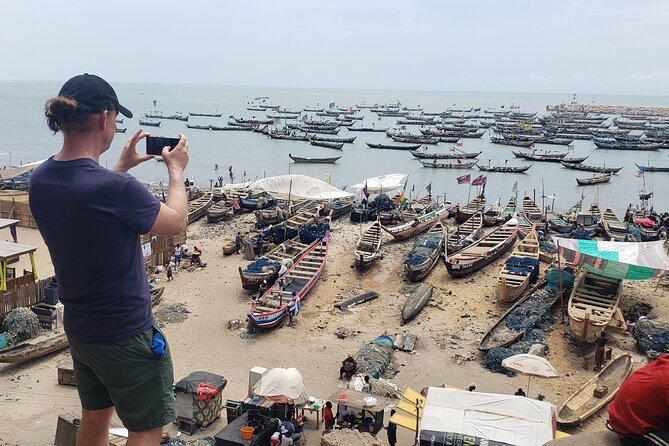
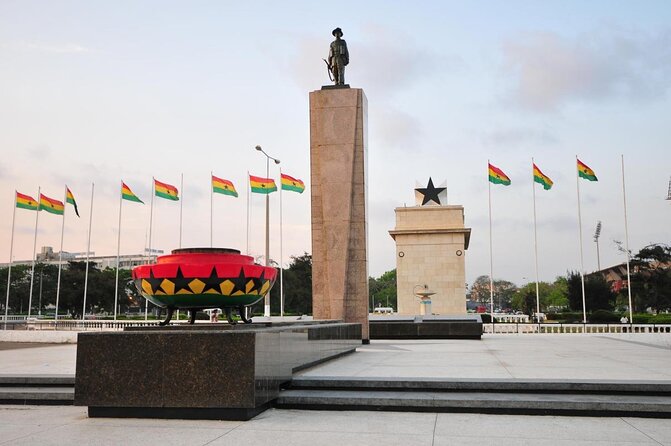
The next major sight is Independence Square, scheduled for about 30 minutes. The square contains monuments tied to Ghana’s independence struggle, including the Independence Arch, Black Star Gate, and Liberation Day Monument.
This is not a stop for a long indoor visit. It is a place to look at the scale and symbolism of the national monuments, hear how Ghana’s independence fits into the wider African independence movement, and take photographs.
Ghana became independent in 1957, and the date matters because it made the country a major symbol of African self-rule. Your guide can help turn the monuments from photo backgrounds into political statements. Ask about the Black Star, which appears in Ghanaian national symbolism and points to African freedom and unity.
The open setting means little shade. You may be standing on broad paved spaces under strong sun, so a hat and water are practical. Traffic problems can also show up here. One difficult outing involved a wait of about 20 minutes while the guide negotiated a local taxi after arriving at the square.
Centre for National Culture: crafts, bargaining, and music
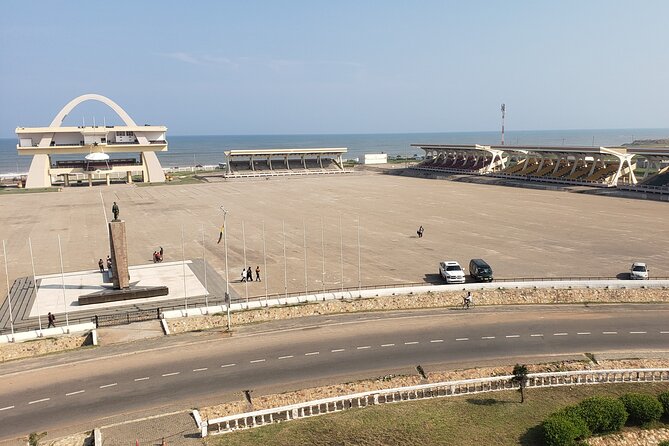
The Centre for National Culture is described as the country’s largest craft market. The scheduled visit lasts about 45 minutes, with time to browse stalls, bargain for souvenirs, and possibly receive extra instruction in drums or other local instruments from people at the market.
This is a better place than Makola for craft shopping. You might find carvings, textiles, drums, and other handmade items, but the supplied information does not guarantee a particular product or lesson. Ask what is available that day and agree on any price before accepting an item or instruction.
The market is also a useful place to think about the difference between buying a factory-made souvenir and buying something tied to Ghanaian craft traditions. If you purchase a drum or another instrument, remember that size and weight may affect how you carry it home.
I would keep the bargaining light and respectful. The goal is to pay a fair amount, not to win by forcing the lowest price. A guide who knows the local setting can make this exchange easier, particularly if you are unsure how prices are discussed.
Walking through Jamestown and its old forts
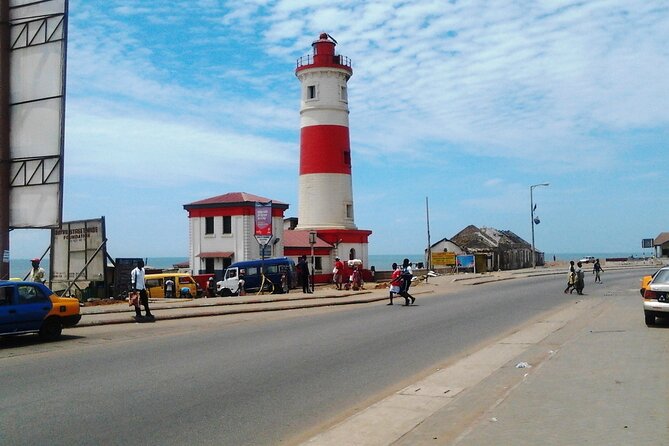
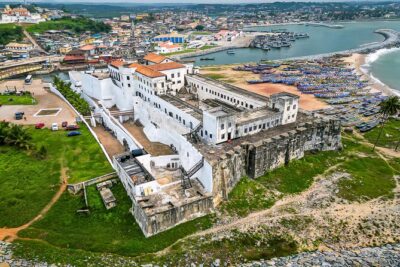
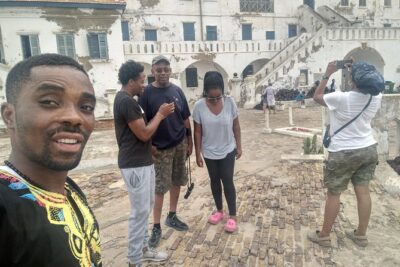
Jamestown is included as a walking tour, making it one of the more distinctive parts of the day. It is one of Accra’s oldest districts, and the route includes James Fort and Ussher Fort, both linked to the colonial era.
This section changes the rhythm. After museums and monuments, you are on foot in an older neighborhood, looking at the built setting rather than only entering formal attractions. The forts point to Accra’s role in European trade, colonial power, and the Atlantic world.
The exact time for Jamestown is not given, so ask how long you will walk and whether the forts will be entered or viewed from outside. The listed itinerary names a visit to the two forts, but access can depend on opening conditions and the guide’s timing.
Wear shoes that can handle walking, and expect heat. One customer felt that the walking distance in the sun was too much, which is a useful warning for anyone with limited mobility or low tolerance for midday heat. The tour states that most people can participate and that service animals are allowed, but it does not provide detailed accessibility information. Ask specific questions if that affects your plans.
W.E.B. Du Bois Center and the Pan-African connection
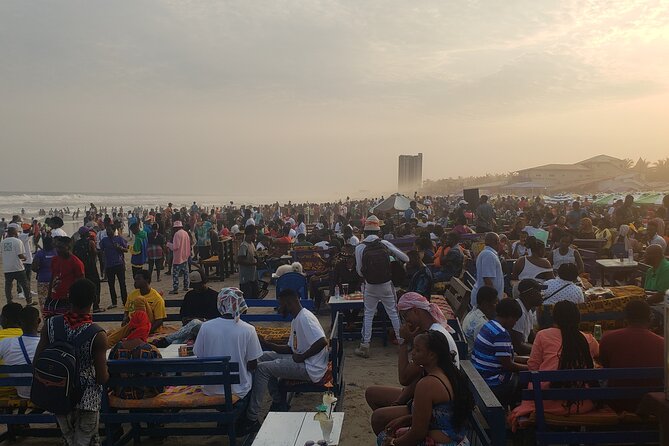
The W.E.B. Du Bois Center is scheduled for about 45 minutes. It was the home, library, and final resting place of William Edward Burghardt Du Bois, the American-born social justice campaigner who spent his final years in Ghana.
The center includes a museum with personal items and his library. It also has an open-air theater used for lectures, workshops, seminars, and cultural events.
This stop gives the tour an international frame. Ghana’s story is not isolated within its borders. Du Bois connected African American history, colonialism, civil rights, and Pan-African politics, and his presence in Accra shows the country’s importance to that wider movement.
I would ask the guide to explain why Du Bois chose Ghana and how his work relates to Kwame Nkrumah. That question links this stop to the memorial park later in the route. The 45-minute schedule should give you a focused visit, though not enough time for every book, display, and idea.
Kwame Nkrumah Memorial Park and independence history
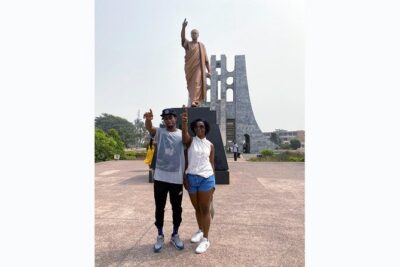
The Kwame Nkrumah Memorial Park honors Ghana’s first Prime Minister and President, Dr. Kwame Nkrumah, who lived from September 21, 1909, to April 27, 1972. The visit is allotted about 45 minutes, with admission included.
This is one of the most important stops for understanding modern Ghana. Nkrumah’s career is tied to the country’s independence and to Pan-African political ideas. The memorial gives the national story a face and a central figure.
The stop works best after Independence Square and the Du Bois Center. At Independence Square, you see the public symbols of national freedom. At the Du Bois Center, you consider international Black political thought. At Nkrumah’s memorial, those themes come together around the leader who helped put Ghana at the center of African independence.
The timing is again brisk. If political history is your main interest, tell your guide. A flexible private tour can give you more context here, but only if you make your priorities clear before traffic and earlier stops use up the day.
Labadi Beach: an easy finish after a full route
The final stop is Labadi Pleasure Beach, also called La Pleasure Beach. About an hour is planned here, and the tour ends at the beach.
This is a practical finish. After a hot day of walking, markets, museums, and monuments, you can sit down, cool off, and choose food or drinks. The beach offers local, continental, and international options, so your group does not need to agree on one style of meal.
Some people may want to stay with dinner after the formal tour ends, but the listed experience itself ends at Labadi Beach. Ask the guide about the exact arrangement if you want extra time.
Do not treat this as a quiet, empty shoreline. It is described as Accra’s busiest beach, so expect an active public setting. The appeal is the chance to relax among local beach life, not solitude. If you prefer a calm beach visit, this may be the least essential stop. If you like ending a sightseeing day with food and the sea, it is a welcome change of pace.
What $80 means for the value
The price is $80 per person. Admission is included at the listed stops, and the experience is private, so your group does not share the guide with strangers.
That can be fair value if you are visiting Accra for the first time and want the city’s main historical sights arranged in one day. You are paying for planning, local assistance, a guide, admissions, and the chance to ask questions along the way. The private format also gives you some control over how long you spend at markets, museums, and memorials.
The value drops if you expect a dedicated car, fixed door-to-door transport, or long guided talks at every attraction. Transportation may rely on ride-hailing services or local taxis, and delays can eat into the sightseeing time. One poor experience raised exactly this concern, with cancellations, waiting, and disappointment over the lack of a company vehicle.
For a solo booking, ask about transport before paying. For a small group, the price may feel stronger because you share the private guide cost. Group discounts are offered, but the amount is not specified, so request the current price for your party.
The tour is booked an average of 23 days in advance. That does not mean you must book exactly that far ahead, but it suggests planning early if your dates are fixed.
Who should book this Accra city tour?
I would recommend it to a first-time Accra visitor who wants a broad introduction and does not want to arrange seven different stops alone. It suits people who enjoy a mix of formal sights and ordinary city life, especially those interested in independence history, Pan-African ideas, Ghanaian crafts, and markets.
It is also a good fit for a private group that wants a flexible day. You can ask to spend more time at the National Museum, seek help with shopping, or adjust the order if a site is closed.
I would be more cautious if you have limited walking ability, dislike heat, or need guaranteed private transport. The route is full, the Jamestown section involves walking, and traffic can force changes. Sunday closures have already caused one group to miss some planned places, although the guide later arranged visits on another day for another customer.
The tour is rated 4.6 out of 5, with 91 percent recommending it. The strongest praise centers on friendly guides, good communication, local explanations, market help, and the amount seen in a single day. The clear weak point is not the list of sights. It is the uncertainty around transportation and the risk that a crowded, hot day may leave some stops shortened.
Should you book it?
Book this tour if you want Accra’s major landmarks in one private outing and you are comfortable with a flexible schedule. Clinton, Alex, and Kwame are all associated with positive experiences of the tour, and a good guide can make the connections between the museum, market, forts, memorials, and beach much clearer.
Before booking, confirm the vehicle arrangement, ask which attractions will be open on your chosen day, and state your top two priorities. Bring water, sun protection, comfortable shoes, and patience for traffic.
If those conditions suit you, the tour offers a useful first chapter of Accra. If you need guaranteed private transportation and exact completion of every listed stop, choose only after the operator confirms those details.
FAQ
How long does the Accra Detailed City Tour last?
The tour lasts approximately three to six hours. The listed stops total close to six hours before allowing for traffic and the walking tour of Jamestown.
What are the meeting and ending points?
The tour starts at Accra Mall, Plot C11 Tetteh Quarshie Interchange, Spintex Road, Accra. The activity ends back at the meeting point, although the sightseeing route itself ends at Labadi Beach.
Is this a private tour?
Yes. Only your group participates in the private activity.
Is transportation included?
Transportation arrangements can involve Uber, Yango, or local taxi services, particularly when traffic and parking make a dedicated vehicle less practical. Confirm before booking whether a private vehicle will be provided for your group.
Which sights are included?
The route includes the National Museum of Ghana, Makola Market, Independence Square, the Centre for National Culture, Jamestown, James Fort, Ussher Fort, the W.E.B. Du Bois Center, Kwame Nkrumah Memorial Park, and Labadi Pleasure Beach.
Are admission tickets included?
Admission tickets are listed as included for the National Museum, Makola Market, Independence Square, the Centre for National Culture, the W.E.B. Du Bois Center, Kwame Nkrumah Memorial Park, and Labadi Beach.
Can I cancel for a full refund?
You can cancel for a full refund up to 24 hours before the experience start time. Cancellations or changes made less than 24 hours in advance are not accepted for a refund.
Is the tour suitable for most people?
The activity states that most people can participate and that service animals are allowed. Because Jamestown includes walking and the day can involve heat and time on foot, ask the operator about your specific mobility needs.
Just added around Accra
- Experience Aburi Botanical Gardens And Boti Water Falls In A Day.★ 5.0 · 3 reviews
- Experience Cape Coast Castle and Kakum National Park★ 4.5 · 3 reviews
- Accra city tour★ 4.5 · 3 reviews
- Half-Day City Tour of Accra★ 5.0 · 3 reviews
- 7days/6nights Eco Tourism★ 5.0 · 3 reviews
- 3 Days Accra City Tour & Cape Coast Tour★ 4.5 · 3 reviews
- Local Ghanaian Food Tasting Tours★ 5.0 · 3 reviews
- Accra Zoo, Canopy Walk and Botanical Gardens Private Tour★ 5.0 · 3 reviews
Accra Tours, compared.
Experience the Beauty, History and the Culture Of Accra in a Day
Read our review →
Cape Coast, Elmina Castle & Kakum Park Day Tour
Read our review →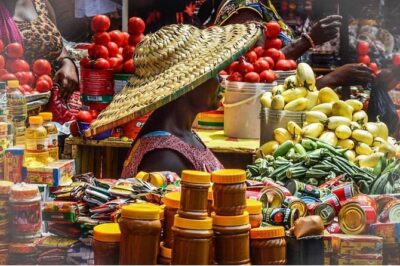
Boti Falls, Umbrella Rock, Aburi Gardens & Cocoa Farm Tour
Read our review →
Browse the lists this tour appears in