
Reviewed · ACCRA TOURS
Experience the Beauty, History and the Culture Of Accra in a Day
Accra’s story comes into focus through its people and places on this private six-hour tour. You move from Ghana’s independence struggle to the market streets of Makola, then on to Pan-African history at the W.E.B. Du Bois Centre. It is a useful first look at the city, especially if you have only one free day.
I like the private vehicle and hotel pickup, which save you from arranging several taxis in unfamiliar traffic. I also like the mix of memorials, working markets, and craft shopping. The main consideration is time: six major stops in roughly six hours can feel brisk, and heavy traffic may force changes, as happened when one group could not reach Makola Market.
Key points to know
- Six major Accra stops in one morning and afternoon: The route covers national monuments, a market, a historic neighborhood, a research center, and a craft market.
- Private touring keeps the day flexible: Only your party takes part, so you can ask questions, adjust the pace, or request an earlier meal.
- Guides make a major difference: Emmanuel, Samuel, Bernice, and Benjamin have each been praised for clear explanations, helpful driving, and assistance with photographs or shopping.
- Makola Market is the most unpredictable stop: Traffic and parking can be difficult, but the market offers a direct look at everyday buying and selling in Accra.
- The tour costs $80 per person: That includes private transportation, pickup from your Accra accommodation, entrance fees, and taxes, but not lunch.
- Bring water and plan for heat: The day includes outdoor walking and several stops, so water, light clothing, and comfortable shoes are sensible.
Why this tour works as a first day in Accra
If you are new to Accra, this tour gives you a useful framework. You see the landmarks tied to Ghana’s independence, then visit places connected with daily life, local crafts, and Pan-African thought.
The route also helps you understand that Accra is not just a collection of monuments. At the Kwame Nkrumah Memorial Park and Independence Square, you hear about national political history. At Makola Market and the Center for National Culture, you see commerce and craft. At James Town, you connect the modern city with its early colonial past.
That range is the strongest part of the experience. Many city tours focus only on photo stops. This one includes places where you can ask questions, shop, and observe how the city works.
The private format matters here. You are not sharing the vehicle with a large group, and the guide can respond to your interests. If you want more time at the memorials, help negotiating at the market, or a few photographs along the way, you can ask. The tour is scheduled, but the available information and direct experiences indicate that guides have made reasonable adjustments for private groups.
More history visits around Accra:
- Ghana Heritage Tours – Beyond The Return
★ 5.0 · 36 reviews - 10 Days Ghana Cultural and Heritage Trip
★ 5.0 · 31 reviews - Cape Coast Historical Day Tour
★ 5.0 · 24 reviews
Kwame Nkrumah Memorial Park and Ghana’s independence story
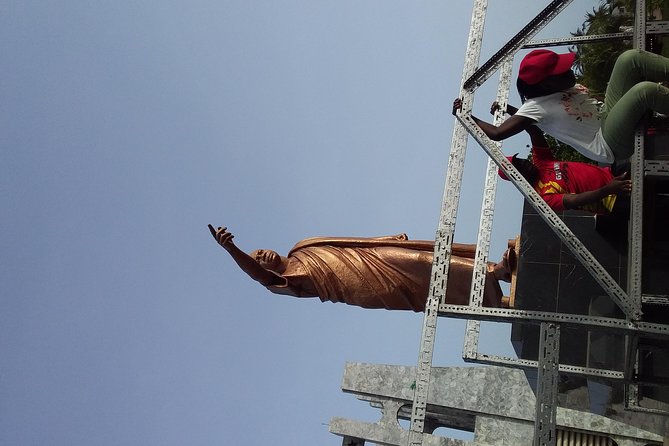
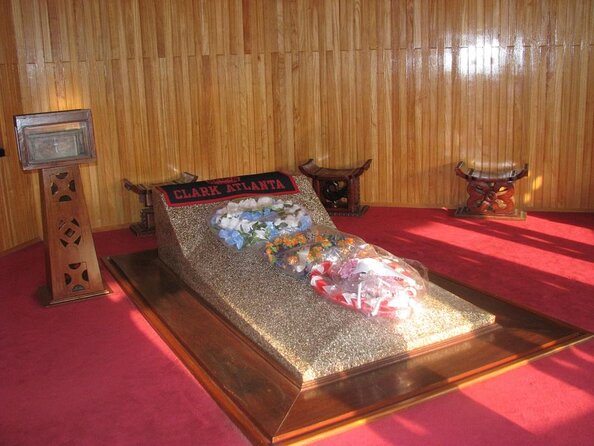
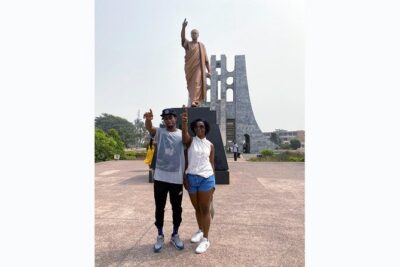
The first stop is the Kwame Nkrumah Memorial Park, with about an hour set aside. This is the historical anchor for the day.
You learn about Dr. Kwame Nkrumah, Ghana’s independence leader and first president. His role gives the rest of the tour a clear thread, since Independence Square and other national sites make more sense after you understand the political movement that shaped modern Ghana.
The one-hour visit should give you time for an explanation and a look around without turning the stop into a rushed photograph. Guides have been praised for answering questions in clear language, which is useful here. The subject can be unfamiliar if your previous education gave little attention to African independence movements or Pan-African politics.
I would pay attention to how your guide connects Nkrumah’s personal story with Ghana’s national identity. The best part of this stop is not simply seeing a memorial. It is getting the background needed to read the symbols and monuments you will encounter later.
Makola Market and the practical side of Accra
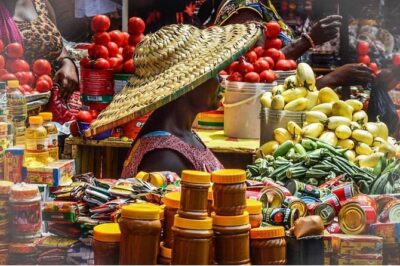
Makola Market brings a sharp change of pace. For about an hour, you explore one of Ghana’s open-air markets and learn about the daily work of buyers and sellers.
This is the stop most likely to feel unscripted. Markets are active places, and you may find yourself more interested in watching commerce than following a formal explanation. It is also one of the few parts of the tour where you see ordinary city life rather than a site built for national memory.
The practical warning is important: access can be affected by traffic and parking. One group could not make it to Makola because the surrounding streets were too crowded. That does not mean the stop will be missed on your day, but you should understand that the schedule is not fully under the guide’s control.
If you shop, ask your guide for help. Emmanuel has been praised for assisting with negotiations, a useful service when prices and bargaining customs are unfamiliar. Keep your expectations sensible. This is a market visit, not a quiet shopping center, and the experience may be more about observing local trade than finding a particular item.
Makola can also be tiring in the heat. Bring water, keep your belongings secure, and wear shoes suited to walking. Lunch is not included, so ask your guide about timing if you want to eat before or after this stop.
Independence Square and the meaning of national symbols
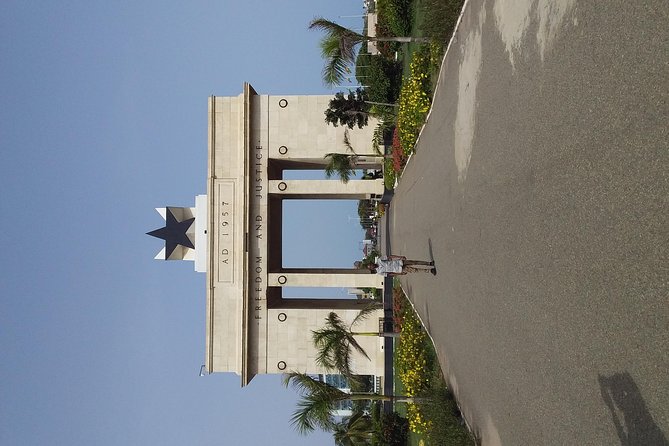
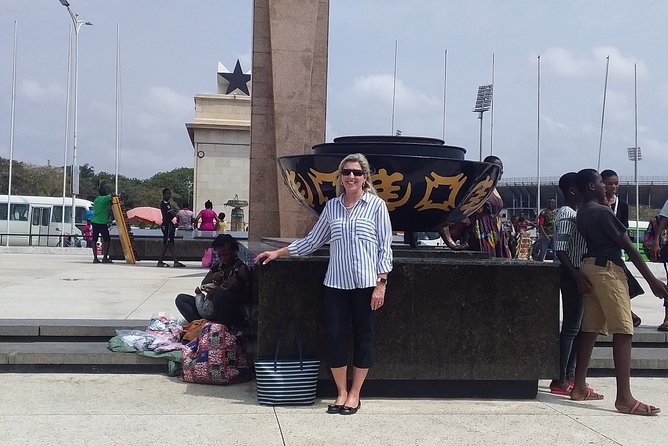
Independence Square gives the tour its most formal public setting. You spend about an hour learning about Ghana’s struggle for independence.
This stop pairs naturally with the Kwame Nkrumah Memorial Park. At the memorial, you begin with the leader and the movement. At Independence Square, you see how that national story is presented through public space and ceremony.
It is worth asking your guide to explain the significance of the monuments and the events associated with the square. The available details do not promise a formal museum-style presentation, so your guide’s explanation is central to the visit. Guides such as Emmanuel and Samuel have been praised for giving clear background at each location rather than simply driving from one photo stop to another.
The square is also a good place for photographs, but do not let the camera become the whole visit. The value here comes from understanding why the site matters to Ghana, not just from collecting another landmark image.
A few more Accra days to weigh up
- The Cape Coast Day Tour
★ 5.0 · 525 reviews - The Cape Coast Tour
★ 5.0 · 177 reviews - From Accra: Cape Coast, Elmina Castle & Kakum Park Day Tour
★ 4.6 · 144 reviews - Accra Detailed City Tour
★ 4.5 · 118 reviews
The W.E.B. Du Bois Centre and Pan-African thought
The W.E.B. Du Bois Centre adds an international and intellectual layer to the day. Here you learn about Dr. W.E.B. Du Bois, a major Pan-Africanist and a figure linked to the Pan-African Congresses.
This stop can be especially meaningful if you are interested in African diaspora history, civil rights, or the political links between Africa and the wider Black world. The tour description presents Du Bois as one of the most important Pan-African thinkers, and the visit gives you space to consider that movement in a Ghanaian setting.
I would allow yourself time to ask questions. Several guides have been praised for explaining history in a way that goes beyond dates and names. That matters at the Du Bois Centre, where the broader ideas may be more important than a quick list of biographical facts.
The centre also gives the day some balance. Nkrumah represents Ghana’s national independence story, while Du Bois helps place Ghana in a wider Pan-African discussion. If you want a tour that treats Accra as a center of political and cultural ideas, this is one of the most valuable stops.
James Town Lighthouse and Accra’s early colonial past
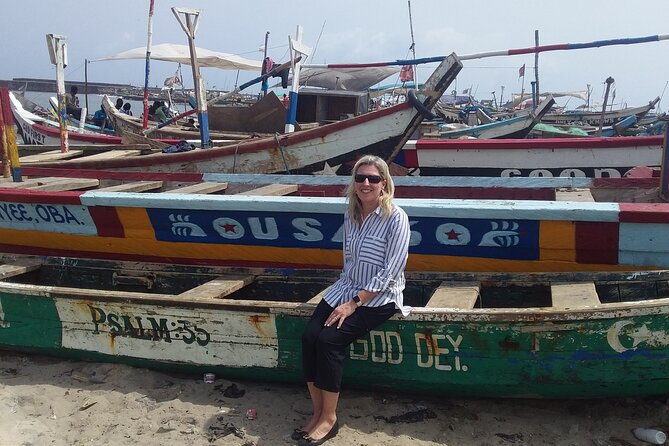
James Town Lighthouse takes you into one of Accra’s older areas. The planned hour is used to explain the history of the first British settlement in Accra.
This stop helps you see the city before and beyond the modern national monuments. The focus is historical, but the location also gives you a chance to understand how Accra developed around early coastal settlement and colonial activity.
The experience may depend heavily on the guide’s storytelling. The supplied information does not specify an interior visit, a climb, or a particular viewpoint, so you should think of this as a guided historical stop rather than assume a lighthouse-access experience.
James Town is also a useful contrast with the polished symbolism of Independence Square. Here, the story feels tied to an older part of the city and to the physical beginnings of British influence. Ask your guide how the settlement connects to the Accra you are seeing today.
The Center for National Culture and Ghanaian crafts
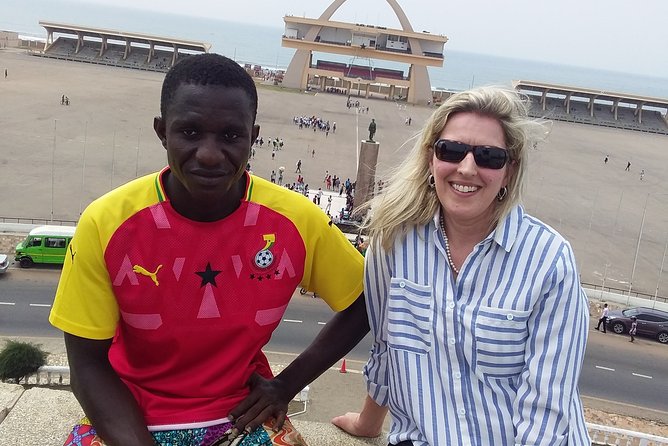
The final stop is the Center for National Culture, described as Ghana’s largest craft market. It is the tour’s main opportunity for browsing local arts and souvenirs.
You may find a wide range of handmade goods, but the exact shopping experience can vary. Use the time to compare items, ask questions about what you are buying, and decide what fits your budget rather than purchasing at the first stall.
A guide can be useful here even if you are an experienced shopper. The right person may help explain local products, point out differences in quality, and assist with bargaining. Bernice has been praised for taking photographs so visitors could enjoy the stop without constantly managing a phone, while Emmanuel has been singled out for help with local merchants.
The Center for National Culture is a good closing stop because it shifts the focus from political history to living culture. You finish the day with something tangible, though it is wise to leave room in your luggage.
What the private vehicle adds to the day
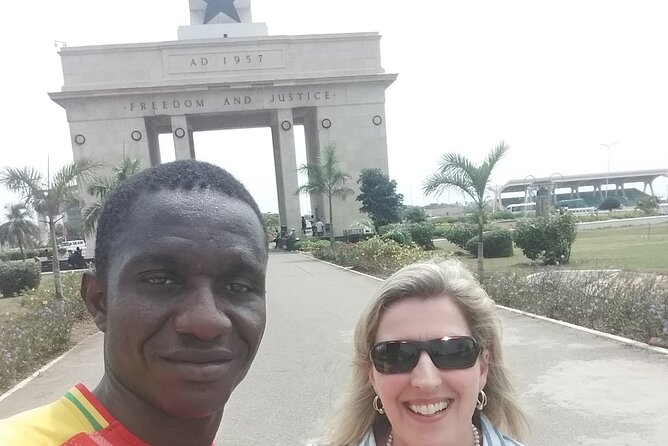
Round-trip transportation from your Accra accommodation is included, along with private transport, taxes, and other fees. The start time is 9:00 a.m., and the total duration is about six hours.
That arrangement is worth more than it may first appear. Accra traffic can affect the order and length of stops, and moving between six sites by taxi would add planning, waiting, and fare negotiations. A chauffeur-driven vehicle gives you one point of contact for transport throughout the day.
The private format also suits families, couples, and solo visitors. A group of 10 has been accommodated, and solo visitors have valued the sense of comfort and safety provided by the guide and driver. Your party is the only group taking part, so you do not have to match the pace of strangers.
Still, do not read private tour as entirely unstructured. Six stops are listed at about one hour each, and the day has a clear plan. Flexibility is possible, but traffic, opening hours, and the number of sites mean you should choose your priorities before setting out.
Price, timing, and what you actually receive
At $80 per person, the tour is easiest to judge by what it replaces. You receive private transportation, pickup from your Accra accommodation, and all fees and taxes. You also get a guide for a route that would be difficult to organize efficiently on your own in six hours.
Lunch is not included. Since the tour begins at 9:00 a.m. and can run for about six hours, plan to discuss a meal stop with your guide. One family was able to change the schedule to eat earlier, which suggests that private groups can request adjustments, but you should not assume lunch is automatically built into the price.
The tour is booked, on average, 23 days ahead. That is useful planning information if your Accra dates are fixed. Confirmation is received at booking, and free cancellation is available if you cancel at least 24 hours before the local start time. Cancellations or changes made inside that window are not refunded or accepted.
Who will get the most from this Accra tour
I would choose this experience if you want a broad introduction rather than a slow, specialist visit to one subject. It suits first-time visitors, solo visitors who prefer a driver, families, and anyone who wants history and shopping in the same day.
It is particularly good for people interested in Ghana’s independence movement and Pan-African history. The Nkrumah Memorial Park, Independence Square, and W.E.B. Du Bois Centre give the day a strong educational core.
You should also consider it if you dislike managing local transport. The driver handles the route while you focus on the sites. Several guides have been praised for punctuality, polite service, clear explanations, photography, and safe driving.
This is less suitable if you want a relaxed day with long stays at each place. Six stops in six hours is ambitious. Makola Market may be affected by traffic, and some places may not be open on Sundays. Confirm your preferred day and priorities before booking.
Should you book this private Accra city tour?
Book it if you have one day in Accra and want to connect the city’s independence story with everyday commerce and Ghanaian crafts. At $80 per person, the private car, hotel pickup, guide, and included fees make it a fair choice for a small group, especially compared with arranging six separate visits yourself.
Go in prepared for heat, traffic, and a full schedule. Bring water and snacks, wear comfortable shoes, and tell your guide what matters most to you. If you are lucky enough to be paired with a guide such as Emmanuel, Samuel, Bernice, or Benjamin, expect a personal day shaped by questions and practical help. Just keep the limits in mind: this is a well-packed introduction to Accra, not an unhurried study of every stop.
FAQ
Where does the tour take place?
The tour takes place in Accra, Ghana, with pickup offered from your Accra accommodation.
What time does the tour start?
The stated start time is 9:00 a.m.
How long does the tour last?
The tour lasts approximately six hours.
Is this a private tour?
Yes. Only your group participates in the activity.
What sites are included?
The stops are Kwame Nkrumah Memorial Park, Makola Market, Independence Square, the W.E.B. Du Bois Centre, James Town Lighthouse, and the Center for National Culture.
Is transportation included?
Yes. Private transportation and round-trip pickup from your Accra accommodation are included.
Are entrance fees and taxes included?
Yes. All fees and taxes are included in the price.
Is lunch included?
No. Lunch is not included.
Can I cancel for a full refund?
Yes, if you cancel at least 24 hours before the experience start time. Cancellations or changes made less than 24 hours before the local start time are not refunded or accepted.
Just added around Accra
- Accra: Tafi Kente Village, Monkey Sanctuary &Wli Waterfalls★ 4.5 · 4 reviews
- 2 Days (1 night) Elephants Safari at Mole Park with Round – trip flights★ 5.0 · 4 reviews
- Full-Day Wli water Falls and Monkey Sanctuary Private Tour★ 5.0 · 4 reviews
- 9 Day Ghana Wildlife and Culture Tour★ 5.0 · 5 reviews
- A Taste of West Africa – Ghana Togo & Benin★ 5.0 · 5 reviews
- Quad Biking and Waterfalls Adventure★ 5.0 · 5 reviews
- Accra, Ghana Guided Local Market Tour★ 5.0 · 6 reviews
- Half-day Accra Safari Tour★ 4.5 · 6 reviews
Accra Tours, compared.
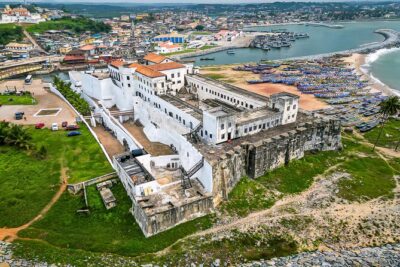

Cape Coast, Elmina Castle & Kakum Park Day Tour
Read our review →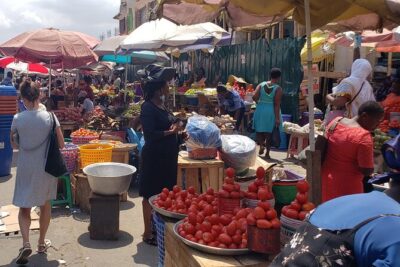
Boti Falls, Umbrella Rock, Aburi Gardens & Cocoa Farm Tour
Read our review →
Browse the lists this tour appears in