
Reviewed · GHANA
Nature Thrills
The most unusual part of this Aburi Mountains day trip is how neatly it joins three very different places: a colonial-era botanical garden, Ghana’s first cocoa farm, and a forest waterfall with natural pools. I like the mix of learning and rest, and I like that the cocoa stop goes beyond a quick photo by explaining planting, harvesting, and fermentation. The waterfall gives the day a cool finish.
The main thing to weigh is the physical side. You will walk through the garden and farm, then hike for about 20 minutes to Adom Waterfalls. Dirt roads and uneven ground can be part of the day, so comfortable shoes matter. Lunch is not included, and a seven-hour outing can feel full if you prefer a slow, unstructured day.
Key points to know before booking
- Three distinct stops in one day: Plants, cocoa farming, and a waterfall give this outing more variety than a single-site excursion.
- A genuine cocoa lesson: The Tetteh Quarshie farm explains the crop from planting through fermentation, with two original trees still producing fruit.
- A walk through living history: Aburi Botanical Gardens opened in 1890 and contains plants connected with leaders including Queen Elizabeth II and Prince Charles.
- A short but real hike: Reaching Adom Waterfalls takes about 20 minutes on foot, with lower and upper sections and naturally formed pools.
- Strong guide support: English-speaking guides including Suwaiba, Suwauba, and Gian have been praised for their care, local knowledge, and help with photographs.
- Good transport value: At $150 per person, the price includes pickup and drop-off in Accra, transport, entrance fees, guide support, fuel surcharges, and the listed activities.
Leaving Accra for the Aburi Mountains
This is a day for trading city noise for protected natural areas without giving up the ease of a guided outing. Pickup and drop-off in Accra are included, which makes a real difference because you do not need to arrange separate transport to the Aburi area or work out how to connect three rural stops yourself.
The experience lasts about seven hours. That is long enough to make the trip feel worthwhile, but short enough to fit into a wider stay in Ghana. You will spend about an hour at the botanical gardens, around 35 minutes at the cocoa farm, and roughly an hour and a half at the waterfall. The rest of the time goes toward driving between sites and handling the day’s transitions.
I would treat this as an active sightseeing day, not a resort-style escape. You will walk, listen, ask questions, and deal with natural ground rather than paved paths at every point. Light clothes and sturdy, comfortable shoes are the right choice. If you want to swim at Adom Waterfalls, bring a swimsuit and a change of clothes.
The tone of the outing depends partly on the guide assigned to you. Suwaiba, also spelled Suwauba in the supplied information, is praised for being hospitable and accommodating, while Gian is described as friendly and well informed. The guide support is one of the strongest reasons to choose an arranged tour instead of trying to piece together the day independently.
Other Ghana days people book alongside this one:
- The Cape Coast Day Tour
★ 5.0 · 525 reviews - Experience the Beauty, History and the Culture Of Accra in a Day
★ 5.0 · 323 reviews - The Cape Coast Tour
★ 5.0 · 177 reviews
Aburi Botanical Gardens: plants with a past
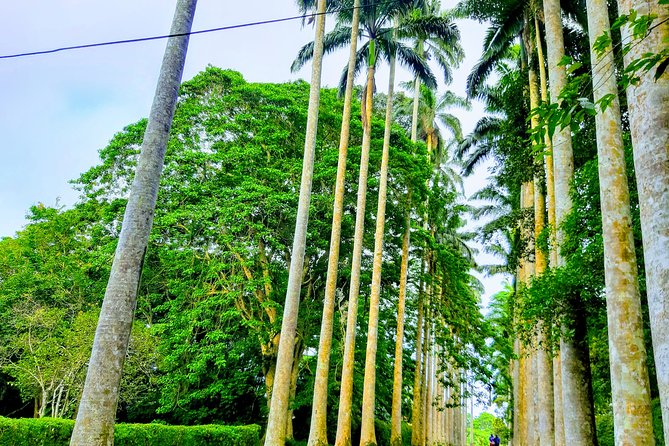
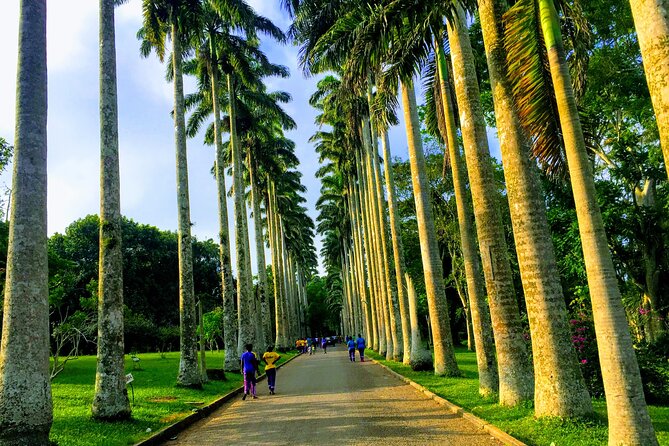
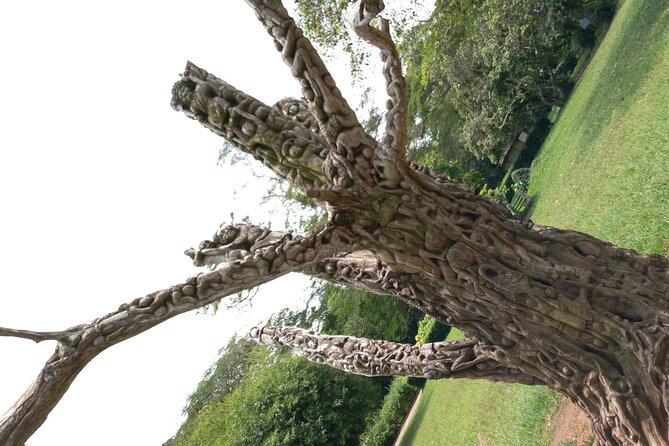
Aburi Botanical Gardens is the gentlest opening stop. The garden opened in 1890 and focuses on protecting plant and animal species. You will walk among plants from different parts of the world, with an English-speaking guide explaining what you are seeing and why it matters.
This is not simply a green space for taking pictures. The plants have practical uses as food, medicine, spices, and decoration. That gives the walk a useful local connection. You may recognize familiar scents or plants in an unfamiliar setting, then learn how they fit into cooking or traditional remedies.
The garden also carries traces of Ghana’s colonial and political past. Plants were planted by colonial governors and African leaders, including Sir Gordon Guggisberg, General Olisengo Obasanjo, Jerry John Rawlings, Queen Elizabeth II, and Prince Charles of Britain. The tour does not reduce the garden to a list of famous names. Instead, these plantings help show how the site developed and why it has remained an important public garden.
Plan on about one hour here. That is enough time for a guided walk, but not enough for every corner if you are an avid plant enthusiast. You will get a taste of the collection rather than a full botanical study. I like that the stop is active without being strenuous, and it lets you start the day at an easy pace.
The garden is also a good place to slow down and use your senses. You might smell flowers and spices, notice the size of older trees, and learn how plants adapt to their surroundings. One especially memorable detail from the outing is the chance to see a tree taken over by a parasite. The experience can be more hands-on than a standard garden tour, though exactly what you see depends on the guide and conditions that day.
Tetteh Quarshie Cocoa Farm and Ghana’s cocoa story
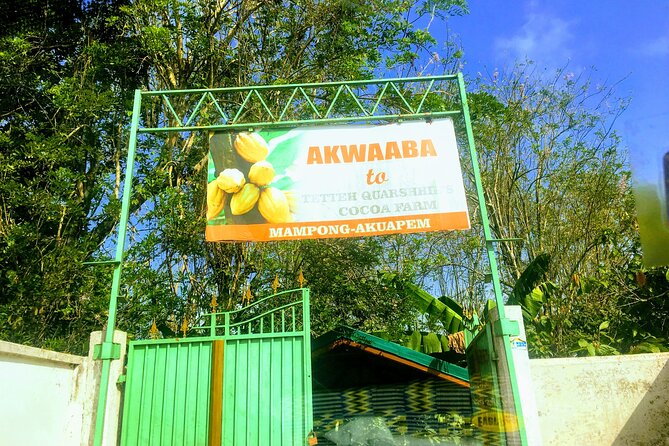
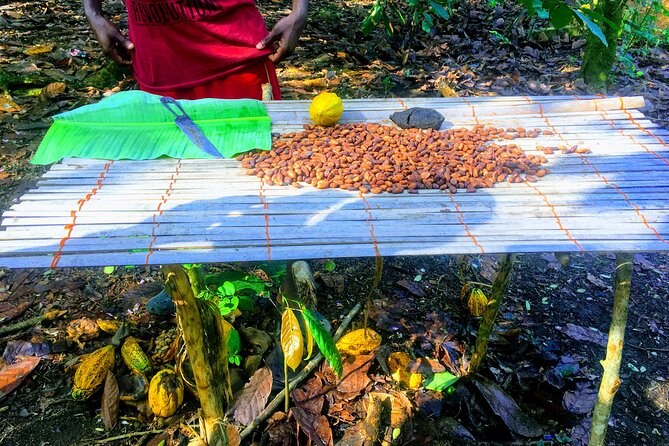
The cocoa farm is the most specific cultural stop on the route. Tetteh Quarshie planted the farm in 1870 at Akuapim Mampong, and it is recognized as the first cocoa farm in Ghana. Two of the original trees planted by Quarshie are still on the property and continue to bear fruit.
That detail changes the visit from a general agricultural tour into a place tied to Ghana’s national story. Ghana is known for producing high-quality cocoa and is second in quantity to Ivory Coast. At the farm, you learn how the crop moves from planting to harvesting, then through fermentation. This helps explain the work behind the chocolate products most of us know.
The stop lasts about 35 minutes, so expect a focused introduction rather than a long farm stay. The guide can show you cocoa plants and explain the production process in a way that connects the trees to finished beans. You may also taste unripened cocoa, which is a useful reminder that fresh cocoa fruit is not the same as a chocolate bar.
The farm visit has a practical side, too. One person enjoyed buying beans to support local farming. If purchasing cocoa is important to you, carry some extra money, since shopping is not listed as part of the $150 price.
This stop may be less visually dramatic than the waterfall, but I think it is the part that gives the day its strongest sense of place. A garden can exist in many countries. Cocoa farming is closely tied to Ghana’s economy and identity, and this farm lets you see that connection at its source.
Hiking to Adom Waterfalls
Adom Waterfalls supplies the day’s sense of adventure. The walk to the falls takes about 20 minutes through a forest, and the water runs over stratified rocks into naturally formed pools. The waterfall has an upper and lower section, giving you more than one angle for photographs and a little room to find a quiet place to sit.
The hike is short, but you should not treat it as a flat stroll. The tour specifically calls for comfortable shoes and light clothing, and that advice is worth following. Mud, rocks, or uneven footing can make a short trail feel demanding, especially after the earlier walking.
At the falls, the pace changes. You can sit, take photographs, listen to the water, or swim in the pools if conditions allow. Bring a swimsuit if you want that option. The cool water and forest setting make this the natural rest point after the more educational first half of the tour.
A particularly appealing feature is the chance to go beyond the main waterfall area for a view across the plains of the Aburi Mountains. This extra walk is described as an off-the-beaten-path part of the outing, so it may suit you if you want more than the standard waterfall photograph. It also means you should tell your guide if you need a quieter or less strenuous visit.
The waterfall stop lasts about an hour and a half. That is enough time to enjoy the setting rather than rush in, take one picture, and leave. Still, the exact amount of swimming or extra walking will depend on the day’s timing and your group. You should not expect a private swimming hole or a fully developed recreation facility. The appeal is the natural setting.
Same departure point, a completely different day out:
- From Accra: Cape Coast, Elmina Castle & Kakum Park Day Tour
★ 4.6 · 144 reviews - Accra Detailed City Tour
★ 4.5 · 118 reviews - Accra Guided City Tour Experience
★ 4.7 · 88 reviews - Accra Guided City Tour Experience
★ 5.0 · 76 reviews
What $150 per person covers
The $150 price is easier to judge when you look at what is bundled into it. You receive transportation, fuel surcharges, entrance fees, guide support, the activities described for the day, and hotel pickup and drop-off in Accra. Those inclusions remove several small costs that can add up when arranging a similar trip yourself.
For a private or small organized outing, the value depends on how much you care about convenience and interpretation. You are not only paying to reach the Aburi area. You are paying for a driver, site access, local guidance, and a route that links three places in one day.
Meals are not included, so plan for that separately. One person enjoyed lunch afterward, but the supplied tour details do not promise a meal or name a restaurant. Do not assume food is covered. Ask about the meal plan when you book, or carry money for lunch.
International airfare, visa fees, immunizations, and travel insurance are also outside the price. Those are normal exclusions for a local day tour, but they matter when you calculate the full cost of your Ghana trip.
The reserve-now-and-pay-later option can help if you are still arranging your schedule. Cancellation is free up to 24 hours before the experience for a full refund. Those policies add flexibility, but the real value still comes from the transport and the quality of the guiding.
Who will enjoy this day most
I would recommend Nature Thrills to you if you want a nature outing with substance. The day is a good fit for plant lovers, families with older children, first-time visitors who want a guided introduction to Ghana’s countryside, and anyone who wants to pair relaxation with cultural learning.
The experience can work well for families. A 10-year-old enjoyed the mix of unusual trees, cocoa tasting, photographs, and the waterfall. Children who need constant entertainment may find the garden explanation slow, but the farm and water are likely to break up the pace.
It also suits photographers. The gardens offer plants, flowers, spices, and large trees. The cocoa farm provides a distinctive subject, while the waterfall and the view toward the plains offer the strongest scenic shots. Guides such as Suwaiba have been praised for helping find good photo spots.
You should think twice if you dislike walking on uneven ground, cannot manage a short forest hike, or want a day built mostly around food and leisure. The tour is not a demanding expedition, but it is not entirely effortless either.
Practical preparation for a smoother outing
Wear shoes that can handle dirt, rocks, and a 20-minute hike. Sandals may be fine for some parts of the day, but they are a poor choice if you plan to walk beyond the main waterfall area.
Choose light, comfortable clothing. A swimsuit makes sense if you want to enter the pools, and a change of clothes will keep the ride back to Accra more pleasant. Bring money for food and for cocoa beans if you would like to buy some.
Keep your schedule flexible around the seven-hour estimate. The stated visits add up to about three hours, leaving driving and transitions between Accra, the gardens, the farm, and the falls. Traffic, road conditions, and time spent taking photographs can affect the return time.
The tour is conducted in English. That is important if you want detailed explanations about plant uses, cocoa production, and the history of the sites. Guide quality has been one of the most praised parts of the outing, so use the time to ask questions rather than treating each stop as a quick photo break.
Is Nature Thrills worth booking?
I would book this tour if you want three different experiences in one manageable day and prefer having transport, entry fees, and guides handled for you. The botanical gardens offer context, the cocoa farm gives you a direct connection to Ghana’s agricultural story, and Adom Waterfalls supplies the cool, restful finish.
The strongest reasons to go are the original cocoa trees, the chance to taste fresh cocoa and spices, the helpful guiding associated with Suwaiba and Gian, and the option to swim or take the extra walk for views over the Aburi plains. The main cautions are the included walking, the short hike, the possible rough roads, and the fact that lunch costs extra.
At $150 per person, this is a sensible choice for convenience and variety, especially if you are staying in Accra and do not want to arrange a rural day on your own. Pack proper shoes, light clothes, swimwear, and money for lunch. If that sounds like your kind of day, Nature Thrills offers a useful and refreshing break from the city.
FAQ
Where does the Nature Thrills tour begin and end?
The tour includes hotel pickup in Accra and returns you to Accra at the end of the experience.
How long does the tour last?
The full experience lasts about seven hours.
What places does the tour visit?
You visit Aburi Botanical Gardens, Tetteh Quarshie Cocoa Farm, and Adom Waterfalls.
How long is the hike to Adom Waterfalls?
The walk to the waterfall takes about 20 minutes.
Can I swim at Adom Waterfalls?
Natural pools are present at the waterfall, and swimming is an option mentioned for the experience. Bring a swimsuit if you would like to swim.
Is food included in the price?
No. Meals are not included.
What language is the tour conducted in?
The host or greeter and tour support are in English.
What does the $150 price include?
The price includes fuel surcharges, transportation, entrance fees, guide support, the listed activities, and hotel pickup and drop-off.
Just added around Ghana
- Experience Aburi Botanical Gardens And Boti Water Falls In A Day.★ 5.0 · 3 reviews
- Experience Cape Coast Castle and Kakum National Park★ 4.5 · 3 reviews
- Accra city tour★ 4.5 · 3 reviews
- 7days/6nights Eco Tourism★ 5.0 · 3 reviews
- Half-Day City Tour of Accra★ 5.0 · 3 reviews
- 3 Days Elephants Safari at Mole Park with Round – trip flights★ 5.0 · 3 reviews
- 3 Days Accra City Tour & Cape Coast Tour★ 4.5 · 3 reviews
- Accra Zoo, Canopy Walk and Botanical Gardens Private Tour★ 5.0 · 3 reviews