
Reviewed · ACCRA TOURS
Makola Market Walking Tour
Makola Market is not a polished attraction. It is a working part of Accra, where food, clothing, household goods, medicine, electronics, and building supplies crowd into a huge maze of stalls. The most rewarding part is seeing how everyday Ghanaian life works, from palm oil and gari in the food section to textiles, used clothes, and local cosmetics.
I like the local guide and the chance to speak with sellers without wandering blindly. I also like the food focus, especially the unusual ingredients such as giant snails, edible cow hide, bush meat, and the red and white oils made from palm trees. The main consideration is the setting: the market can be crowded and intense, and two to three hours may not cover every section.
Key things to know before you go
- The food section sets the tone: Learn how Ghanaian kitchens use gari, palm oils, spices, fish, meat, fruit, and vegetables.
- Your guide matters: Ben, Benjamin, and Prince have each led this experience, helping with directions, local context, shopping, and prices.
- It is a private walking tour: You receive a live English-speaking guide rather than joining a large group.
- Shopping is part of the visit: You can look for textiles, jewelry, cosmetics, electronics, used clothes, and other practical goods.
- The market extends beyond food: With enough time and energy, the route can reach artisan, timber, building-material, vegetable, and used-clothing areas.
- The price buys orientation: At $58 per person, the value is strongest if you want help navigating, asking questions, and choosing the right part of the market.
Why Makola Market makes a strong first look at Accra
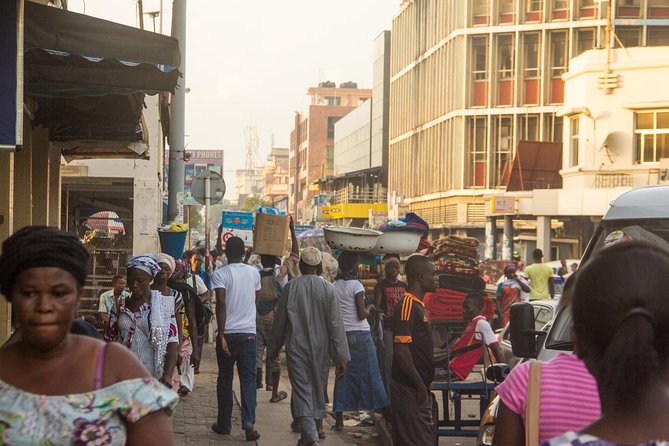
A market can tell you more about a city than a row of monuments. At Makola, you see what people buy, cook, wear, repair, and sell. The sounds and smells change as you move from one section to another, and the guide helps turn that rush of activity into something you can understand.
This is not a staged cultural show. You are walking through a real trading center. Sellers are working, customers are shopping, and you need to pay attention to the flow of people around you. That makes the visit feel direct and useful, but it also means you should expect a busy urban setting rather than a quiet sightseeing walk.
The tour lasts about two to three hours. That is enough for a solid introduction and some shopping, though not enough to see every corner if you stop often. The route begins at the selected meeting or pickup point and finishes with drop-off in the Accra Metropolis or at the Accra Metropolitan Assembly.
A few more Accra days to weigh up
- Makola Market Walking Tour
★ 5.0 · 14 reviews - Private Accra Market Tour
★ 5.0 · 10 reviews - Accra Street Food Tour: Makola Market Tour With Full Lunch
★ 4.1 · 9 reviews
Starting with Ghanaian food and kitchen staples
The food market is the best place to begin because it gives you a practical introduction to Ghanaian cooking. Instead of simply passing rows of produce, you can ask what ingredients are used for, how they are sold, and how they fit into a typical kitchen.
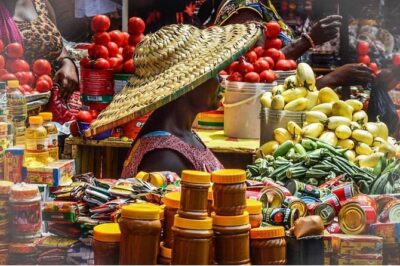
You may see gari, a cassava product that is a common local staple, along with fruits, vegetables, spices, and different forms of fish and meat. The tour also introduces ingredients that may be unfamiliar to you, including giant snails, bush meat, and edible cow hide.
The oils are another useful stop. The tour covers red and white palm oils, giving you a chance to see products made from the palm tree and understand their place in Ghanaian food. This is the kind of detail that makes a market visit worthwhile. You are not just looking at food; you are learning what it means in daily life.
The food section may be the most demanding part for some people. Unfamiliar smells, raw ingredients, and crowded stalls are part of the setting. If you prefer carefully arranged food halls, this will feel rough around the edges. If you want an honest look at local shopping, that is precisely its appeal.
Following the market into cosmetics, jewelry, and textiles
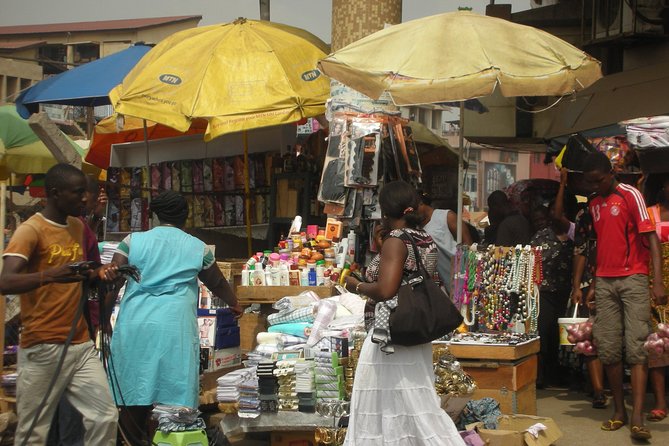
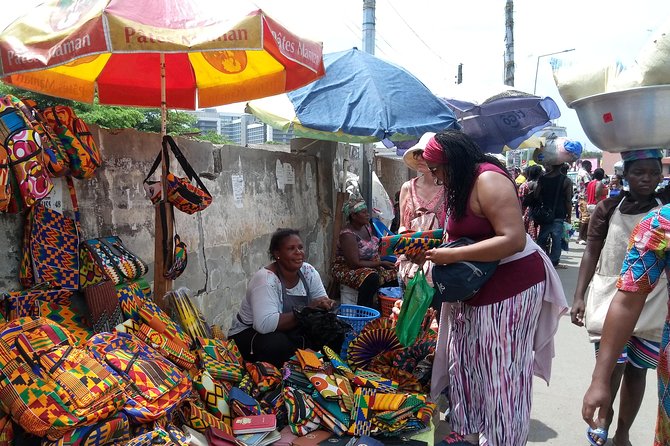
After the food stalls, the tour moves through sections devoted to cosmetics, jewelry, textiles, groceries, and other household goods. These areas show another side of the market: Makola is not only a place to buy dinner, but also a center for personal items, clothing, gifts, and daily necessities.
The textile section can be especially useful if you want Ghanaian fabric or are curious about local clothing. You can browse patterns and materials while your guide helps you understand where to look. Do not expect a quiet boutique experience. The market is active and practical, and the pleasure comes from comparing goods in their real setting.
The cosmetics and pharmaceutical areas also show how broad Makola is. The tour description includes everything from cosmetics to medicines and groceries, though the exact route depends on timing and the guide’s plan. You should tell your guide early if you have a particular interest, because the market is large and you may not reach every section by chance.
That point matters for shopping. One person wanted to replace a broken suitcase and received extra help from guide Ben in finding a replacement. Another visitor had specific items in mind and found Ben useful for locating them and getting a fairer price. If you want fabric, clothing, a suitcase, jewelry, or another particular item, say so at the beginning.
What a private guide adds to the walk
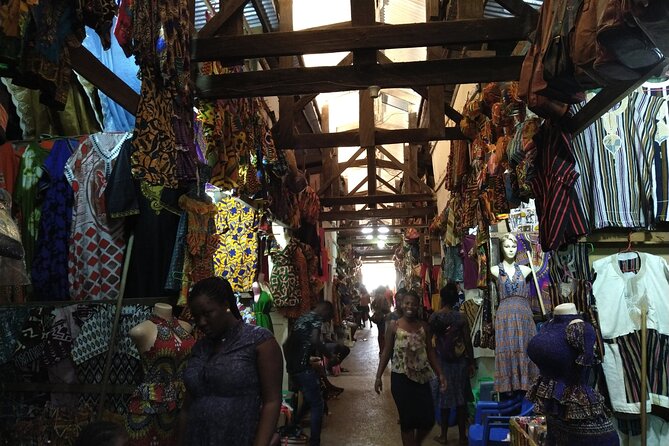
A market of this size can be difficult to read on your own. The tour gives you a local expert who guides you through the sections, answers questions, and helps you keep track of where you are. You are not left to guess which aisle leads to food, textiles, clothing, or building supplies.
The guides named in the feedback include Ben, Benjamin, and Prince. The names may vary with your booking, but the useful service is the same: someone who knows the market and can adjust the route to your interests.
Prince also led an Accra Slave Tour for one visitor who combined the two activities into a full day. He shared historical details along the way and even made time to pass by Jubilee House. That extra drive-by is not presented as a standard part of this market tour, so do not book this walk expecting it. Still, it shows how a private guide may help connect separate Accra experiences if you arrange them together.
Ben received particular praise for staying with a visitor who needed help replacing luggage. He also helped with shopping and price discussions. This does not mean every purchase will produce a bargain, and you should still decide what you are comfortable paying. It does mean the guide can be useful beyond simply pointing out stalls.
Same departure point, a completely different day out:
- The Cape Coast Day Tour
★ 5.0 · 525 reviews - Experience the Beauty, History and the Culture Of Accra in a Day
★ 5.0 · 323 reviews - The Cape Coast Tour
★ 5.0 · 177 reviews - From Accra: Cape Coast, Elmina Castle & Kakum Park Day Tour
★ 4.6 · 144 reviews
Shopping without losing the point of the visit
Shopping is built into the walk, but you do not need to buy anything to benefit from it. I suggest treating purchases as an optional part of the experience rather than the main goal. That lets you enjoy the market first and make decisions at your own pace.
If you do want to shop, prepare a short list. Makola covers many categories, and a guide can take you to the right area rather than spending half the tour searching. Useful possibilities include textiles, jewelry, cosmetics, groceries, electronics, clothing, and practical household items.
Price discussions are also part of the experience. Guides Ben and Prince helped visitors negotiate in situations where a seller appeared to quote a higher price. Your guide can offer local context, but you remain responsible for agreeing to the final amount. A good rule is to ask the price, compare where possible, and walk away if the item does not feel right.
The used-clothing section is known locally as Broni wawu, translated in the tour material as the white man died. It is also called a bend-down boutique. Here you may find used clothing and shoes, with the selection extending from underwear to shirts and footwear. This section gives you a sharp view of the reuse economy, but it may not suit anyone looking for new or carefully displayed merchandise.
The outer sections: artisans, timber, and vegetables
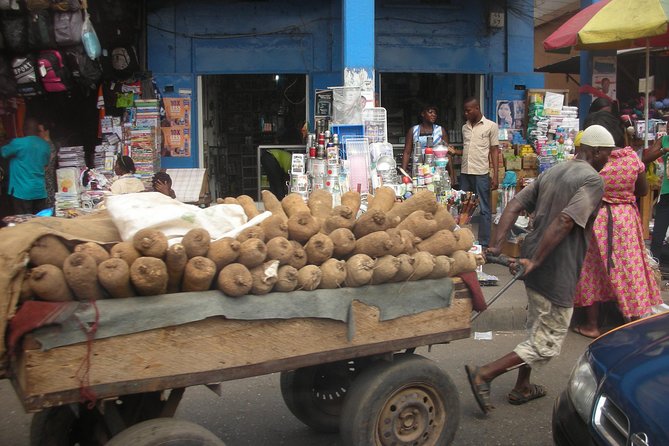
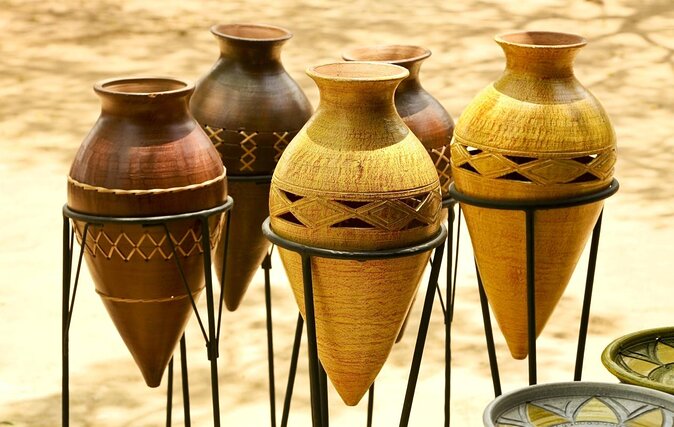
If you have the time and energy, the walk can extend beyond the central market sections. The artisan and timber market focuses on skilled workers and building needs. It is described as a place to find items required for construction, so it offers a different view of local trade from the food and clothing stalls.
The Agblobloshie market may also be included. It is described as Ghana’s largest vegetable market, adding another food-focused area to the route. Since the full walk is only two to three hours, you should ask your guide what can realistically fit on the day.
This is one of the tour’s strengths and limits. The market has enough range for several different visits, but a short tour must make choices. You may get a broad look at many sections, or spend more time in the food and shopping areas that interest you most. A private booking gives you a better chance of shaping the route, but it cannot make the market small.
Sights, sounds, and the practical side of walking
The tour’s strongest feature is sensory. You will see piles of produce, fabrics, clothing, cosmetics, and household goods. You will hear sellers and shoppers negotiating, moving, and calling across the market. You will also notice how quickly the character of the market changes from one section to the next.
Wear comfortable shoes and expect to walk for the full visit. Water is included, which is useful in a warm, active market, but the tour information does not promise meals or extra refreshments. Bring only what you need and keep track of your belongings in the crowd.
The market can feel intense, especially if you are visiting for the first time. One guide was specifically praised for paying close attention to a visitor’s comfort, and that personal care is an important reason to choose a private tour. Still, you should be ready for noise, close quarters, and a less predictable route than you would find in a museum.
The experience is conducted in English. The private-group format is helpful if you want to ask many questions, shop at your own pace, or request more time in a particular section. It is less useful if you simply want a quick photo stop and no interaction.
Is $58 per person fair value?
At $58 per person, this is not the cheapest way to look at a market. The value depends on what you want from the visit.
If you only want to walk past the stalls, you could spend less by exploring independently. But Makola is large, and a first-time visitor may miss the most useful sections or feel unsure about where to go. The fee pays for a private English-speaking guide, local orientation, help finding specific goods, and assistance with market conversations.
That makes the price more reasonable for solo visitors, couples, and small groups who want a focused introduction. It is also good value if you plan to shop and would otherwise spend time searching for the right area. The guide’s help with prices can be useful, though you should never assume that the tour fee guarantees discounts.
Water and guiding are included. Pickup and drop-off points depend on the selected option, with the listed ending points in the Accra Metropolis and at the Accra Metropolitan Assembly. Check the exact starting point and time when booking, since availability controls the departure schedule.
The activity offers free cancellation up to 24 hours before the start for a full refund, and you can reserve now and pay later. Those terms make it easier to fit the walk around other Accra plans.
Who should book the Makola Market walk?
I would choose this tour if you want to understand Accra through ordinary commerce rather than only through formal sights. It suits curious shoppers, photographers who are comfortable in an active market, first-time visitors, and anyone interested in Ghanaian food and household life.
It is also a good fit if you want a private guide. The market is large enough that going alone may leave you unsure where to begin, especially if you have a particular item to find.
I would think twice if you dislike crowds, strong food smells, negotiation, or walking on an unpredictable route. The tour does not turn Makola into a calm attraction, and that is not its purpose. Its appeal is the direct contact with a working market.
The strongest way to book is with a clear plan. Tell the guide if you want food, textiles, used clothing, electronics, jewelry, or building materials. Ask how much of the outer market sections can fit into your two to three hours. That small bit of planning can turn a general walk into a much more useful one.
Final verdict: book it for the local view
The Makola Market Walking Tour is a strong choice for seeing Accra at street level. I like its food focus, its private format, and the practical help offered by guides such as Ben, Benjamin, and Prince. The best moments are likely to come from small encounters: learning what an unfamiliar ingredient is used for, finding a fabric stall, tasting a local snack such as Agneli kaklo, or getting help with a purchase.
You should book it if you want an active, unpolished market visit and value having someone guide you through the noise. Skip it if you want a relaxed sightseeing walk with fixed displays and little interaction. For the right visitor, $58 buys more than a route through stalls. It buys a clearer way to read one of Accra’s most important everyday places.
FAQ
Where does the Makola Market Walking Tour take place?
The tour takes place at Makola Market in Accra, Ghana. The activity information lists Ghana’s Central Region, while the meeting and ending points are connected with Accra Metropolis and the Accra Metropolitan Assembly.
How long does the tour last?
The tour lasts approximately two to three hours. The main Makola Market visit is listed as a two-hour guided walk, with the total activity time depending on the selected option and route.
Is the tour private?
Yes. The activity is offered for a private group with a live English-speaking guide.
What language is used during the tour?
The tour is conducted in English.
What areas of Makola Market can I see?
The route can include food, cosmetics, jewelry, textiles, pharmaceuticals, groceries, electronics, artisan and timber areas, the Agblobloshie vegetable market, and the Broni wawu used-clothing section. The exact areas covered depend on available time and your selected route.
What is included in the price?
The price includes water and guiding services from a local expert. The listed price is $58 per person.
More Walking Tours in Accra
- Walking Tours In Cape Coast And Elmina
★ 5.0 · 9 reviews - Accra Zoo, Canopy Walk and Botanical Gardens Private Tour
★ 5.0 · 3 reviews
Just added around Accra
- Experience Cape Coast Castle and Kakum National Park★ 4.5 · 3 reviews
- Experience Aburi Botanical Gardens And Boti Water Falls In A Day.★ 5.0 · 3 reviews
- Accra city tour★ 4.5 · 3 reviews
- 7days/6nights Eco Tourism★ 5.0 · 3 reviews
- Half-Day City Tour of Accra★ 5.0 · 3 reviews
- 3 Days Accra City Tour & Cape Coast Tour★ 4.5 · 3 reviews
- Local Ghanaian Food Tasting Tours★ 5.0 · 3 reviews
- Accra Zoo, Canopy Walk and Botanical Gardens Private Tour★ 5.0 · 3 reviews
Accra Tours, compared.
Experience the Beauty, History and the Culture Of Accra in a Day
Read our review →
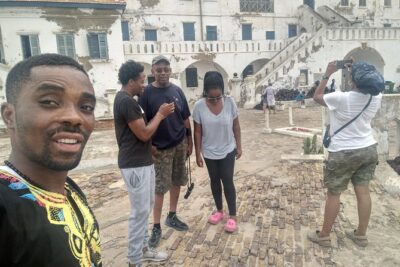
Cape Coast, Elmina Castle & Kakum Park Day Tour
Read our review →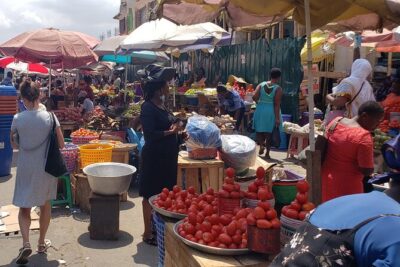
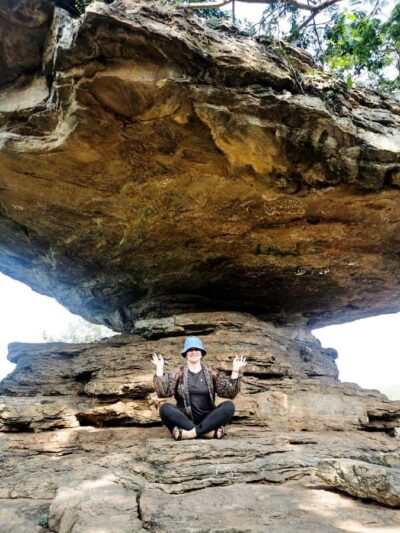
Boti Falls, Umbrella Rock, Aburi Gardens & Cocoa Farm Tour
Read our review →
Browse the lists this tour appears in