
Reviewed · ACCRA TOURS
Introducing Ghana, 6 Days
Ghana comes into focus through powerful contrasts: modern Accra beside old Jamestown, royal Ashanti traditions beside busy craft villages, and coastal castles beside the forest canopy of Kakum National Park. This six-day trip covers a lot of ground without asking you to manage hotels, drivers, or complicated regional transport.
I like the way the route combines major landmarks with working communities. The Kente looms at Bonwire and Adinkra cloth workshops at Ntonso give you something living and hands-on, while the visits to Cape Coast Castle and Assin Manso bring difficult chapters of history into clear view.
The main drawback is the pace. You spend long hours on the road between Accra, Kumasi, Cape Coast, and back to Accra, and there is no scheduled rest day. At $3,889.62 per person, this is a serious purchase, but the private vehicle, airport transfers, accommodation, breakfasts, bottled water, and six days of guiding help explain the cost.
Key Things to Know Before Booking
- Jamestown gives you Accra’s sharpest contrast: You see an old coastal community, the lighthouse, Brazil House, and fishing life alongside the city’s newer buildings.
- The Ashanti portion is more than a museum visit: Manhyia Palace, the Okomfo Anokye Sword Site, Bonwire, Ntonso, Ahwiaa, and Kumasi Central Market connect royal history with craft and daily commerce.
- The castle visits are serious, not decorative sightseeing: Assin Manso and Cape Coast Castle address the forced removal and enslavement of Africans with direct, sobering reminders.
- Kakum adds a physical highlight: The 1,000-foot canopy route crosses seven bridges at heights of more than 150 feet above the ground.
- Private touring keeps the route manageable: A private air-conditioned vehicle and a maximum group size of 10 make long transfers easier than they would be on a large coach.
- The guides are central to the trip: Guides named George, Elvis, Isaac, Naa, Joshua, Martina, and Ernest have been praised for care, planning, local insight, and help with personal needs.
Day One: Arriving in Accra and Getting Oriented
Your trip begins at Kotoka International Airport, where a guide meets you after immigration, baggage collection, and customs. Airport pickup and departure assistance are included, which is useful after an international flight and removes the usual scramble for transport.
If your arrival time permits, the first outing may include a short drive through the University of Ghana campus at Legon and a stop along Oxford Street. The university offers a calmer introduction to Accra, while Oxford Street brings colorful African shops and a more commercial side of the capital.
The first day is intentionally light. You receive a hotel check-in and a briefing from the guide who stays with you during the trip. No meal is included on arrival day, so you should plan for your own food unless your hotel arrangement covers it.
The flexible wording around the first sightseeing stops matters. You may have time for them, or you may go straight to the hotel depending on when your flight lands. I would not count on a full touring day here.
A few more Accra days to weigh up
- 6 day Culture & History Tour in Ghana
★ 5.0 · 8 reviews
Day Two: Accra’s Independence Story and Jamestown
After breakfast, the tour turns to Accra’s main historic sights. The route links the W.E.B. Du Bois Centre, Independence Square, the Kwame Nkrumah Memorial Park, Jamestown Fishing Community, the lighthouse, and Brazil House.
The Du Bois Centre honors the Pan-African thinker who chose to live and work in Ghana. It gives the day an international frame before you move to Independence Square, where the enclosed flame of Africa and the broad Black Star Square area connect Ghana’s national story with the wider independence movement.
The Kwame Nkrumah Memorial Park focuses on Ghana’s first president and the country’s break from colonial rule. Together, these sites make a useful opening lesson in modern Ghana. You are not simply looking at monuments. You are following the political ideas that shaped the nation.
Jamestown changes the tone. This old Accra community has a strong coastal and working character, with the lighthouse and fishing activity providing a sharper sense of everyday life. Brazil House adds another historical layer connected to people of African descent who returned from Brazil and settled in the area.
I like this part of the program because it avoids presenting Accra as only a new capital with hotels and offices. You see colonial-era structures, national monuments, a historic neighborhood, and modern city life in one day. The stated sightseeing period is about three hours, so the schedule is focused rather than leisurely.
Day Three: Kumasi, Manhyia Palace, and the Golden Stool Tradition
Day three takes you through Ghana’s forest zone to Kumasi, the center of the Ashanti Kingdom. This is one of the longer transfers, so the day is built around an early start, road travel, and two important sites after arrival.
Manhyia Palace served as the official residence of Ashanti kings, or Asantehene, until 1974. It is now a museum with objects tied to the Ashanti royal house. For you, the value lies in seeing the kingdom through its institutions and symbols, rather than only reading about it in a general city museum.
The Okomfo Anokye Sword Site adds a strong note of legend and political identity. The sword marks the place associated with the descent of the Golden Stool from the sky, a story tied to Ashanti unity. The sword has remained in place for about 300 years, according to the tour description.
This is a compact Kumasi introduction, with about two hours allotted to the main visits. You will not cover every corner of the city. Instead, the route gives you a focused look at royal authority, belief, and the symbols that hold a nation together.
The road time is the tradeoff. If you dislike long vehicle transfers, this six-day plan may feel demanding. If you want to connect Accra with the Ashanti center without arranging domestic travel yourself, the private car makes the journey much simpler.
Day Four: Kente, Adinkra, and Kumasi’s Working Crafts
Day four is the most tactile part of the tour. You visit three craft communities around Kumasi: Bonwire, Ntonso, and Ahwiaa, followed by Kumasi Central Market.
Bonwire is associated with Kente cloth, which is woven by hand on looms through methods passed down over generations. You can watch the weavers work, see different Kente styles, and purchase cloth. A courtesy call to the local paramount chief may also be possible.
Ntonso focuses on Adinkra textiles. Artisans hand-stamp patterns onto cotton cloth, creating designs with cultural meaning. Black-on-black and black-on-red Adinkra cloth is linked with funeral use, giving the patterns a purpose beyond decoration.
Ahwiaa is also included among the craft villages, though the supplied schedule gives fewer details about the specific work you see there. Kumasi Central Market then brings you into a larger commercial setting, where the scale and pace differ from the smaller workshops.
I especially like this day for shoppers who want context before buying. You can see how cloth moves from a traditional process into something you might take home. Still, purchases are personal expenses, and the tour does not state that shopping time or prices are fixed. Bring a clear budget and ask your guide about appropriate buying practices.
The day’s listed touring time is about two hours, but the route includes several separate stops. The exact timing may depend on traffic, workshop visits, and how long you spend looking at goods.
Same departure point, a completely different day out:
- The Cape Coast Day Tour
★ 5.0 · 525 reviews - Experience the Beauty, History and the Culture Of Accra in a Day
★ 5.0 · 323 reviews - The Cape Coast Tour
★ 5.0 · 177 reviews - From Accra: Cape Coast, Elmina Castle & Kakum Park Day Tour
★ 4.6 · 144 reviews
Day Five: Assin Manso and the Sobering Castles of Cape Coast
The journey toward Cape Coast begins with Assin Manso Ancestral Slave River Park. The site includes the Slave River, where captured Africans were washed before being held in coastal castles for shipment to the Americas and the Caribbean.
Assin Manso is also the burial place of two formerly enslaved people from the United States and Jamaica. Their remains were re-interred in August 1998 during Ghana’s first Emancipation Day celebration. That detail gives the site a direct connection to the African diaspora and to modern efforts to remember those who were taken.
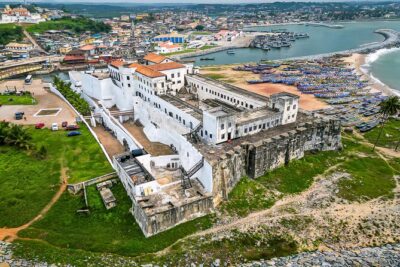
After lunch in Cape Coast, you visit Cape Coast Castle, a UNESCO World Heritage site and one of the departure points for Africans sent into slavery. The Door of No Return is the best-known symbol here, but the importance of the visit lies in the whole setting: the castle’s purpose, its holding spaces, and its position on the coast.
You should expect this day to be emotionally heavy. The itinerary does not treat the castles as pretty coastal photo stops, and you should not either. A guide who can explain the setting clearly is especially important here. The tour description promises an experienced cultural guide, and past guide names include Elvis, Isaac, Joshua, Martina, Ernest, George, and Naa.
The scheduled touring time is about two hours, not including the drive and lunch. That leaves the visit concentrated. If you want hours of independent reflection at the castle or time at additional coastal sites, this route may feel too brief.
Day Six: Kakum’s Canopy Walk and the Return to Accra
Kakum National Park supplies the trip’s biggest change of pace. The visit begins with a short walk on the forest floor, where you might see birds, butterflies, monkeys, and possibly other wildlife. The park is also home to more than 40 species of mammals, including the reclusive forest elephant, though no sighting is promised.
The main attraction is the canopy walkway. It is about 1,000 feet long, crosses seven bridges, and includes viewing platforms more than 150 feet above the ground. This is not a flat stroll through a garden. If you are uneasy with height, the walkway deserves serious thought before booking.
The canopy route is also the kind of stop that gives the itinerary a welcome physical element after several museum and monument visits. You move through the forest rather than simply looking at objects behind glass.
On the return to Accra, the vehicle stops at Abandze Village, identified as the ancestral home of Louis Armstrong. The supplied details do not promise a lengthy program there, so think of it as an additional cultural and diaspora connection on the drive back.
The tour ends back at the Accra meeting point. The sixth day combines a park visit, a village stop, and a long return journey, so you should keep your expectations realistic about free time in Accra that evening.
What the Private Format Adds
A private air-conditioned vehicle is one of the most useful inclusions here. The route covers Accra, Kumasi, Cape Coast, Assin Manso, Kakum, and the return to Accra, and public transport would add considerable planning and uncertainty.
The group size is capped at 10 people. That is small enough for a more personal guide relationship, though it is not the same as a private trip for one person or one family. The vehicle also gives you a place to store your belongings between stops and take breaks during long road sections.
The guide remains with you throughout the stay. That continuity matters when the subject matter shifts from national independence to Ashanti royal tradition, textile production, and the Atlantic slave trade. Past guide feedback highlights practical care as well as cultural explanation. One guide helped arrange a hairdresser, and another was praised for making a solo visitor feel safe and well organized.
You receive bottled water each day, plus breakfast daily. Lunch and dinner are not included except where otherwise arranged, so your budget should cover additional meals and personal purchases.
Is $3,889.62 a Fair Price?
The price is high for six days, especially before international flights, visas, insurance, gratuities, and unlisted meals. You are paying for a short, tightly planned introduction rather than a low-cost independent trip.
The value improves if you are traveling alone, visiting Ghana for the first time, or prefer not to arrange long-distance driving yourself. Airport transfers, accommodation in the stated or similar properties, private transport, daily breakfast, bottled water, and a continuous cultural guide are all included.
The price is harder to justify if you already have transport, hotels, or local contacts in Ghana. You may also feel that six days is too short for the amount of ground covered. One useful improvement would be a rest day, especially after the Accra to Kumasi transfer and before the coastal route.
Free cancellation is available if you cancel at least 24 hours before the start time. Weather-related cancellation offers a different date or a full refund. The tour requires good weather, which matters most for the Kakum canopy visit.
Who Will Get the Most From This Tour?
I would recommend this trip to a first-time visitor who wants Ghana’s major cultural and historical themes in one organized route. It suits people who value explanation, structured transport, and meaningful sites more than slow mornings or long stretches of free time.
It is also a strong choice for people tracing family or diaspora connections. Assin Manso, Cape Coast Castle, the Slave River, Brazil House, and Abandze create several points of contact with the African diaspora.
Solo travelers may appreciate the structure and the airport-to-airport support. The guide names associated with past trips include Naa, Isaac, Martina, Joshua, Ernest, Elvis, and George, but the assigned guide for a particular booking is not specified.
You should think twice if you want a relaxed holiday, a beach stay, extensive nightlife, or many unscheduled hours. This is a road-based cultural program with early starts, compact sightseeing periods, and a lot of subject matter packed into six days.
Should You Book Introducing Ghana?
Book it if you want a well-supported first look at Ghana that links Accra, the Ashanti Kingdom, the coast, and Kakum in one trip. The strongest features are the private vehicle, small group limit, steady guide support, craft workshops, and the clear connection between Ghanaian history and the wider African diaspora.
Skip it if the price strains your budget or if you need a slower schedule. At six days, the route is efficient but demanding. For the right person, it can be a powerful introduction, especially if you approach the castles with care and treat the craft villages as working communities rather than souvenir stops.
FAQ
Where does the tour begin?
The tour begins at Kotoka International Airport in Accra, Ghana. Meeting and assistance are provided after arrival procedures.
Where does the tour end?
The activity ends back at the Accra meeting point after the return from Kakum National Park and Abandze Village.
How long does the tour last?
The tour lasts approximately six days and includes six itinerary days.
Is airport transportation included?
Yes. Round-trip airport and hotel transfers, along with meeting and assistance on arrival and departure, are included.
Are meals included?
Breakfast is included daily, for a total of five breakfasts. Meals not specifically listed, including most lunches and dinners, are not included.
How large is the group?
The activity has a maximum of 10 travelers and uses private-vehicle transportation.
What is not included in the price?
International flights, visas, travel insurance, gratuities for the driver and guide, unlisted meals, and personal expenses are not included.
Just added around Accra
- Experience Aburi Botanical Gardens And Boti Water Falls In A Day.★ 5.0 · 3 reviews
- Experience Cape Coast Castle and Kakum National Park★ 4.5 · 3 reviews
- Accra city tour★ 4.5 · 3 reviews
- 7days/6nights Eco Tourism★ 5.0 · 3 reviews
- Half-Day City Tour of Accra★ 5.0 · 3 reviews
- 3 Days Accra City Tour & Cape Coast Tour★ 4.5 · 3 reviews
- Local Ghanaian Food Tasting Tours★ 5.0 · 3 reviews
- Accra Zoo, Canopy Walk and Botanical Gardens Private Tour★ 5.0 · 3 reviews
Accra Tours, compared.
Experience the Beauty, History and the Culture Of Accra in a Day
Read our review →
Cape Coast, Elmina Castle & Kakum Park Day Tour
Read our review →
Boti Falls, Umbrella Rock, Aburi Gardens & Cocoa Farm Tour
Read our review →
Browse the lists this tour appears in