
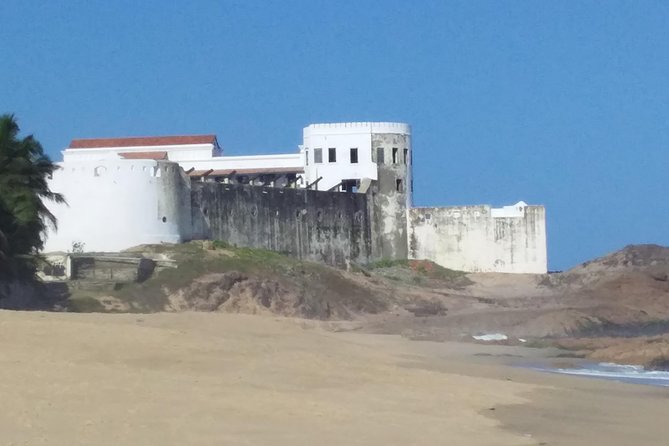
Reviewed · ACCRA TOURS
A 9 Days Experience Of The Motherland
Ghana’s story comes alive through people and place, not just museum labels. This nine-day private tour moves from Accra’s markets and colonial quarters to Ashanti royal museums, village craft workshops, waterfalls, monkey sanctuaries, slave-trade sites, and a local festival.
I like the way the program mixes major landmarks with real community encounters, especially the kente workshop and naming ceremony. I also like that airport pickup, private transport, bottled water, entrance fees, breakfast, and lunch are built in. The trade-off is a full schedule with long road days, and the meal details need checking because dinner is not clearly included in the itemized inclusions.
Key points to know
- A broad Ghana itinerary: Accra, Kumasi, Assin Manso, Cape Coast, Elmina, Kakum, Winneba, and Kintampo all appear within nine days.
- Personal cultural contact: You may receive a Ghanaian name at a traditional ceremony and try making Adinkra cloth.
- Strong historical focus: W.E.B. DuBois, Kwame Nkrumah, Cape Coast Castle, Elmina Castle, and Assin Manso give the trip serious substance.
- Private touring: Only your own group takes part, with an air-conditioned vehicle, driver, guide, and airport transfers.
- Guiding is a major part of the experience: Ben is frequently named for his warmth, flexibility, humor, and clear explanations, with Bernice, Emmanuel, Victor, Dan, Sherifa, and Charles also involved across different departures.
- Plan for busy days: Several days include two to five stops, and the route covers a lot of ground.
Why this Ghana tour feels different

Many Ghana itineraries stay close to Accra or focus only on the coastal castles. This one tries to show the country as a whole. You begin with modern Accra, move inland to the Ashanti capital of Kumasi, then continue through forest, waterfalls, craft villages, and the central coast before returning to the capital.
That range is the tour’s greatest strength. You are not simply ticking off buildings. You see how royal traditions, cloth production, cocoa farming, local religion, food, music, and public celebrations fit into everyday Ghanaian life.
The trip also has a clear connection to the African diaspora. Assin Manso, Cape Coast Castle, and Elmina Castle are not treated as isolated historic attractions. They form a difficult but important sequence, tracing the movement of captive Africans from inland routes toward the coast and the Atlantic slave trade.
You should expect an active nine days. The stated start time is 7:00 a.m., and some stops take several hours. That early rhythm helps you cover the route, but it leaves little room for sleeping late or changing plans on a whim.
A few more Accra days to weigh up
- The Cape Coast Day Tour
★ 5.0 · 525 reviews - Experience the Beauty, History and the Culture Of Accra in a Day
★ 5.0 · 323 reviews - The Cape Coast Tour
★ 5.0 · 177 reviews
Arrival in Accra starts with music
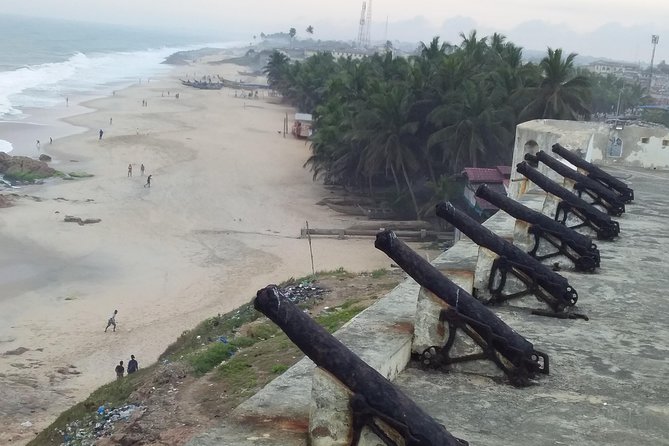
Your driver and guide meet you at the airport and take you to your hotel. That first transfer matters after a long flight, since you do not need to figure out local transport immediately.
The welcome continues with a traditional performance by the Kpalungo Cultural Troupe. It is a smart introduction to the trip. Instead of beginning with a formal lecture, you meet Ghana through rhythm, movement, and ceremony.
The first day is otherwise light, with about an hour set aside for the transfer and another hour for the performance. That gives you a chance to settle in before the more demanding sightseeing begins.
Accra combines national memory with street life
Day two packs several very different parts of the capital into one route. At the W.E.B. DuBois Center, you visit the former home, library, and memorial site connected with the Pan-African thinker and civil rights figure. This stop gives the trip an international frame and helps explain Ghana’s importance to Pan-African politics.
The Kwame Nkrumah Memorial Park shifts the focus to Ghana’s independence. The mausoleum is connected with Dr. Kwame Nkrumah, the country’s first president and a central figure in its independence story. I would give this visit your full attention. It is one of the places where the political meaning of Ghana becomes especially clear.
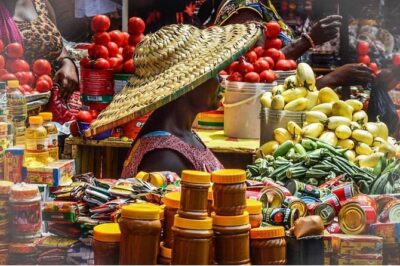
Then the mood changes at Makola Market. This is one of Accra’s best chances to see commerce at close range, with goods, conversation, and movement all around you. Stay alert, keep personal items secure, and follow your guide’s advice. A market visit is more enjoyable when you accept that it may feel crowded and unpredictable.
James Town adds another layer. You see the lighthouse, Usher Fort, the fishing harbor, and the surrounding community. The area connects British colonial settlement with an active coastal neighborhood, so it is more useful than a quick photo stop. You see both the old structures and the living community around them.
The final stop is the Center for National Culture, Ghana’s largest arts market. This is a good place to compare crafts, look for gifts, and see the range of Ghanaian artistic work. If you plan to buy something, ask about prices and take your time. The cultural value is high, but shopping works best when you do not rush into the first purchase.
Kumasi brings Ashanti royal history into focus
Kumasi is the center of the Ashanti portion of the tour. At Manhyia Palace Museum, you visit the former residence and museum of the Ashanti king. The setting gives you a direct look at royal institutions and the people who shaped the region.
The Prempeh II Jubilee Museum, located in the Kumasi Cultural Centre, adds more detail about Nana Agyeman Prempeh. With two hours scheduled here, this is one of the more substantial museum visits on the tour.
I like this pairing because it avoids reducing Ashanti culture to a few objects in a display case. One museum focuses on the palace and royal setting, while the other helps explain a specific king and his place in Ashanti history.
Still, two museum visits in one day can feel formal if you prefer outdoor activity. This part suits you best if you enjoy guided explanations, historic objects, and the story of leadership.
Same departure point, a completely different day out:
- From Accra: Cape Coast, Elmina Castle & Kakum Park Day Tour
★ 4.6 · 144 reviews - Accra Detailed City Tour
★ 4.5 · 118 reviews - Accra Guided City Tour Experience
★ 4.7 · 88 reviews - Accra Guided City Tour Experience
★ 5.0 · 76 reviews
Kente and Adinkra turn culture into a hands-on activity
Day four is one of the most distinctive parts of the experience. At Adansomaso, you visit a kente weaving village and learn how this famous Ghanaian cloth is made. You also visit a cocoa farm and a local healer’s shrine.
The naming ceremony is the emotional center of the day. You receive a local name and take part in a traditional community practice rather than simply watching one from the edge. That personal element can make the visit far more memorable, but you should approach it with respect and follow the guidance of the local hosts.
At Ntonso, artisans demonstrate the making of Adinkra cloth. You can try creating your own piece, which gives you a better sense of the time and care behind the finished designs.
Kente and Adinkra are not interchangeable. The tour presents them in separate villages, allowing you to see two different textile traditions and production methods. For shoppers, this is also a useful chance to understand what you are buying before spending money at an arts market.
The cocoa farm and healer’s shrine broaden the day beyond textiles. You see parts of rural life that a city-centered itinerary would miss. The drawback is that this day asks you to move between several types of activity, so the pace may feel full by the end.
Monkeys and Kintampo Falls provide a change of pace
Boabeng-Fiema Monkey Sanctuary brings wildlife and local belief together. You look for Mona monkeys and black-and-white colobus monkeys, then make a courtesy call on the village’s monkey priest.
The sanctuary is not just a wildlife stop. The visit connects the animals with the traditional customs of Boabeng-Fiema. Listen carefully to your guide here, since the local meaning of the sanctuary is as important as the chance to spot monkeys.
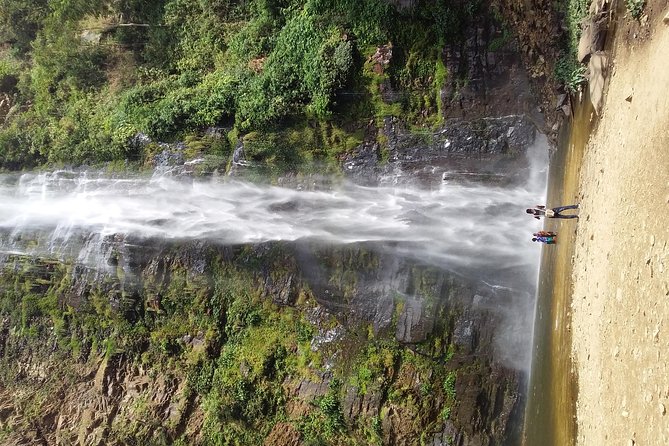
Kintampo Falls adds water, forest, and movement to the day. You visit the waterfall and use the newly constructed canopy walkway. The two-hour schedule at each stop gives you time to enjoy the setting without treating it as a hurried roadside break.
This is one of the tour’s better balanced days. After museums, markets, and historical sites, you get a physical outdoor experience. Wear practical shoes and expect the day to feel less structured than the museum visits.
Assin Manso places the slave trade in human terms
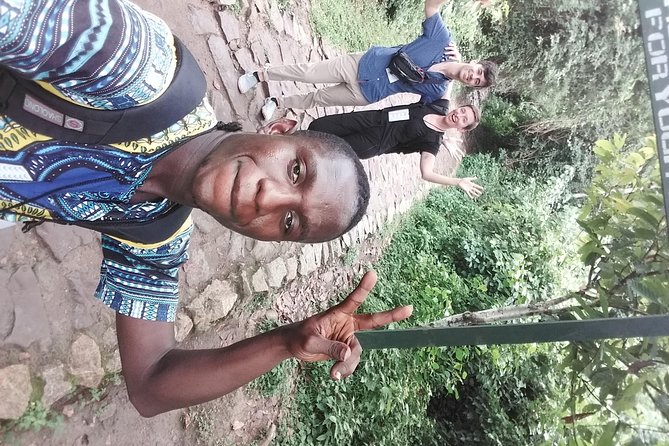
Assin Manso Ancestral Slave River Park receives a full six hours, making it the longest single stop of the tour. The site is associated with the river where captive Africans were taken for their last bath before being sent toward the coastal slave castles at Cape Coast and Elmina.
This is a serious visit, and the time allocation is appropriate. You have room to listen, reflect, and understand the inland connection to the coastal forts. The subject can be painful, particularly for people visiting Ghana as part of a personal or family connection to the African diaspora.
The stop may feel quiet compared with Accra’s markets or the festival in Winneba. That is part of its value. Do not expect entertainment here. Expect a place for remembrance and careful interpretation.
Cape Coast and Elmina complete the historical route
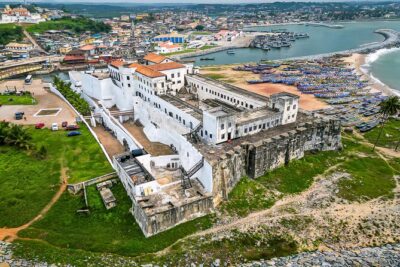
Day seven covers three major sites. At Cape Coast Castle, you visit a UNESCO World Heritage site tied to the Atlantic slave trade. The two-hour visit gives you time to see the structure and follow its difficult story.
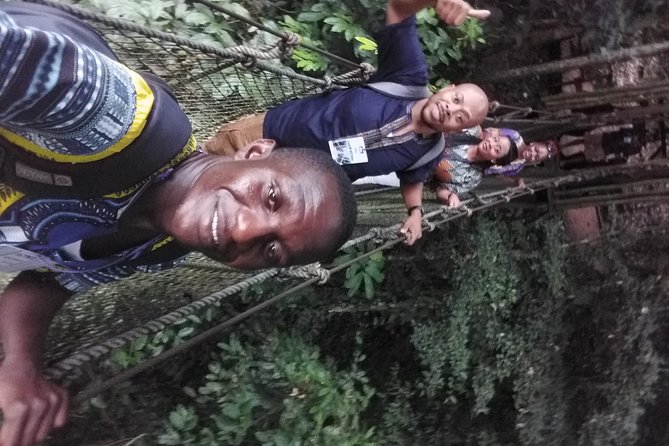
Kakum National Park changes the setting completely. The park includes trees, animal species, and birds, with the famous canopy walkway as its main activity. If heights make you uncomfortable, keep that in mind before booking. The tour includes the walkway, so it is not merely a ground-level nature visit.
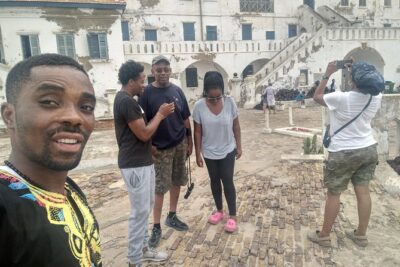
Elmina Castle completes the coastal sequence. It is described as the first colonial building in sub-Saharan Africa and is also a UNESCO World Heritage site. Together, Cape Coast and Elmina show how European forts operated along the coast, while Assin Manso connects those sites to inland capture and forced movement.
This is a demanding day, both physically and emotionally. Three stops with two hours at each means you should be ready for frequent transitions. The benefit is a strong, connected account of Ghana’s past rather than three unrelated attractions.
Winneba adds celebration and local color
The Winneba Masquerade Festival is scheduled for six hours. This is the tour’s biggest public celebration and a chance to see costumes, performance, music, and community pride in a setting that is not staged solely for tourists.
Festival timing is naturally less predictable than a museum visit. The schedule may depend on the day’s program and crowd movement, so bring patience. You may also want to keep your belongings secure and stay close to your guide in busy areas.
This day works especially well after the serious coastal history. It shows Ghana as a living country with public traditions that continue beyond the monuments.
Modern Accra and the beach close the trip
The final day begins at West Hills Mall, where you get a look at modern Accra. It may sound less historic than a palace or castle, but the stop helps round out the picture. Ghana is not only royal museums, craft villages, and colonial buildings. It is also shopping centers, contemporary routines, and urban life.
Labadi Pleasure Beach offers a slower finish. You can enjoy the sea breeze, relax, and take part in horse riding at the beach. The schedule allows about three hours before leaving for the airport two hours before check-in time.
That airport timing is useful, but your departure details still matter. Confirm the exact pickup time with the tour team, particularly if your flight schedule changes. The final day combines leisure with a firm travel deadline, so do not treat the beach portion as completely open-ended.
What the $1,948.72 price covers
At $1,948.72 per person, this is not a budget sightseeing day. It is a nine-day private program with airport pickup, an air-conditioned vehicle, a driver, a guide, entrance fees, unlimited bottled water, breakfast, and lunch.
The value depends on how much you want handled for you. You are paying for one company to organize a wide route across Accra, Kumasi, central Ghana, the coast, and the return to Accra. Private touring also means your group can receive direct attention instead of joining a large shared bus.
The inclusions need a careful look. The headline description refers to eight days of breakfast, lunch, and dinner, but the detailed inclusion list specifically names eight breakfasts and eight lunches. Drinks, personal purchases, and gratuities for the driver and guide are excluded. I would ask about dinner before paying, since that could affect your daily spending.
You also need to budget for souvenirs, festival purchases, beach activities if charged separately, and drinks. Entrance fees are listed as included, which removes one common source of small surprises.
Guides, vehicles, and the feel of a private group
Ben is the main guide named in the feedback about this experience. His strengths are warmth, humor, flexibility, and an ability to explain Ghana in a way that connects with the group. Bernice, Emmanuel, Victor, Dan, Sherifa, and Charles are also named as members of the guiding and support team on different trips.
That matters on a nine-day route. A guide who can adjust to an extra request, keep a group on time, and explain sensitive history clearly can shape the whole experience. The available comments repeatedly highlight punctuality, safety, friendliness, and a family-like atmosphere.
You take part only with your own group. That gives you privacy and makes it easier to manage a larger party. One group described having 16 Jamaican participants, so the private format can also suit family reunions, heritage trips, and organized groups.
The vehicle is air-conditioned, and bottled water is unlimited. Those are practical benefits on long drives and warm sightseeing days. Still, the route is extensive, and you should be comfortable spending substantial time on the road.
Who should book this experience
I would recommend this tour to you if you want a first Ghana trip with the major pieces arranged in one package. It suits people interested in African diaspora history, Pan-Africanism, Ashanti culture, traditional ceremonies, crafts, wildlife, festivals, and food.
It is also a good fit for families or private groups that value a dedicated vehicle and guide. The range of guides named across departures suggests that the company can support larger groups, though your exact guide team should be confirmed.
I would hesitate if you want a slow holiday with long free afternoons. The 7:00 a.m. start, several two-hour visits, long-distance transfers, and emotionally serious historical sites make this an active program.
Book with three questions in mind:
- Is dinner included, or should you plan to pay for it separately?
- Which guide and driver will be assigned to your group?
- How will airport timing and the final beach visit fit your flight?
Confirmation is provided at booking. You can cancel for a full refund up to 24 hours before the start time, but changes or cancellations within 24 hours are not refunded.
Should you book the nine-day Motherland experience?
Book it if you want Ghana presented through both major landmarks and personal encounters. The naming ceremony, textile workshops, monkey sanctuary, festival, and local communities give the route more character than a standard city-and-castle tour.
The price is reasonable for a private nine-day plan with transport, guides, fees, breakfast, lunch, water, and airport transfers, provided the dinner question is settled before booking. You will work hard for the experience, but you will also see a large and meaningful portion of Ghana in a single trip.
FAQ
How long is the Motherland tour?
The experience lasts approximately nine days.
Where does the tour begin?
It begins in Accra, with airport pickup and transfer to your booked hotel.
What time does the tour start?
The stated start time is 7:00 a.m.
Is this a private tour?
Yes. Only your own group participates in the activity.
What transportation is provided?
An air-conditioned vehicle is provided, along with a driver and tour guide. Airport pickup and transfer are also offered.
Are meals included?
Eight breakfasts and eight lunches are listed as included. The detailed inclusions do not clearly list dinner, so confirm that point before booking.
What attractions are included?
The route includes Accra landmarks, W.E.B. DuBois Center, Kwame Nkrumah Memorial Park, Makola Market, James Town Lighthouse, the Center for National Culture, Ashanti museums in Kumasi, kente and Adinkra villages, Boabeng-Fiema Monkey Sanctuary, Kintampo Falls, Assin Manso, Cape Coast Castle, Kakum National Park, Elmina Castle, the Winneba Masquerade Festival, West Hills Mall, and Labadi Pleasure Beach.
Are entrance fees included?
All fees and taxes are listed as included, and admission is specifically included for the named museums, parks, castles, markets, and other stops.
What is the cancellation policy?
You receive a full refund if you cancel at least 24 hours before the experience starts. Cancellations or changes made less than 24 hours before the start time are not refunded or accepted.
Just added around Accra
- Experience Cape Coast Castle and Kakum National Park★ 4.5 · 3 reviews
- Experience Aburi Botanical Gardens And Boti Water Falls In A Day.★ 5.0 · 3 reviews
- Accra city tour★ 4.5 · 3 reviews
- Half-Day City Tour of Accra★ 5.0 · 3 reviews
- 7days/6nights Eco Tourism★ 5.0 · 3 reviews
- 3 Days Accra City Tour & Cape Coast Tour★ 4.5 · 3 reviews
- Local Ghanaian Food Tasting Tours★ 5.0 · 3 reviews
- Accra Zoo, Canopy Walk and Botanical Gardens Private Tour★ 5.0 · 3 reviews
Accra Tours, compared.
Experience the Beauty, History and the Culture Of Accra in a Day
Read our review →
Cape Coast, Elmina Castle & Kakum Park Day Tour
Read our review →
Boti Falls, Umbrella Rock, Aburi Gardens & Cocoa Farm Tour
Read our review →
Browse the lists this tour appears in