
Reviewed · GHANAIAN NAMING CEREMONY EXPERIENCES
Kumasi Heritage Tours And Naming Ceremony In A Day
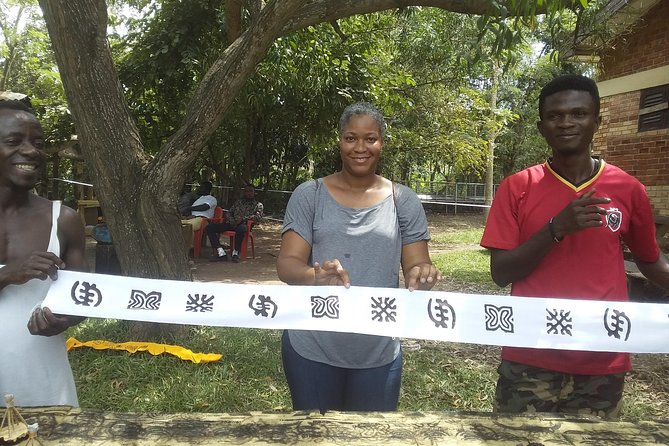
The most memorable part of this day is the chance to take part rather than simply look. In Adanwomase, you learn how kente cloth is woven, visit a working cocoa farm, and receive a Ghanaian name based on the day of your birth. At Ntonso, you make your own Adinkra cloth.
I like the private transport and guide, which remove the trouble of finding two rural craft villages on your own. I also like the clear mix of culture and hands-on work: you see how cloth is made, then try the process yourself. The main drawback is the early 7 a.m. start and the fact that lunch is not included, so you should plan for a long day.
Key points to know before booking
- Two craft villages in one day: Visit Adanwomase for kente and Ntonso for Adinkra cloth.
- A personal naming ceremony: Receive a local Ghanaian name connected to the day of your birth.
- Hands-on textile work: Make your own Adinkra cloth instead of only watching a demonstration.
- A working cocoa farm: See another important part of local life and Ghana’s agricultural economy.
- Private, practical transport: Ride in an air-conditioned vehicle with round-trip transportation included.
- A full ten-hour outing: Start at 7 a.m., and allow most of the day for the road, village visits, and activities.
What this Ashanti culture day really offers
This is not a city sightseeing trip with a quick photo stop at each attraction. The focus is on village-based craft, personal contact, and taking part in customs that are still practiced today.
The two main stops also complement each other. Adanwomase introduces you to kente, the brightly patterned woven cloth associated with Ghana, especially Ashanti culture. Ntonso shifts the focus to Adinkra, a printed cloth built around traditional symbols. You get to see two different textile methods in one day.
The private format matters here. Only your group takes part, so the pace can feel more personal than a large coach outing. You have a guide to handle the route and explain what you are seeing, while the included vehicle keeps the day simple.
The price is $256.42 per person. That is not a bargain-priced local excursion, but it includes an air-conditioned vehicle, all fees and taxes, a private activity, and transportation between the stops. For a small group that values convenience and a planned cultural experience, the cost can make sense. If you are comfortable arranging transport independently, you may find the price harder to justify.
The tour is listed in Accra, while the route information describes visits to Adanwomase and Ntonso from Kumasi. Confirm the pickup location before paying, since that detail affects the day’s timing and value.
More naming ceremony experiences:
- The Ancestral Naming Ceremony and Home Coming Experience
★ 5.0 · 30 reviews - Naming Ceremony and Heritage Homecoming Experience for Diasporas
★ 4.5 · 15 reviews - Traditional Naming Ceremony and Boat Cruise Experience
★ 5.0 · 15 reviews
Starting at 7 a.m. with private transport
The day begins at 7 a.m. Pickup is offered, and the experience includes round-trip transportation in an air-conditioned vehicle. That is useful for a route involving rural communities, particularly if you do not want to work out separate connections between the villages.
A 7 a.m. start also means you should prepare the night before. Have breakfast before pickup or bring something along, since lunch is not included and the outing lasts about ten hours. The schedule leaves plenty of room for the two main villages and the farm visit, but it is still a full day rather than a short morning activity.
Because the tour is private, you are not tied to the needs of a large group. The supplied information does not name the guide, so you should not expect to choose a particular guide in advance. What is clear is that the guide is there to provide personal attention and help you understand the places you visit.
The drive itself is part of the practical calculation. Private transport saves you from navigating, but the price reflects that convenience. If you are staying close to the listed starting point and want one organized day, this arrangement is easy. If your accommodation is far away, ask exactly where pickup is available.
Adanwomase and the patient work of kente weaving
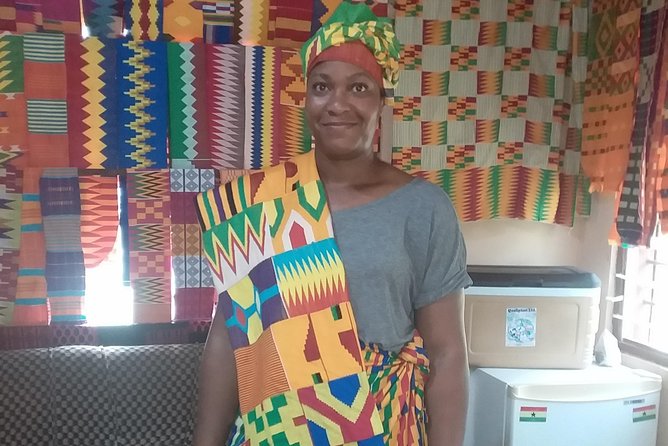
Your first main stop is Adanwomase, a village noted for kente weaving. The visit takes you to a community weaving center, where you can learn how traditional kente cloth is made.
Kente is not produced as a single sheet on a modern factory line. The appeal of this visit is seeing the work close up and understanding the skill behind the finished cloth. You can expect the weaving process to be the center of the stop, with time to watch the craft and ask questions through your guide.
The human side of the workshop is part of its appeal. The local weavers, including young boys dedicated to their task, make the visit feel connected to working community life rather than staged only for display. You are seeing people practice a skilled trade, with the patience and concentration that the work requires.
This is a good place to slow down. Kente patterns can look bold and quick to make from a distance, but the weaving itself requires steady attention. Your guide can help connect the technique to the wider Ashanti setting, while the weavers show what the process looks like in practice.
Do not treat the stop as a guaranteed shopping opportunity unless your guide or the workshop confirms it. The information provided focuses on learning how the cloth is made, not on a specific purchase allowance or a particular type of textile included in the price.
A cocoa farm adds an agricultural side
Adanwomase also includes a visit to a local cocoa farm. This gives the day a useful change of pace after the textile center and shows another part of everyday work in the area.
The farm visit is not described as a long plantation tour or a chocolate-making workshop, so keep your expectations focused. You are visiting a working cocoa farm, not signing up for a food tasting or a full agricultural course. The value is in seeing the source of an important crop and placing local craft within a broader rural setting.
I like this combination because it prevents the day from becoming only a textile demonstration. You see one livelihood based on careful handwork and another tied to farming. Those two stops make the outing feel broader and more grounded.
The supplied information does not specify the season, the crops you will see, or the exact activities at the farm. Conditions may vary. Wear practical clothing and shoes suitable for a rural visit, but do not expect a detailed farm program beyond the stated stop.
More history visits around Accra:
- Experience the Beauty, History and the Culture Of Accra in a Day
★ 5.0 · 323 reviews - Ghana Heritage Tours – Beyond The Return
★ 5.0 · 36 reviews - 10 Days Ghana Cultural and Heritage Trip
★ 5.0 · 31 reviews - Cape Coast Historical Day Tour
★ 5.0 · 24 reviews
Your Ghanaian name and the meaning of the ceremony
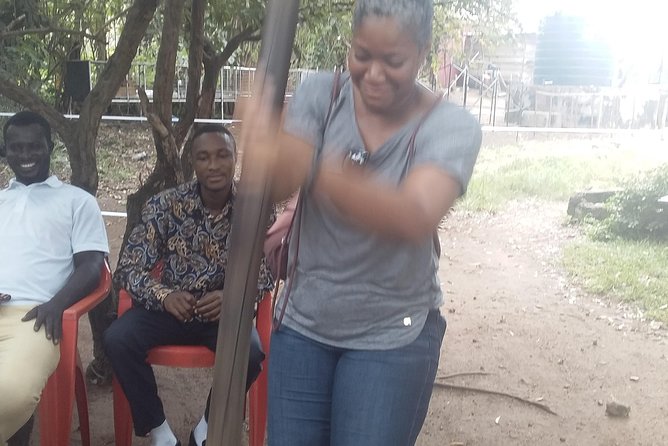
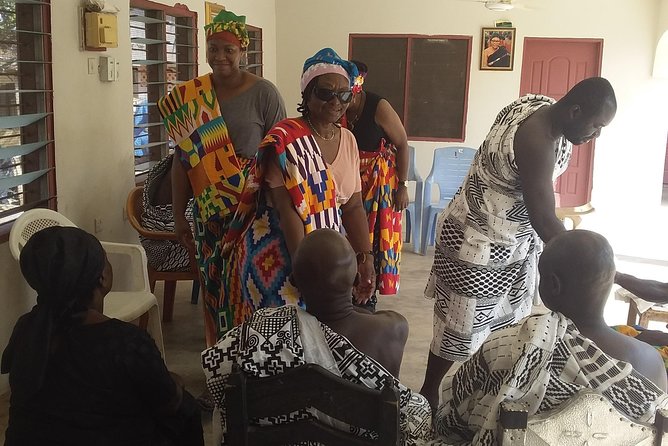
Adanwomase is also where you take part in a traditional Ghanaian naming ceremony. You receive a local name based on the day of your birth.
This is the most personal part of the experience. A name connected to your birth day gives you a direct link to Ghanaian custom, rather than leaving culture as something you only observe from the outside. Your guide and local hosts can explain the name and the ceremony as you take part.
The activity is designed for participation, but it is worth approaching it with respect. Listen carefully to the explanation, follow the local instructions, and treat the ceremony as more than a novelty photo moment. You may leave with a small story that is easier to remember than a list of dates and facts.
The listing does not state the exact ceremony format, the names assigned for each day, or whether a certificate or other keepsake is provided. Do not assume those extras are included. The confirmed element is the local name given according to your day of birth.
This part can also make the tour a good choice for families, couples, and small groups looking for a shared memory. Since the activity is private, the ceremony is limited to your own group rather than performed for a large audience.
Ntonso and the symbols of Adinkra cloth
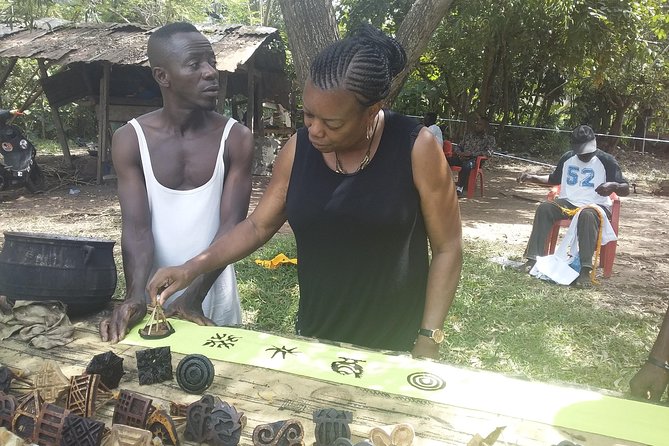
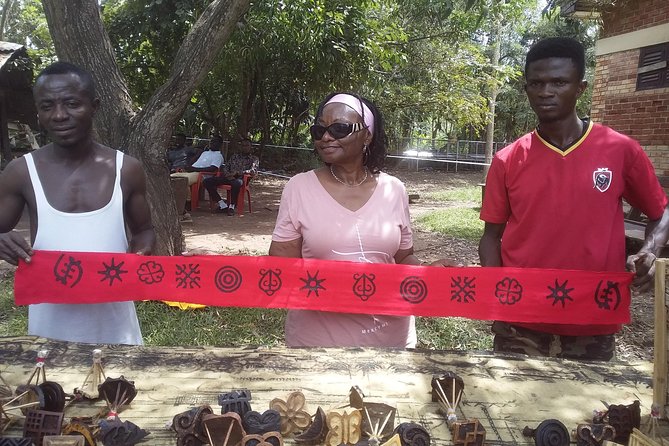
The second main stop is Ntonso, an Adinkra cloth-making village. Here, you learn about Adinkra and the traditional symbols used in this form of cloth decoration.
Adinkra is different from kente. At Adanwomase, you focus on weaving. At Ntonso, the focus is on symbols and cloth-making methods connected to them. That contrast gives the day a clear structure and helps you understand that Ghanaian textile traditions are not all the same.
The visit includes an explanation of the background of Adinkra and the meaning of this ancient traditional symbol system. The supplied information does not list individual symbols or their meanings, so the exact discussion will depend on the guide and the local craftsmen. Still, this is the stop where visual design and cultural meaning come together most directly.
You also make your own Adinkra cloth. That hands-on element is important. It lets you feel the process instead of simply looking at finished pieces, and it gives you something personal to remember the day by.
The activity lasts about two hours, with admission included. The information does not specify the size of the cloth, the tools used, or whether your finished piece is included to take home. Ask the guide or workshop staff before beginning if the final item is yours to keep and how it should be packed for the journey.
How the two village visits fit together
The strongest feature of this tour is its progression. Adanwomase gives you weaving, farming, and a naming ceremony. Ntonso gives you Adinkra symbols and your own cloth-making activity.
That mix keeps the ten-hour day from feeling repetitive. You move between watching skilled work, visiting a farm, taking part in a personal custom, and producing something yourself.
The schedule information assigns about two hours to Adanwomase and two hours to Ntonso. The remaining time accounts for transportation and the full route. You should not plan another fixed activity immediately after the tour, especially if road conditions or village timing change.
The trip also works best for people who want context and contact, not only landmark photographs. If your priority is a quick list of sights, the long duration may feel excessive. If you want to understand how cloth is made and take part in local customs, the pace has more purpose.
Price, lunch, and what is included
At $256.42 per person, the cost deserves a close look. The package includes an air-conditioned vehicle and all fees and taxes, along with the private format. You are paying for transport, planning, access to the activities, and a guide focused only on your group.
Lunch is not included. That is the main extra cost stated, and you should budget for it. The information does not identify a restaurant, a meal stop, or a set lunch price, so ask how food fits into the day before departure.
The tour becomes better value when several people share the private experience, though the listed price is still charged per person. It is also more useful if you would otherwise need to arrange transport to both villages yourself. For independent visitors who already have a car and local contacts, the price may feel high.
All fees and taxes being included makes the booking easier to understand. You will still want to confirm whether any purchases, optional tips, food, or personal expenses are separate. The supplied details specifically exclude lunch and do not promise shopping credits or extra souvenirs.
Who will enjoy this experience most
I would choose this day if you want more than a standard city tour and have a genuine interest in Ghanaian craft and custom. It suits people who enjoy meeting local makers, asking questions, and trying a traditional process with their own hands.
It is also a good match for visitors who prefer private arrangements. Your group is the only group taking part, and the air-conditioned vehicle removes the need to navigate between Adanwomase and Ntonso.
Families and small groups may appreciate the variety. Children who enjoy making things could find the Adinkra activity especially engaging, although the information does not set a minimum age or describe child-specific arrangements. Ask the provider if you are booking for young children.
You should think twice if you dislike early starts, long days, or activity-based cultural visits. The experience is not presented as a relaxed resort outing. It asks you to leave early, travel between communities, listen, watch, and participate.
The tour is also less suitable if you need a tightly fixed schedule after 5 p.m. The duration is about ten hours, and the exact return time is not stated.
Practical preparation for a better day
Wear comfortable clothes that allow you to move around during the weaving and Adinkra activities. The tour includes village and farm visits, so practical footwear is a sensible choice.
Bring money for lunch and any personal purchases. Lunch is the only clearly stated exclusion, but the cost and availability of craft items are not specified.
Keep your booking confirmation available. Confirmation is sent at the time of booking, and the activity accepts mobile tickets. Pickup details should be checked carefully because the information names Accra as the location while describing a route from Kumasi.
Most people can participate, and the activity is near public transportation, but it is still a private road-based tour with village visits. If you have a specific mobility, medical, or dietary need, contact Bigbentours1gh before booking because the available details do not explain those arrangements.
Free cancellation is available up to 24 hours before the start time for a full refund. Cancellations or changes made inside that 24-hour window are not refunded or accepted, with cut-off times based on local time.
Should you book the Adanwomase and Ntonso day?
Book it if you want a private, hands-on introduction to Ashanti culture and are happy to give up a full day. The kente workshop, cocoa farm, naming ceremony, and Adinkra activity offer more substance than a simple sightseeing loop.
The strongest reasons to choose it are the personal naming ceremony and the chance to make cloth yourself. Those details turn the outing into something you participate in, not just something you photograph.
Think carefully about the $256.42 price, the 7 a.m. start, lunch costs, and the unclear Accra versus Kumasi pickup wording. Confirm that point before booking. If the location works for you and you value private transport and local craft contact, this is a worthwhile cultural day. If you want a cheap, short excursion or a polished museum-style presentation, choose another activity.
FAQ
Where does the tour take place?
The tour information lists Accra as the location, while the route visits Adanwomase and Ntonso and describes the trip as being from Kumasi. Confirm the exact pickup point with Bigbentours1gh before booking.
What time does the experience begin?
The scheduled start time is 7:00 a.m.
How long does the tour last?
The experience lasts approximately 10 hours.
Is transportation included?
Yes. Round-trip transportation is included in an air-conditioned vehicle, and pickup is offered.
Is this a private tour?
Yes. Only your group participates in this private tour or activity.
What happens at Adanwomase?
You visit a kente weaving village, see a local cocoa farm, learn how kente cloth is made at a community weaving center, and take part in a naming ceremony.
What happens at Ntonso?
You learn about Adinkra cloth and its traditional symbols, then make your own Adinkra cloth. Admission is included.
Is lunch included?
No. Lunch is not included in the tour price.
Is cancellation free?
You can cancel at least 24 hours before the start time for a full refund. Cancellations or changes made less than 24 hours before the start time are not refunded or accepted.
Just added around Accra
- Accra: Tafi Kente Village, Monkey Sanctuary &Wli Waterfalls★ 4.5 · 4 reviews
- 2 Days (1 night) Elephants Safari at Mole Park with Round – trip flights★ 5.0 · 4 reviews
- Full-Day Wli water Falls and Monkey Sanctuary Private Tour★ 5.0 · 4 reviews
- 9 Day Ghana Wildlife and Culture Tour★ 5.0 · 5 reviews
- A Taste of West Africa – Ghana Togo & Benin★ 5.0 · 5 reviews
- Quad Biking and Waterfalls Adventure★ 5.0 · 5 reviews
- Experience Accra★ 5.0 · 6 reviews
- Accra Architectural Tour★ 3.9 · 5 reviews
Ghanaian Naming Ceremony Experiences, compared.
The Ancestral Naming Ceremony and Home Coming Experience
Read our review →
Naming Ceremony and Heritage Homecoming Experience for Diasporas
Read our review →
Traditional Naming Ceremony and Boat Cruise Experience
Read our review →
Traditional naming ceremony For African Diasporas in Kumasi
Read our review →
Naming Ceremony, Assin Manso Slave River and Cape Coast Castle
Read our review →Browse the lists this tour appears in