
Reviewed · ACCRA TOURS
Half-Day Guided Fabric Tour in Ghana
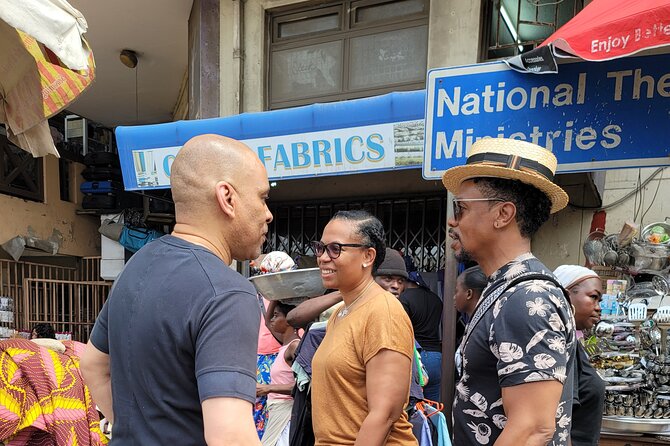
The best part of this Accra experience is that you do not just look at fabric, you handle the buying process and make your own design. At Makola Market, you will see how African print sellers and buyers negotiate, learn what different patterns and symbols mean, and then spend three hours creating a batik tie-dye piece at Exmac Fabrics.
I like the direct access to local textile culture and the chance to take home something made by your own hands. I also like that your guide, Albert, is a working designer who can answer questions about Ghanaian society as well as clothing. The main consideration is walking: Makola Market can be demanding for anyone with mobility difficulties, and lunch is not included.
Key points to know before booking
- Makola Market comes first: Spend about two hours learning about African prints, fabric names, symbols, and buying customs in Accra’s largest open market.
- You make the souvenir yourself: The three-hour Exmac Fabrics session lets you choose, design, and create a batik tie-dye piece to take home.
- Albert brings fashion experience: The guide is a designer with 12 years in the fashion industry, and custom clothing can be ordered with a 20% discount.
- Pickup keeps the day simple: Hotel or residence pickup and drop-off are included within Accra, along with private transport in an air-conditioned vehicle.
- The group stays small: The maximum is 10 people, though private transportation is provided.
- Budget for lunch and extras: The $160 price covers the listed activities, drinks, transport, and fees, but not lunch, breakfast, or anything outside the planned schedule.
Why fabric is the right way to meet Accra
Clothing here is not treated as a minor shopping detail. Fabric carries color, pattern, names, and symbols, and it can connect to particular occasions or ways of presenting yourself. This tour gives you a practical way to understand that meaning instead of simply passing a rack of cloth and calling it local culture.
The fashion focus also makes the experience useful for people who enjoy design, sewing, photography, shopping, or handmade work. You will not spend six hours moving from one famous sight to another. Instead, the day stays with one subject and shows it from two angles: the market and the workshop.
That narrow focus is a strength. A guide can explain what you are looking at, show you how fabrics are bought, and then help you turn a piece of cloth into a personal souvenir. If you want a broad city tour covering monuments, food, and museums, this is not that. If you want a closer look at textile life, it makes good use of a half-day.
A few more Accra days to weigh up
- Half-Day Private History Tour in Nkyinkyim Museum
★ 5.0 · 9 reviews - Half-day Accra Guided Tour
★ 4.5 · 8 reviews - Half-Day Accra City Tour Experience
★ 5.0 · 7 reviews
Starting at Makola Market in Accra
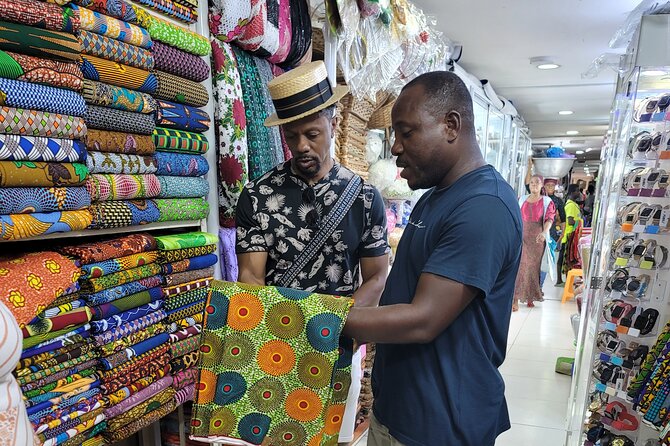
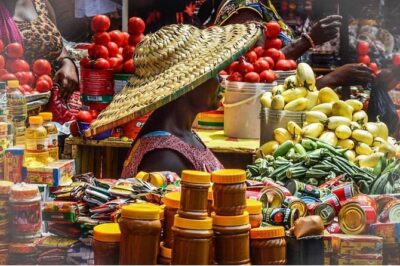
The first stop lasts about two hours at Makola Market, described as the biggest open market in Accra. You will be taken to the African print sellers’ section, where the activity centers on the everyday exchange between buyers and sellers.
This is more useful than a quick shopping stop. You will learn how fabric is presented and sold, along with the names of different textiles and the symbols found in their designs. You can ask what certain patterns mean and when particular fabrics are worn or used. The guide’s fashion background should help connect the visual details to clothing choices and social occasions.
The market also gives you a chance to buy local fabric at affordable or wholesale prices. That can make a real difference if you want several yards for clothing, gifts, or a later sewing project. It also means you should think ahead about what you want to buy. The tour includes a lesson in fabric, but it does not include the cost of any cloth you purchase.
I would treat Makola as both a shopping stop and a field lesson. Look closely at the designs before deciding what you like. Ask about names, symbols, and uses rather than choosing only by color. The experience is strongest when you allow time for conversation and observation, not just a fast purchase.
There is one practical trade-off. A large open market requires walking, standing, and moving through a busy commercial setting. The tour specifically says it is not recommended for people who cannot walk comfortably or who have difficulty walking in a market. Wear sensible shoes and keep your spending plans clear so the shopping does not crowd out the learning.
Turning cloth into batik at Exmac Fabrics
The second stop is Exmac Fabrics, where you will spend about three hours learning how handmade batik tie-dye is made. This is the hands-on center of the tour. You do not simply watch an artisan work. You choose and design your own piece, then create it with your hands.
The process gives the market visit a useful follow-up. After seeing finished fabrics for sale, you get to think about how patterns are formed and how a plain piece of material becomes something personal. The exact design options are not specified, so you should expect guidance at the workshop rather than a fixed project with only one outcome.
Your finished fabric is yours to take home. That makes the souvenir more meaningful than a ready-made purchase because you have a clear connection to the making process. It may also appeal to anyone who wants a creative activity rather than another passive sightseeing stop.
Three hours is a generous amount of time for the workshop. You should not need to rush from choosing a design to completing the fabric. At the same time, this is a craft session, not a polished stage show. Your result may reflect your own decisions and skill, which is part of the point.
If you are booking with friends or colleagues, the workshop should work well as a shared activity. You can make different choices while learning the same process. It also suits solo visitors because the work itself gives the day a clear focus and the vehicle and pickup arrangements remove some of the usual transport planning.
What Albert adds to the experience
Albert is identified as the guide and as a designer himself. His professional background is important here because the tour depends on more than getting from one stop to another. You need someone who can explain fabric types, patterns, symbols, clothing, and the practical side of design.
He can also answer questions about Ghanaian society, which broadens the experience beyond fashion. That matters at Makola Market, where a fabric’s use may relate to an occasion or social setting. It also matters at the workshop, where design choices can lead to wider questions about how clothing is made and worn.
The tour provider describes its lead as a 12-year fashion industry expert, while the experience specifically identifies Albert as the guide. That combination suggests a guide-led day with real professional context rather than a generic shopping transfer.
A useful bonus is the 20% discount on custom African wear clothing. This is not the same as clothing being included, so plan for an additional purchase if you decide to use the offer. Still, it gives you a practical option after learning about local fabric, especially if you want a finished garment instead of only the fabric you make.
Same departure point, a completely different day out:
- The Cape Coast Day Tour
★ 5.0 · 525 reviews - Experience the Beauty, History and the Culture Of Accra in a Day
★ 5.0 · 323 reviews - The Cape Coast Tour
★ 5.0 · 177 reviews - From Accra: Cape Coast, Elmina Castle & Kakum Park Day Tour
★ 4.6 · 144 reviews
What the $160 price covers
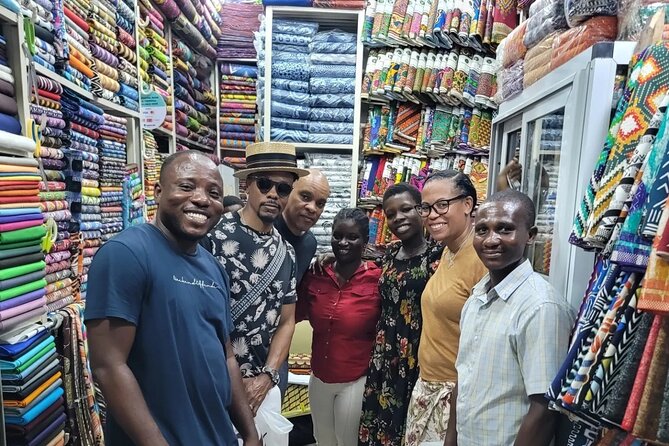
At $160 per person, this is not a bargain market outing. The value depends on how much you want from the day. You are paying for about six hours, private transportation, pickup and drop-off within Accra, an air-conditioned vehicle, all fees and taxes, bottled water, soda or pop, and both listed activities.
The price also buys structure. You do not have to arrange a ride to Makola Market, find the fabric sellers, locate a batik workshop, or work out how to connect the two stops. You also have a guide who can explain what you are seeing and help turn the workshop into a complete activity.
For someone interested in textiles, that package can be fair value. You receive a handmade piece to take home, but remember that the $160 does not include fabric purchases at the market, lunch, breakfast, or activities outside the two scheduled stops. The amount you spend on cloth or custom clothing will be separate.
The private transport is especially useful if you are staying in Accra and want a focused day without arranging several taxis. Hotel or residence pickup and drop-off are included within Accra. If you are staying outside the city, do not assume the same service applies, since the stated pickup area is Accra.
Timing, group size, and practical comfort
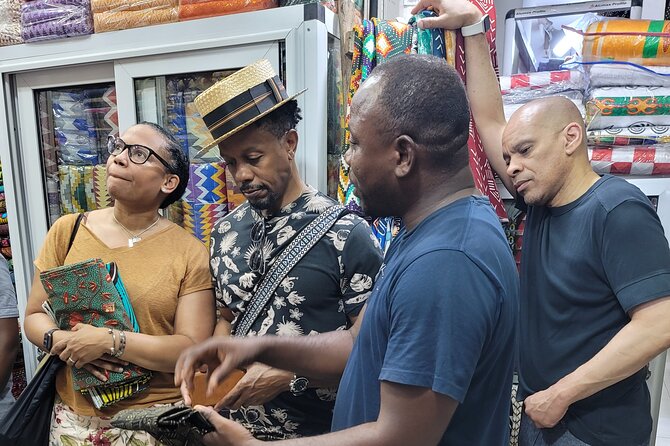
The total duration is about six hours, with two hours at Makola Market and three hours at Exmac Fabrics. That leaves roughly one hour for transfers and the movement between parts of the experience. The schedule is long enough to avoid making the workshop feel like a rushed demonstration.
The maximum group size is 10 people. That is small enough for questions and individual help, though the transport is described as private rather than as a guaranteed one-person or one-party tour. If having the vehicle entirely to yourself matters, confirm that detail before booking.
Mobile tickets make entry simple, and confirmation is provided when you book. The experience is also near public transportation, though that matters less if you use the included pickup service.
Bring room in your luggage for fabric. Since you can buy textiles at Makola and take your handmade batik home, a small empty bag will be useful. Also plan to eat before or after the tour, because neither breakfast nor lunch is included. Bottled water and soda are included, so you will have drinks during the outing.
The walking note deserves attention. Most people can participate, but the market portion is not designed for someone who has difficulty walking. If you need special assistance, ask before booking rather than assuming the market route can be changed.
Who will get the most from this tour
I would recommend this experience first to people who care about clothing, print design, craft, or shopping with context. It is also a good choice for a solo visitor who wants a planned cultural activity, and for a small group that would enjoy making different batik designs together.
It works well for people who like souvenirs with a story. You can buy fabric at the market, learn what its patterns mean, and then create a separate piece at the workshop. The result is a fuller connection to the material than a standard store visit provides.
The tour may also suit anyone curious about Ghanaian society. Albert’s design background gives him a natural starting point for questions about fabric, while his ability to discuss society adds more depth to the conversation.
I would hesitate to recommend it to someone seeking a broad introduction to Accra. You will not have time here for a full city circuit, and lunch is not part of the plan. I would also choose another activity if walking through a large open market is difficult for you.
The strongest reasons to book
The hands-on batik session is the clearest reason to reserve this tour. Many cultural outings show you how a craft is made, then send you on your way. Here, you make a piece yourself and take it home. That gives the three-hour workshop a real purpose.
The second strong point is the combination of market and maker. Makola shows the buying and selling side of fabric, while Exmac shows how a design can be produced by hand. Together, they create a more complete picture than either stop would offer alone.
The guide is another major advantage. Albert’s work as a designer means you can ask questions that go beyond basic sightseeing. The two available ratings praise his textile knowledge and his ability to answer questions about Ghanaian society, so I would make a point of bringing questions with you.
The main weakness is the price. At $160, you should want the full package, not just a ride to a market. You are paying for the guide, the transport, the workshop, the handmade item, and the convenience of a planned day. If you only want to buy fabric, you can likely spend less by arranging a market visit separately, though you would lose the organized explanations and batik activity.
Should you book this Accra fabric tour?
Book it if you want a focused cultural experience built around cloth, design, and making something with your own hands. The combination of Makola Market, Exmac Fabrics, Albert’s fashion experience, private transport, and a take-home batik piece gives the day a clear identity.
Skip it if your main goal is a general Accra sightseeing tour, a food-focused outing, or a low-cost shopping trip. Also think twice if market walking is hard for you. For the right person, though, this is a practical and personal way to connect with Ghanaian textile traditions, with enough time to learn rather than simply look.
Free cancellation is available up to 24 hours before the start time for a full refund. Changes or cancellations made less than 24 hours ahead are not accepted for a refund.
FAQ
How long does the fabric tour last?
The experience lasts approximately six hours. About two hours are scheduled at Makola Market and three hours at Exmac Fabrics, with the remaining time used for transportation and movement between stops.
Where does the tour take place?
The tour takes place in Accra, Ghana. The stops are Makola Market and Exmac Fabrics.
Is hotel pickup included?
Yes. Hotel or residence pickup and drop-off are included within Accra.
What is included in the price?
The price includes an air-conditioned vehicle, private transportation, all fees and taxes, bottled water, soda or pop, the listed activities, and pickup and drop-off within Accra. A 20% discount on custom African wear clothing is also included as a benefit.
Is lunch included?
No. Lunch and breakfast are not included.
Can I buy fabric during the tour?
Yes. At Makola Market, you can purchase local fabrics at affordable or wholesale prices. The cost of fabric you buy is not included in the tour price.
Do I get to make my own fabric?
Yes. At Exmac Fabrics, you can choose, design, and make your own batik tie-dye fabric by hand. You can take the finished fabric home.
Who is the guide?
Albert is identified as the tour guide and is also a designer. The tour is led by a fashion industry expert with 12 years of experience.
How many people can join the tour?
The maximum group size is 10 people. Most people can participate, but the experience is not recommended for anyone who cannot walk or has difficulty walking in a market setting.
Just added around Accra
- 3 Days Accra City Tour & Cape Coast Tour★ 4.5 · 3 reviews
- Local Ghanaian Food Tasting Tours★ 5.0 · 3 reviews
- Accra Zoo, Canopy Walk and Botanical Gardens Private Tour★ 5.0 · 3 reviews
- Historical tour in Cape Coast Ghana★ 5.0 · 3 reviews
- Half Day Accra City Sightseeing Tour With Guide★ 5.0 · 3 reviews
- Accra Slave Tour★ 5.0 · 3 reviews
- Cape Coast Castle and Kakum National Park 2-Day Private Tour★ 5.0 · 3 reviews
- Discover Ghana – Wli Waterfalls, Mountain Afadjato, Monkey Sanctuary & Akosombo.★ 4.5 · 3 reviews
Accra Tours, compared.
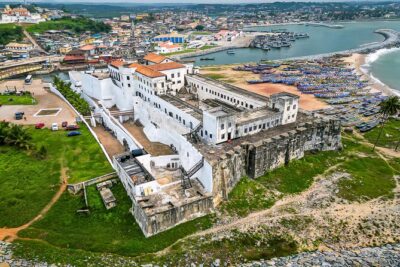
Experience the Beauty, History and the Culture Of Accra in a Day
Read our review →
Cape Coast, Elmina Castle & Kakum Park Day Tour
Read our review →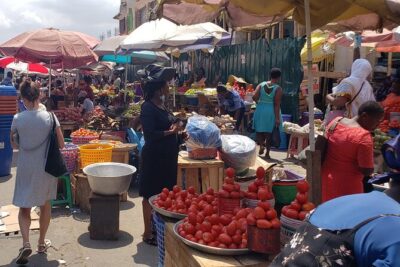
Boti Falls, Umbrella Rock, Aburi Gardens & Cocoa Farm Tour
Read our review →
Browse the lists this tour appears in