
Reviewed · ACCRA TOURS
Private Multi-Day Ghana Tour about Culture History and Wildlife – 7 Days
Ghana packs a lot into seven days. This private tour links Accra’s independence landmarks, Ashanti craft villages, rainforest wildlife, and the sobering castles of the former Gold Coast. You’ll meet artisans at their work, make Adinkra cloth and batik, and travel with a local guide who can explain the meaning behind what you see.
I especially like the balance between serious history and daily life, and the chance to see traditional skills still practiced in homes and village workshops. The tour also includes a rare mix of city sights, forest, beaches, markets, and wildlife. The trade-off is a demanding schedule, with long road journeys and several early starts.
Key points to know before booking

- Private touring from Accra: Only your group takes part, with airport transfers, an air-conditioned vehicle, driver, guide, and unlimited mineral water included.
- Hands-on Ghanaian culture: Make a strip of Adinkra cloth, learn batik printing, watch Kente weaving, and see traditional brass casting.
- Strong historical range: Visit the Kwame Nkrumah Memorial Park, James Town, Manhyia Palace Museum, Cape Coast Castle, Elmina Castle, and Fort Amsterdam.
- Wildlife with a forest view: Kakum National Park includes a seven-bridge canopy walkway about 40 meters above the rainforest floor.
- Useful local connections: Guides such as Foster and Richard are part of the wider Ashanti African Tours team, with Foster especially associated with birding and nature tours.
- A full package price: At $3,095 per person, the cost covers accommodation, meals, transport, excursions, airport transfers, and guide support, but not flights, visas, or drinks.
Why this seven-day route works
This is not a slow beach holiday. It is a road trip with a cultural purpose. You move from Accra to the Akuapem hills, then to Kumasi, and finally south to Elmina and Cape Coast before returning to Accra.
That route gives you a useful first picture of Ghana. Accra explains modern national identity and colonial-era trade. Kumasi brings you into the world of the Asante Kingdom, Kente, Adinkra, and market life. The central coast connects natural beauty with the painful story of the transatlantic slave trade.
The private format matters. You are not tied to a large group, and the guides can explain local customs as you go. Several stops are built around conversation and demonstration rather than simply looking at displays behind glass.
Still, you should expect substantial time in the vehicle. Day three is a long transfer from Accra to Kumasi, and day five moves from Kumasi to Elmina. If you prefer a relaxed pace with little driving, this route may feel crowded.
A few more Accra days to weigh up
- 15-Day Ghana Wildlife Private Tour
★ 4.5 · 9 reviews - 9 Day Ghana Wildlife and Culture Tour
★ 5.0 · 5 reviews - 5 Days Adventurous Wildlife Safari
★ 4.5 · 49 reviews
Day one: a simple arrival in Accra
Your guide and driver meet you at Kotoka International Airport after customs. Look for the Ashanti African Tours sign outside the main terminal building.
The first day is deliberately light. Airport pickup, transfer to your accommodation, and assistance from a local team allow you to settle in without trying to sightsee after an international flight.
That 24/7 guide and office support can be useful if you need help with arrival details. The tour includes airport transfers and unlimited mineral water, which removes two small but practical hassles.
Day two: Accra from museum to fishing community
Your first sightseeing day begins at the National Museum of Ghana. The collection focuses mainly on ethnography, with displays covering Ghana and other parts of West Africa. This is a good starting point because it gives you cultural context before you visit communities, workshops, and historic sites later in the week.
The adjoining sculpture garden adds a visual introduction to West African traditions. You also have the chance to see traditional fabrics and crafts. If you plan to buy something, this is an early opportunity to compare prices and styles before reaching the larger markets.
Next comes James Town, one of Accra’s oldest suburbs. The walking tour includes colonial-era structures, the 30-meter lighthouse built by the British in 1871, Fort James, and the beach where colorful fishing boats are pulled ashore.
This is one of the best parts of the Accra day because it connects formal history with working life. You are not only looking at a fort. You are also seeing a fishing community and older parts of the city that help explain Accra before and during colonial rule.
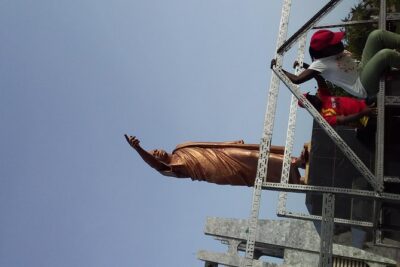
After lunch at Country Kitchen, the route continues to Black Star Square and Independence Square. The enclosed flame of African liberation was lit by Kwame Nkrumah in 1961, soon after Ghana’s independence. These broad ceremonial spaces can feel formal, but your guide helps connect them to the country’s modern political identity.
The Kwame Nkrumah Memorial Park provides more detail. Nkrumah’s final resting place is set in gardens, with a museum containing photographs and artifacts from his life. The nearby National Cultural Center is a large outdoor craft market, so this is another place where bargaining becomes part of the experience.
The final stop is Teshie Nungua, home to Ghana’s famous fantasy coffins. These coffins can be shaped like cars, cocoa pods, airplanes, crocodiles, shoes, or beer bottles. They reflect the person’s work, interests, or status, and they are connected to funeral customs in which mourning is followed by celebration.
The day covers a lot. Wear comfortable shoes for James Town and expect time on foot, in markets, and around busy city streets. The schedule is full, but the stops are varied enough to keep it from feeling like a string of monuments.
Day three: beads, hill views, and the road to Kumasi
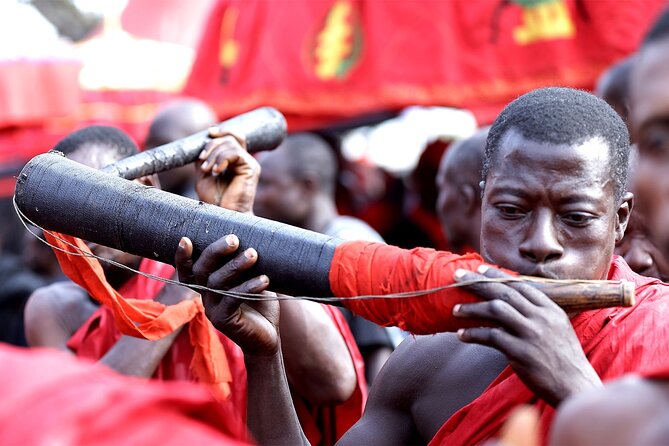
Before leaving Accra, you visit TK Beads for a demonstration of traditional beadmaking. Beads have long carried associations with wealth and beauty in Ghana and are still used at festivals and traditional durbars.
This stop is practical as well as cultural. You can watch the production process and buy beads directly at the onsite shop. It is a better way to shop for this kind of souvenir than making a rushed purchase from an unidentified stall.
The road then climbs into the Akuapem hills toward Aburi Botanical Gardens. Founded by the British in 1890, the gardens contain indigenous and exotic plants. Your guide identifies trees and plants, including some with medicinal uses, and explains how they help local communities.
On a clear day, the gardens provide views toward Accra and Tema. The hill setting also gives you a break from the heat and traffic of the capital. Nearby Aburi craft village offers drums, sculptures, and other handmade goods.
Lunch is taken in Koforidua, the capital of Ghana’s Eastern Region, before the long drive to Kumasi. You arrive in the early evening, check into your accommodation, eat dinner, and have time to rest.
This is the itinerary’s first day where the driving really matters. The gardens and bead workshop make good stops, but you should not expect a relaxed transfer. Keep essentials in a small day bag so you do not need to search through luggage during the road journey.
More history visits around Accra:
- Experience the Beauty, History and the Culture Of Accra in a Day
★ 5.0 · 323 reviews - Ghana Heritage Tours – Beyond The Return
★ 5.0 · 36 reviews - 10 Days Ghana Cultural and Heritage Trip
★ 5.0 · 31 reviews - Cape Coast Historical Day Tour
★ 5.0 · 24 reviews
Day four: Asante buildings and living craft traditions
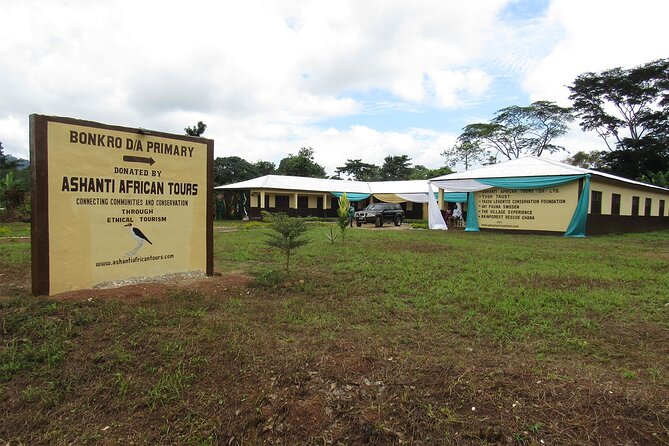
The morning begins with the traditional Asante buildings recognized as UNESCO World Heritage Sites. These structures use bamboo, timber, mud, and thatched roofs. Ten active shrines remain within the buildings, and the walls carry motifs based on Adinkra symbols.
This stop gives you a look at Asante religious and architectural traditions that are difficult to understand from a museum display alone. Your guide also introduces Nana Yaa Asantewaa, the important Asante woman who led resistance against the British in the 1901 war.
From there, you continue to Adanwomase, known as the birthplace of Kente cloth. Families have woven the colorful textile here for generations, and some designs are exclusive to the region.
You can walk through the community, meet weavers, and see the work done outside their homes. Ask about the patterns before you buy. Kente is not simply decorative fabric. The designs carry meaning, and the quality and amount of work involved affect the price.
Ntonso provides another hands-on lesson. This is the traditional home of Adinkra cloth and symbols. Artisans carve symbols from calabash shells, then print them onto cloth with natural dyes made from tree bark.
You can make your own strip of Adinkra cloth using symbols that have personal meaning. That activity gives you a more lasting connection to the craft than a quick demonstration. It also makes a light, useful souvenir.
After lunch, Sokoban Krofrom introduces traditional brass casting. Artisans make beads, jewelry, and statues using methods that have remained largely unchanged. Watching the process helps you understand why handmade pieces cost more than factory-made souvenirs.
This is one of the tour’s strongest days for cultural contact. The drawback is that several craft visits include shops, so you should set a budget before you arrive. You are free to admire the work without buying everything.
Day five: Kumasi’s royal center and the road south
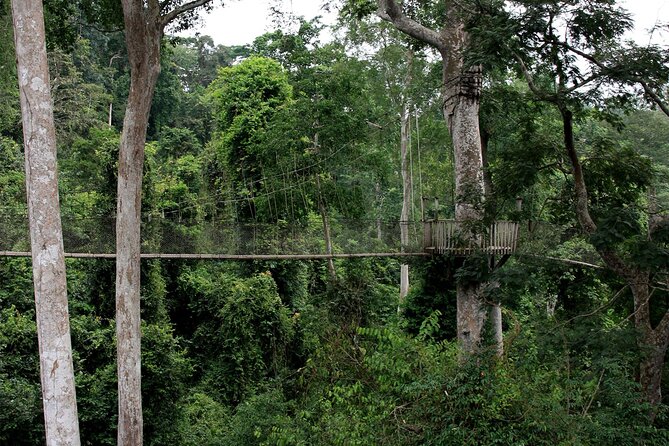
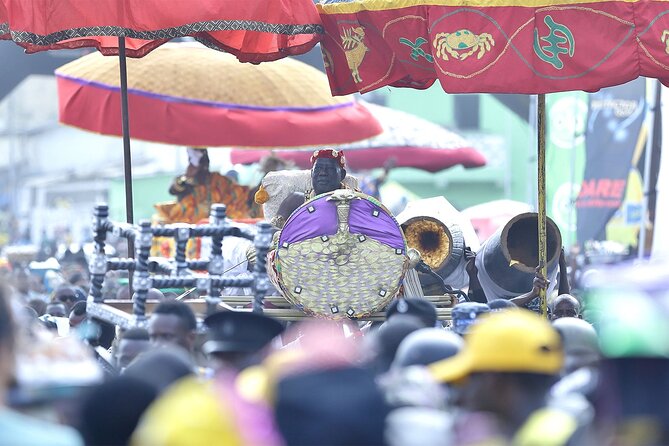
At Manhyia Palace Museum, you learn about the Asantehene, the king of the Ashanti people, and the Asanteman Kingdom. The museum presents the history and culture of one of West Africa’s most influential kingdoms.
This visit gives the previous day’s villages a wider frame. After seeing Kente, Adinkra, shrines, and brasswork, you can better understand how those traditions fit into Asante identity and authority.
The National Cultural Centre follows, located in one of Kumasi’s older suburbs. It offers more craft shopping and cultural displays.
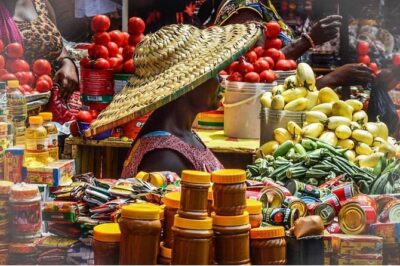
Then you enter Kejetia Market, reported to be one of the largest outdoor markets in West Africa. The market is a maze of closely packed stalls, and trade continues for much of the day and evening. Go with your guide, stay aware of your belongings, and allow the market to work at its own pace.
Kejetia is not a polished attraction. That is exactly its value. You see the ordinary commercial life of Kumasi, from food and clothing to souvenirs and household goods. Lunch at a local restaurant includes local and continental choices.
After lunch, the route heads south toward Elmina, with a stop at Assin Manso. The town lies along an important route connected to the enslaved African trade, beside the Ndonkor Nsuo, known as the Enslaved African River.
You reach Elmina in the early evening. This is another long transfer, so the day combines a busy morning with several hours on the road.
Day six: Kakum, Cape Coast Castle, and Elmina
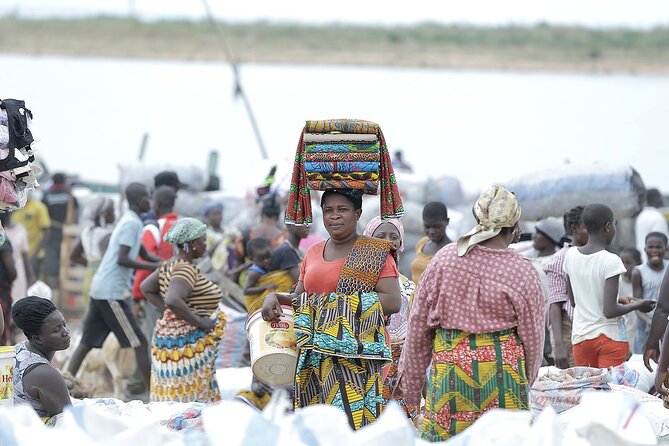
Kakum National Park is an early start and one of the trip’s most memorable outdoor stops. The rainforest canopy walkway uses seven bridges attached to seven emerging trees, around 40 meters above the forest floor.
The walkway is suspended high above the ground, so it may test your nerves. In return, you get broad views across the rainforest and a different view of Ghana’s natural life than you would find in the cities.
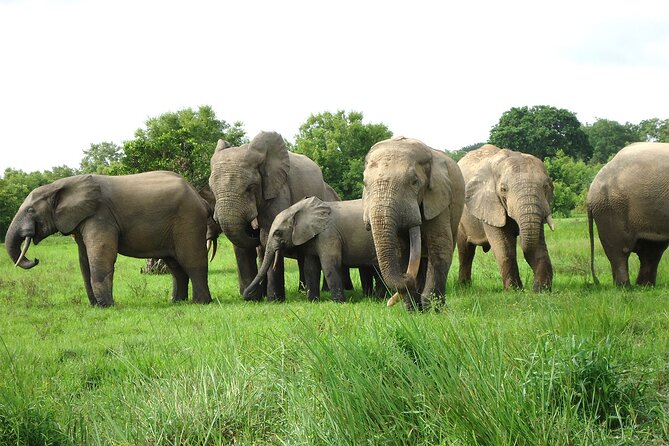
More than 40 mammal species have been recorded in the park, including forest elephants, leopards, and six primate species. This is not presented as a guaranteed wildlife sighting. The main experience is the forest itself, with the canopy walkway providing the drama.
At the International Stingless Bee Centre, you learn about Ghana’s approximately nine identified stingless bee species, their role in the ecosystem, and their medicinal uses. It is a small-scale stop, but it adds a useful lesson about conservation and local knowledge.
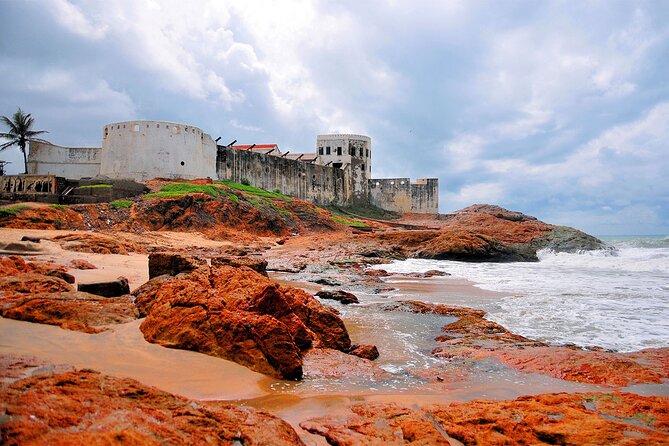
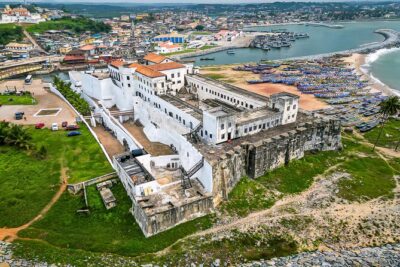
After lunch, Cape Coast Castle brings the mood down sharply. The UNESCO World Heritage site held more enslaved Africans than any other castle in West Africa. The tour includes the dungeons, the Door of No Return, and a museum explaining the castle and the town.
Give this visit time and emotional space. It is not a casual sightseeing stop. The building’s beauty and position beside the ocean make the history more painful, not less.
Later, you take part in a batik workshop with Global Mamas. You heat wax, stamp patterns, and produce your own piece of cloth to take home. The work supports local women who develop artistic skills and sell finished products through fair trade.
The day also includes Elmina’s fishing market and a visit to local boat builders. Traditional wooden boats remain central to the fishing community, and seeing them made by hand adds another layer to the coastal experience.
Elmina Castle, or St. George’s Castle, dates from 1482 and is the oldest surviving colonial building in sub-Saharan Africa. Its museum covers local history and its role in the transatlantic slave trade.
This is a very full day, with six listed stops and plenty of walking. If you want a slower pace at the castles, ask the operator in advance about adjusting the schedule.
Day seven: Fort Amsterdam and the return to Accra
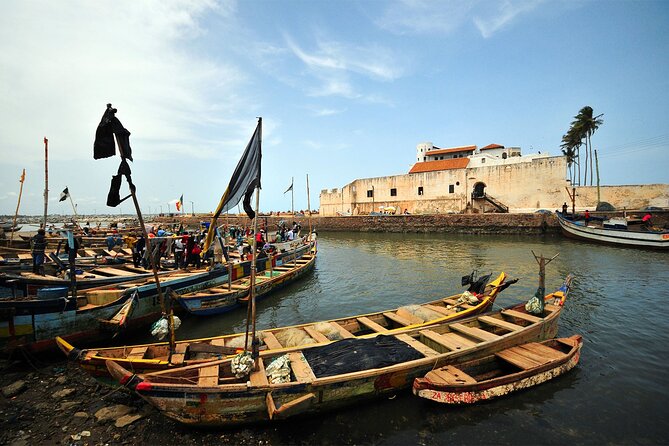
The final morning is intentionally easier. You can use the accommodation’s facilities, swim, relax on the beach, or simply recover from the previous day.
After lunch overlooking the Gold Coast, the coastal road leads toward Accra. In Abandze, you visit Fort Amsterdam, built by the British between 1631 and 1638. The Dutch captured it in 1665 after a long battle, which explains the name it carries today.
The fort provides one last reminder that Ghana’s coast was shaped by competing European powers, trade, and local resistance. It is a smaller historical stop than Cape Coast or Elmina, but its location makes it a useful final piece of the coastal story.
Back in Accra, you may have time for Accra Mall and last-minute shopping. Dinner at a locally owned restaurant gives you a final chance to eat local or international dishes before the airport transfer.
The amount of time available in Accra on this last day depends on the road journey. Do not plan an important independent activity before your flight.
What the $3,095 price includes
At $3,095 per person, this is a high-priced seven-day tour, but the price covers much more than sightseeing. You receive accommodation, six breakfasts, six lunches, seven dinners, an air-conditioned vehicle, fuel, an experienced driver, an expert local guide, airport transfers, excursion fees, unlimited mineral water, insurance, and 24/7 office support.
The private format is important to the value. You are paying for a dedicated vehicle and guide rather than joining a fixed coach group. For families or a small group splitting the cost, that can make the price easier to justify, especially since the company has experience adapting tours for families and custom schedules.
International flights, visas, and soft or alcoholic drinks are extra. Ask for the accommodation details before paying if hotel standards matter to you, since the supplied information does not name the properties.
Who will enjoy this Ghana tour most
I would choose this trip if you want your first visit to Ghana to cover several sides of the country in one organized week. It suits people who care about culture, modern history, craft, food, and local contact more than a long list of luxury amenities.
Families can benefit from the varied activities, especially beads, cloth printing, batik, markets, and the canopy walkway. The private setup also makes it easier to manage a child’s pace than a large group tour.
Birdwatchers may want to ask about guide availability. Foster is associated with the company’s birding programs and has a strong reputation for identifying bird calls and locating species. This seven-day route is not a dedicated birding tour, but Kakum and the botanical gardens could be more rewarding with the right guide.
I would hesitate if you dislike long drives, early starts, market visits, or emotionally difficult historical sites. The schedule is active, and the castles require serious attention.
Cancellation is allowed for a full refund up to three full days before the start time. Weather or minimum-group issues can lead to a different date or a full refund, according to the stated terms.
Should you book it?
Book this Ghana tour if you want a private, guided introduction that combines Accra, Kumasi, the coast, rainforest, crafts, and major historical sites. Its best feature is the way it puts you beside working artisans and local communities instead of keeping you only in museums.
Before booking, confirm the hotel standard, vehicle arrangements, guide assignment, and how much flexibility you have on the longest driving days. If Foster, Richard, or another guide from the wider team is available, ask about their specialties.
For a first Ghana visit, the price can be worthwhile because transport, meals, admissions, accommodation, and airport service are bundled together. Just arrive ready for a packed week, not a restful one.
FAQ
How long is the Ghana cultural, historical, and wildlife tour?
The tour lasts approximately seven days, beginning with airport pickup in Accra and ending with a transfer to Kotoka International Airport.
Is this a private tour?
Yes. Only your group participates in the activity.
What cities and regions does the tour visit?
The route includes Accra, the Akuapem hills and Aburi, Kumasi, Assin Manso, Elmina, Cape Coast, Kakum National Park, and Abandze.
Is accommodation included?
Yes. Accommodation is included in the tour price.
Are meals included?
Yes. The package includes six breakfasts, six lunches, and seven dinners.
Are international flights and visas included?
No. International flights and visas are not included. Soft drinks and alcoholic drinks are also excluded.
What is the cancellation policy?
You can cancel for a full refund at least three full days before the experience start time. Cancellations or changes made less than three full days before the start are not accepted for a refund.
More Week-Long Trips from Accra
- 7-Day Private Cultural and Heritage Tour in Ghana
★ 5.0 · 17 reviews
Just added around Accra
- Accra: Tafi Kente Village, Monkey Sanctuary &Wli Waterfalls★ 4.5 · 4 reviews
- 2 Days (1 night) Elephants Safari at Mole Park with Round – trip flights★ 5.0 · 4 reviews
- Full-Day Wli water Falls and Monkey Sanctuary Private Tour★ 5.0 · 4 reviews
- 9 Day Ghana Wildlife and Culture Tour★ 5.0 · 5 reviews
- A Taste of West Africa – Ghana Togo & Benin★ 5.0 · 5 reviews
- Quad Biking and Waterfalls Adventure★ 5.0 · 5 reviews
- Cape Coast: Kakum National Park, Castles, & Hans Cottage★ 4.8 · 5 reviews
- Full-Day Accra City Tour★ 5.0 · 5 reviews
Accra Tours, compared.
Experience the Beauty, History and the Culture Of Accra in a Day
Read our review →
Cape Coast, Elmina Castle & Kakum Park Day Tour
Read our review →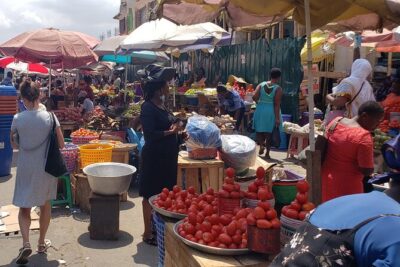
Boti Falls, Umbrella Rock, Aburi Gardens & Cocoa Farm Tour
Read our review →
Browse the lists this tour appears in