
Reviewed · ACCRA TOURS
Experience the Culture of Ashanti Kingdom in 5days
The heart of this five-day journey is Kumasi, where the Ashanti Kingdom comes alive through a royal palace museum, a huge market, sacred sites, and village workshops. You move from Ghana’s middle belt to Accra, seeing how royal tradition, cloth, symbols, faith, and daily trade fit together.
I like the hands-on village visits, especially printing Adinkra symbols at Ntonso and watching Kente take shape at Adanwomase. I also like the practical setup: an air-conditioned vehicle, hotel accommodation, breakfast, attraction fees, fuel, insurance, and ongoing support are included. The main drawback is the pace. Several days are scheduled for about eight hours, and the long road movements may feel tiring.
The program suits you best if you want a private cultural trip rather than a loose collection of city stops. Keep in mind that meals beyond the four included breakfasts, international flights, and visa costs are extra. The booking details also list a private guide as both included and not included, so confirm that point before paying.
Key points at a glance
- Royal Kumasi comes first: Visit Manhyia Palace Museum and the Prempeh II Jubilee Museum for an introduction to Ashanti leadership and culture.
- Make your own Adinkra print: At Ntonso, you choose symbols with proverbial meanings and use them in a local textile workshop.
- See Kente being woven: Adanwomase offers a close look at the colorful silk and cotton cloth used for important occasions.
- Pair history with daily life: Kejetia Market gives you a very different view of Kumasi from the royal museums.
- Add a sacred site and a lake: Okomfo Anokye’s Sword Site and Lake Bosomtwe bring spiritual tradition and natural scenery into the trip.
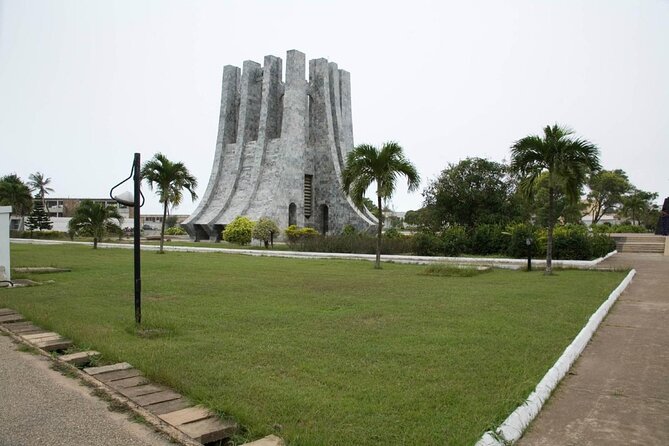
- Finish in Accra: The final day includes the Kwame Nkrumah Memorial Park and an Accra city tour before airport transfer.
Why Kumasi is the right place to begin
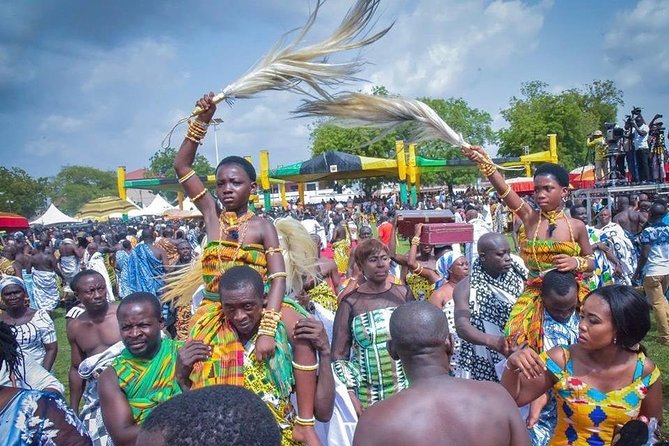
Kumasi is not just a stop between Accra and the Ashanti villages. It gives you the political and cultural frame for everything that follows. The Ashanti Kingdom’s influence is introduced through royal objects, stories, ceremonial traditions, and the continuing importance of the Asantehene, the Ashanti king.
That makes the order of the trip sensible. You first learn about the kingdom in the city, then see its symbols and crafts being made in nearby villages. By the time you reach the lake and return to Accra, the trip has moved from royal history to living culture and modern Ghana.
The private format matters here. Your group is the only group on the activity, so the pace is not built around strangers. You can ask questions as you go, spend longer at a site when it interests you, or move on when a stop has given you what you need. The exact amount of flexibility will depend on the guide and the day’s driving schedule, but a private vehicle is a useful advantage.
A few more Accra days to weigh up
- 5 Days Adventurous Wildlife Safari
★ 4.5 · 49 reviews
Day 1: A simple arrival in Accra
Your first day is deliberately light. After arriving at Terminal 3 of Kotoka International Airport, a staff member meets you and takes you to your hotel. The transfer itself is listed as taking about ten minutes, with no admission fee.
That short arrival day is useful after an international flight. You are not asked to begin sightseeing immediately, and you have time to settle into the hotel before the early starts that follow. Since the main cultural program begins in Kumasi, do not expect a full Accra tour on arrival day.
The listed start time is 7:30 a.m. for the experience. If your flight arrives late, confirm how the arrival transfer and the next morning’s departure will be handled. The tour includes air-conditioned accommodation, but the supplied details do not name the hotels, so ask for hotel information if room standards or location matter to you.
Day 2: Manhyia Palace, royal museums, and Kejetia Market
After breakfast, you travel to Kumasi, the Ashanti capital. The day is planned for about eight hours and begins with the Manhyia Palace Museum, located within the grounds of the palace associated with the Asantehene.
This is the place to begin understanding Ashanti royalty. The museum explains Ashanti culture and Ghana’s heritage during the colonial period. It is more useful if you pay attention to the connection between objects and authority, rather than treating the visit as a quick display of old items. Your guide can help connect what you see to the kingdom’s continuing identity.
You then visit the Prempeh II Jubilee Museum at the Kumasi Cultural Center. This adds another layer to the story of the Ashanti Kingdom. The two museums may sound similar on paper, but their locations and collections give the day a broader historical frame.
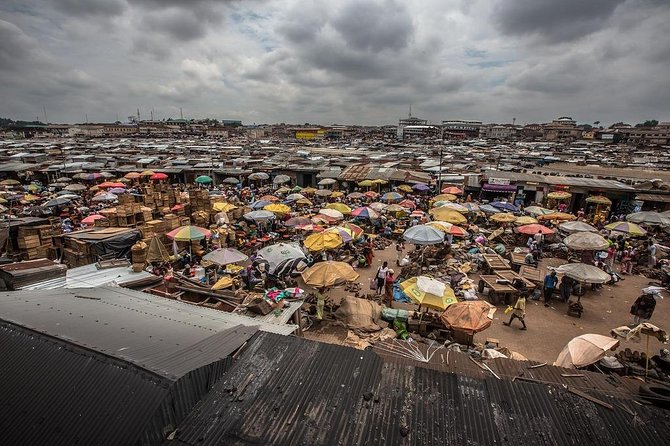
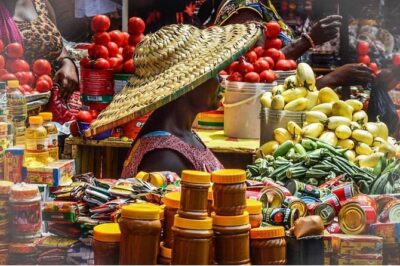
The final major stop is Kejetia Market, one of West Africa’s biggest open-air markets. This is where the polished museum experience gives way to the noise, movement, and practical business of present-day Kumasi. You may find clothing, household goods, food, and local products, but the supplied program does not promise specific purchases or stalls.
Wear comfortable shoes and keep your belongings close in any crowded market setting. Bring small amounts of local currency if you want to buy something, although the tour information does not state which payment methods individual sellers accept. Kejetia can be exciting, but it can also feel intense after two museums, especially on an eight-hour day.
Day 3: Adinkra symbols and Kente cloth
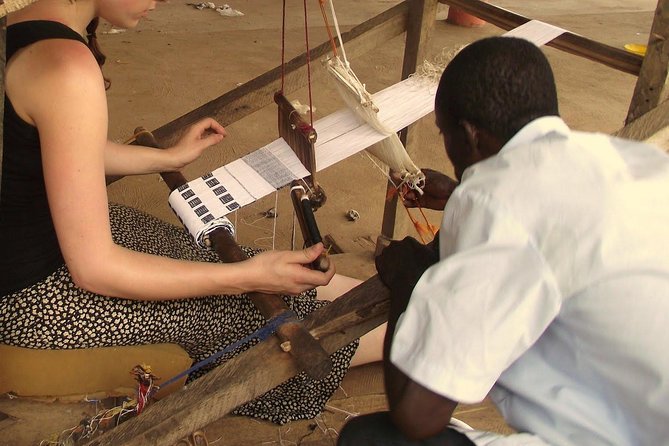
Day three shifts from seeing objects to making them. After breakfast, you visit Ntonso Adinkra Village, known for Adinkra symbols. These symbols carry proverbial meanings, so the workshop is not simply a decorative craft demonstration.
You choose symbols and print with them during a local textile session. This is one of the strongest parts of the tour because you leave with a better sense of how ideas are communicated through cloth. Ask your guide to explain the meaning of the symbols you select before you print. That small step turns a souvenir into something personal and easier to remember.
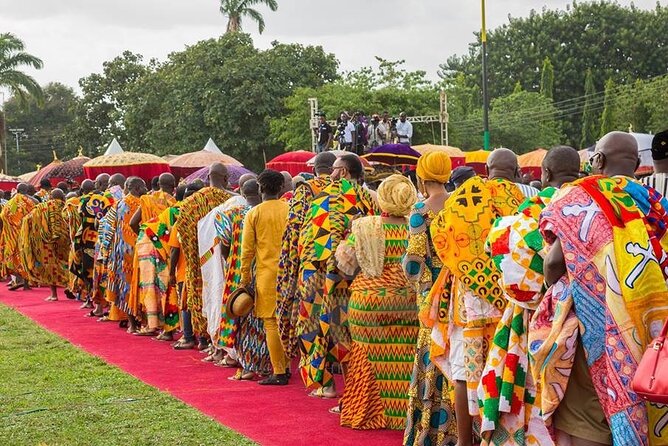
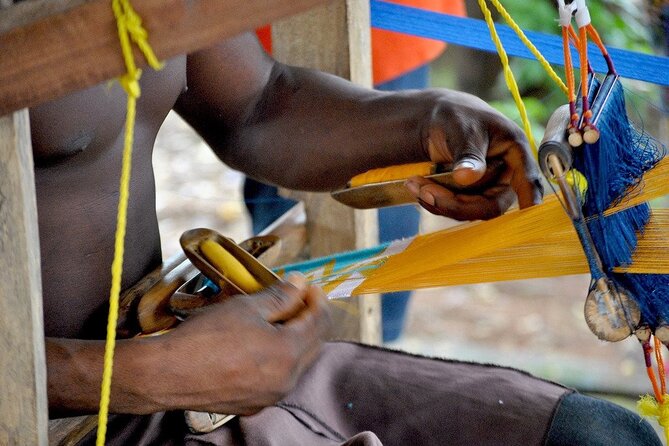
The trip continues to Adanwomase Kente Weaving Village. Kente is made from interwoven strips of silk and cotton and is closely linked with Akan culture and special occasions. Watching the weaving process helps explain why the finished material costs more than a casual market cloth. The work is built from narrow strips, patterns, color choices, and careful handling.
You can buy Kente products at the village. Prices and product types are not provided, so compare items before buying and ask whether a piece is handwoven or made for a different market. The tour includes the workshop and attraction fees, but purchases are naturally your responsibility.
This day is another eight-hour program. The workshops are more relaxed and personal than a museum visit, but the road time and repeated stops can still make it a full day. If you have limited mobility, ask in advance about access around the weaving and printing areas. The information says most people can participate, but it does not provide detailed accessibility notes.
Same departure point, a completely different day out:
- The Cape Coast Day Tour
★ 5.0 · 525 reviews - Experience the Beauty, History and the Culture Of Accra in a Day
★ 5.0 · 323 reviews - The Cape Coast Tour
★ 5.0 · 177 reviews - From Accra: Cape Coast, Elmina Castle & Kakum Park Day Tour
★ 4.6 · 144 reviews
Day 4: Okomfo Anokye and Lake Bosomtwe

Day four begins in Kumasi with the Okomfo Anokye Sword Site. The sword is said to be more than 300 years old and was planted in the ground by the priest Okomfo Anokye. Attempts to remove it have reportedly failed, and the site is also linked with the story of the Golden Stool of the Ashanti Kingdom.
This visit is important because it shows how spiritual belief and political tradition meet. The site is not presented as an ordinary historical monument. Your guide can help explain the role of Okomfo Anokye and why the sword remains an important symbol.
The stop is situated on the grounds of Okomfo Anokye Teaching Hospital. That setting may surprise you. You are not heading to a remote ruin, but to a place where a sacred story exists alongside a working institution and modern city life.
Afterward, you leave for Abono Village and Lake Bosomtwe. The lake adds a welcome change of pace after several cultural stops and long days. You can expect scenic views and a village setting, but the supplied details do not specify boat rides, swimming, meals, or other lake activities. Do not assume those extras are part of the package unless Tripafrica confirms them.
The day is again scheduled for about eight hours. I would treat it as a cultural day with a scenic finish, not as a dedicated lake holiday. If the lake is a major reason you want to book, ask exactly how much time is planned in Abono and what activities are included.
The program may also include further village or cultural experiences. Past arrangements connected with this tour have included a cocoa farm visit and an Ashanti naming ceremony, along with Adinkra-related craft work. Since these details are not clearly assigned to a specific day in the supplied schedule, confirm them before booking if they are important to you.
Day 5: Accra and the Kwame Nkrumah Memorial Park
After breakfast, you return to Accra for a city tour before your airport transfer. The listed stop is the Kwame Nkrumah Memorial Park, and admission is included on this final day.
Nkrumah was Ghana’s first prime minister and first president, and the memorial park gives the final day a national focus. After several days centered on Ashanti identity, you shift to the story of independent Ghana and its capital. That contrast gives the trip a useful closing chapter.
The timing of your departure flight matters. The day includes an Accra tour and transfer to the airport, but no exact city-tour duration is supplied. If you have an evening flight, provide the operator with your flight details early and ask how much time will be allowed at the memorial park and other city stops.
The final transfer is convenient, but this is not a full multi-day Accra sightseeing program. If you want more time in the capital, consider adding extra nights before or after the tour rather than counting on day five to cover everything.
What the $1,350 price covers
At $1,350 per person, this is not a low-cost independent trip. The value comes from combining transport, hotels, four breakfasts, a private tour arrangement, activity and attraction fees, taxes, fuel, vehicle insurance, and 24-hour support in one price.
An air-conditioned vehicle is especially useful when several days run for about eight hours. You avoid arranging separate intercity transport, finding each village, and negotiating admission at every stop. The private format also gives you a more personal setup than a large coach tour.
The price does not include international airfare, visa fees, or meals beyond the listed breakfasts. Those costs can change the final budget quickly. You should also clarify the guide question before booking, since the details both include and exclude a private tour guide. The experience provider is Tripafrica Tours, and the listed support is available around the clock.
I see the strongest value for couples, families, and small groups that want one organized cultural route. Solo visitors may find the per-person cost harder to justify, although the private format offers comfort and control. If you are comfortable arranging hotels, transport, and museum visits yourself, an independent trip may cost less. You would also take on more planning and local logistics.
The people who make the trip personal
The human side of this experience matters. Nuru-Deen is named as a key host, with Eazi and Maxwell also connected with the service. The program has been shaped around personal care, including help with planning and attention to individual needs.
That is useful if you want more than a driver who simply points out the next stop. One past arrangement included an Ashanti naming ceremony, a cocoa farm, Adinkra sash-making, museums, restaurants, and hotels. These examples suggest that the operator can build a personal connection into the trip, but you should ask which extras are included in your own booking.
One particularly meaningful use of this route is ancestry travel. A participant described feeling reconnected with family roots through the experience. You should not assume the tour provides genealogical research, but the Ashanti cultural setting can carry strong personal meaning if your interest in Ghana is tied to heritage.
Practical details before you book
The tour is private, mobile tickets are offered, pickup is available, and confirmation is received at booking. It begins at 7:30 a.m., and most people can participate. Public transportation is nearby, although the main route itself is organized around the supplied vehicle.
Pack light, comfortable clothing and shoes suitable for full days out. You will move through museums, a market, village workshops, a sacred site, a lakeside area, and a city memorial, so practical clothing is more useful than formal outfits.
The cancellation policy is straightforward: cancel at least 24 hours before the local start time for a full refund. Cancellations made within 24 hours are not refunded, and late changes are not accepted.
Who should book this Ashanti Kingdom journey?
I would recommend this tour if you want a structured introduction to Ashanti culture and prefer having transport, accommodation, guides, and entrance fees arranged together. It gives you more substance than a short Kumasi city tour and more cultural focus than a general Ghana highlights trip.
It is a good fit for families, private groups, first-time visitors to Ghana, and people interested in crafts, royal traditions, spiritual sites, and modern national history. It may also suit heritage-focused visitors who want meaningful cultural contact, while remembering that family research is not listed as a formal service.
I would hesitate if you dislike early starts, long road days, or tightly planned schedules. I would also hesitate if your main goal is beach time, nightlife, wildlife, or a slow holiday based in one place. This is a moving cultural route, and the eight-hour days are central to its design.
Final verdict
Book it if you want Kumasi to be the center of your Ghana experience, with village crafts and Accra added in a practical five-day route. The strongest moments are the Adinkra printing workshop, Kente weaving, royal museums, Kejetia Market, and the unusual story of Okomfo Anokye’s sword.
Before paying, confirm the hotels, exact guide arrangement, extra activities, lake plans, and airport timing. With those points clear, the $1,350 price can be fair for a private, transport-inclusive journey that puts Ashanti culture at the center rather than treating it as a quick stop.
FAQ
How long is the Ashanti Kingdom tour?
The experience lasts approximately five days.
Where does the tour begin?
Arrival arrangements begin at Terminal 3 of Kotoka International Airport in Accra, Ghana. The main cultural route starts with travel to Kumasi.
Where does the tour end?
The tour ends in Accra with an airport transfer after the city tour.
What time does the tour start?
The listed start time is 7:30 a.m.
Is pickup available?
Yes. Pickup is offered, and airport arrival transfer is included in the first-day arrangements.
Is this a private tour?
Yes. The activity is private, and only your group participates.
What is included in the price?
The package includes an air-conditioned vehicle with insurance and fuel, air-conditioned accommodation, taxes and fees, ongoing 24-hour support, activities and attraction fees, breakfast for four mornings, and a private tour arrangement.
What is not included?
International airfare, visa fees, and meals not listed among the inclusions are not included. The booking details also give conflicting information about the private guide, so confirm that point with Tripafrica Tours.
Which cultural sites are included?
The route includes Manhyia Palace Museum, Prempeh II Jubilee Museum, Kejetia Market, Ntonso Adinkra Village, Adanwomase Kente Weaving Village, Okomfo Anokye’s Sword Site, and the Kwame Nkrumah Memorial Park.
Can I cancel for a full refund?
Yes. You can receive a full refund if you cancel at least 24 hours before the experience start time. Cancellations within 24 hours are not refunded.
Just added around Accra
- Full-Day Guided Tour Accra City, Ghana★ 5.0 · 3 reviews
- Accra: Nightlife tour★ 5.0 · 3 reviews
- Experience Northern Ghana In 10-Days★ 5.0 · 3 reviews
- 6-Hour Private Guided Accra City Tour★ 4.5 · 3 reviews
- Cape Coast Day Tour★ 5.0 · 3 reviews
- Accra: Cooking Class with Auntie KK in Osu★ 5.0 · 3 reviews
- 4 Days Cultural and Village Stay Experience★ 5.0 · 3 reviews
- African custom clothing making experience with fabric tour★ 4.5 · 3 reviews
Accra Tours, compared.
Experience the Beauty, History and the Culture Of Accra in a Day
Read our review →
Cape Coast, Elmina Castle & Kakum Park Day Tour
Read our review →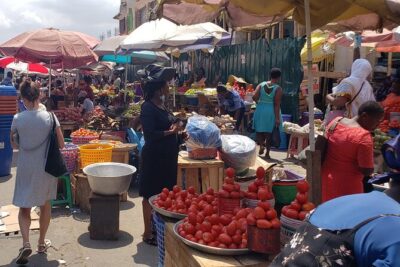
Boti Falls, Umbrella Rock, Aburi Gardens & Cocoa Farm Tour
Read our review →
Browse the lists this tour appears in