
Reviewed · ACCRA TOURS
Half-Day City Tour of Accra
Accra’s story comes into focus on this five-hour city tour, which links independence monuments, presidential memorials, craft stalls, an old coastal neighborhood, and one of the capital’s busiest markets. You get a useful first look at Ghana through both official landmarks and everyday city life, rather than seeing only museums or monuments.
I like the mix of national history and local culture, especially the pairing of Kwame Nkrumah Memorial Park with the Arts Center and Makola Market. I also like that guides such as Charles, Noble, and Christ have been singled out for being on time, friendly, and good at adding historical context. The main consideration is pace: six stops in about five hours leaves limited time at each place, and traffic or a lively market visit could make the schedule feel tight.
Key points at a glance
- Six very different stops: Move from Independence Square and presidential memorials to crafts, a lighthouse, and Makola Market.
- Ghana’s independence takes center stage: The tour explains the Independence Arch, Black Star Gate, Liberation Day Monument, and Kwame Nkrumah’s role.
- Guides add the value: Charles, Noble, and Christ are named in the feedback, with particular praise for clear explanations and punctual service.
- Entry fees and water are included: You do not need to budget separately for the listed admissions or bottled water.
- A compact Accra introduction: The tour covers a lot in roughly five hours, useful at the start of a Ghana visit.
- A maximum of 30 people: This is not necessarily a tiny private outing, so expect a group setting.
Why this Accra tour works as a first look

Accra can feel like several cities at once. Government monuments, memorial parks, markets, craft stalls, and old coastal quarters all tell different parts of the story. This route makes a sensible attempt to connect them within one morning or afternoon.
The focus is not only on sightseeing. At Independence Square, you learn how Ghana presents its break from colonial rule. At the Kwame Nkrumah Memorial Park, that story widens into the wider African struggle for self-government. Then the Arts Center and Makola Market shift attention to work, trade, art, and daily life.
That combination is the tour’s strongest feature. You see the formal face of Accra and its working center in the same outing. For a first visit, that can save you the trouble of trying to arrange several separate stops across the city.
The $100 price is easiest to justify if you value a guide, transport between several sights, admission charges, and a planned route. It is less attractive if you only want to photograph a few landmarks from outside or prefer to explore markets at your own speed. The value depends heavily on how much explanation your guide provides, and the available feedback points to guides who make the historical sections worthwhile.
A few more Accra days to weigh up
- Half-Day Private History Tour in Nkyinkyim Museum
★ 5.0 · 9 reviews - Half-day Accra Guided Tour
★ 4.5 · 8 reviews - Half-Day Accra City Tour Experience
★ 5.0 · 7 reviews
Independence Square and Ghana’s national story
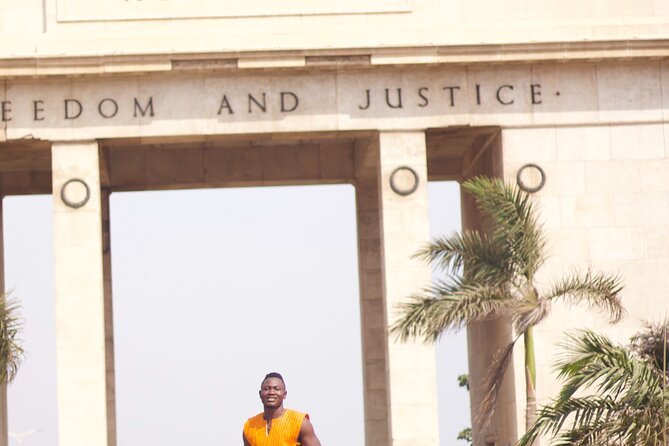
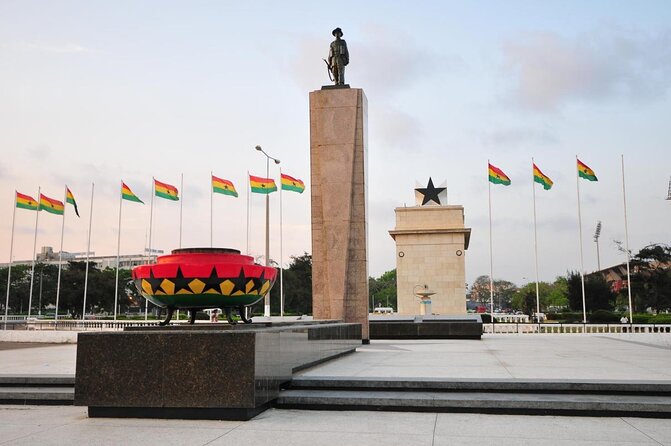
The opening stop, Independence Square, receives about an hour. It is also known as Black Star Square and contains several important monuments connected to Ghana’s independence struggle.
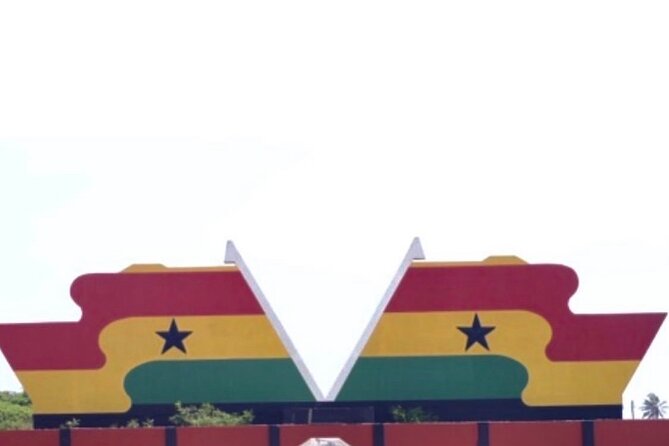
Your guide explains the Independence Arch, Black Star Gate, and Liberation Day Monument. These are not random photo stops. Together, they introduce the symbols Ghana uses to mark its emergence as an independent nation.
Give this section your attention even if you are mainly interested in markets or architecture. The guide’s explanations provide the political thread that connects several later stops, especially the Kwame Nkrumah Memorial Park.
An hour is a useful amount of time here, but the experience is likely to be more about orientation and interpretation than a long museum visit. You should expect open public spaces and monuments rather than a densely packed indoor attraction. Comfortable walking shoes and sun protection make sense, although the tour includes bottled water.
Asomdwe Park and a more recent memorial

Asomdwe Park takes about 30 minutes. The park is a memorial to former President J.E.A. Mills and holds his remains.
This stop gives the route a more recent political focus. After hearing about Ghana’s independence era, you see how the country also remembers a modern president. It is a quieter change of pace from the larger national symbols at Independence Square.
The short visit is appropriate for a memorial park, though it does mean you should not expect an extended grounds tour. Your guide can provide the context that the site itself may not communicate at a glance. If you prefer a tour devoted only to major historic attractions, this stop may feel less essential. If you want a broader picture of Ghana’s public life, it adds useful balance.
Kwame Nkrumah Memorial Park in 30 minutes
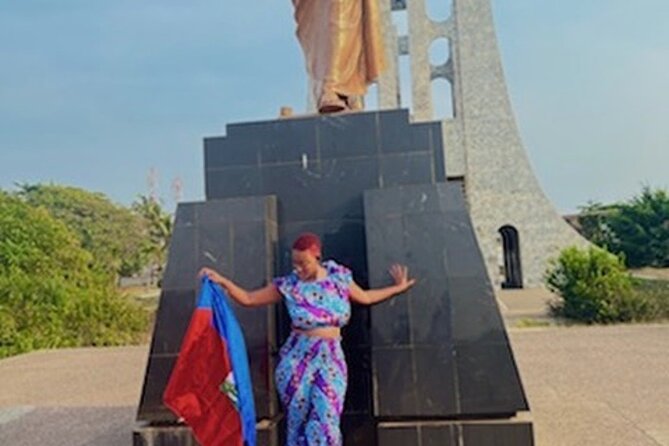
The Kwame Nkrumah Memorial Park is one of the most important stops on the route. Ghana’s first president and a major Africanist are buried in the mausoleum, and the museum contains artefacts tied to Ghana’s independence and the wider sub-Saharan struggle for self-government.
This is where the tour’s historical theme becomes most focused. The site connects Ghana’s national story to Pan-African politics, including the work and influence of W.E.B. Du Bois. One account of the tour specifically praised the explanation of Du Bois and his relationship with Ghana and the wider Pan-African movement.
I would pay close attention here. A good guide turns the museum from a display of objects into a connected story, explaining why Ghana mattered far beyond its own borders. Christ was specifically praised for adding historical context during the museum visit, while Noble and Charles were also named as strong guides.
The planned time is 30 minutes, so expect a brisk visit. That can work well if the guide keeps the explanation focused, but it may feel short if you want to examine every exhibit. If this is the stop you most want to study, tell your guide early. The tour has several later stops, so there may not be room for a long unscheduled extension.
Same departure point, a completely different day out:
- The Cape Coast Day Tour
★ 5.0 · 525 reviews - Experience the Beauty, History and the Culture Of Accra in a Day
★ 5.0 · 323 reviews - The Cape Coast Tour
★ 5.0 · 177 reviews - From Accra: Cape Coast, Elmina Castle & Kakum Park Day Tour
★ 4.6 · 144 reviews
The Arts Center for crafts and local culture
The Center for National Culture, commonly called the Arts Center, receives about an hour. This is the route’s main stop for arts, crafts, and shopping.
The Arts Center adds a practical side to the historical material. You are no longer only looking at monuments connected to national leaders. You are also seeing objects made for daily use, decoration, and visitors looking for something to take home.
An hour gives you time to browse, compare items, and ask your guide about the setting. The information provided does not specify which workshops, stalls, or products you will see on the day, so keep expectations open. You might find a wide range of locally made goods, but the exact selection can change.
This is also a place where a guide can help you understand the difference between a quick purchase and a considered one. Use the time to look before committing to anything. The tour includes entry fees, but it does not state that purchases are included, so shopping money is separate.
James Town Lighthouse and Accra’s coastal past
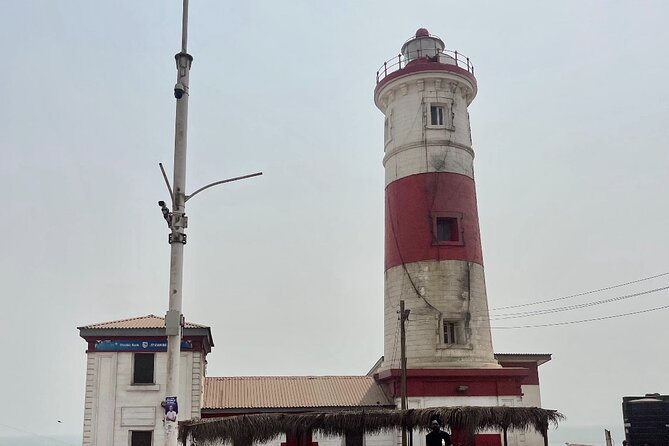
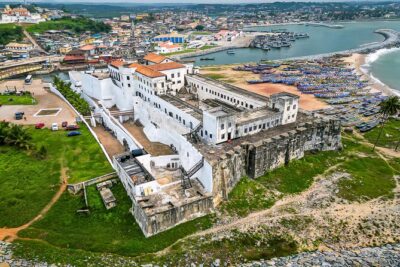
The James Town Lighthouse stop lasts about an hour. The lighthouse consists of a stone tower with a lantern and gallery, attached to a keeper’s house.
The building gives the route a different visual character. After broad public squares and memorial sites, you get an old coastal landmark with a more specific purpose. The lighthouse helps show Accra through its maritime setting and James Town neighborhood.
The information supplied does not confirm whether lighthouse access to the tower or gallery is available during every visit. I would treat the stop as a chance to see and learn about the structure, while asking your guide what parts can be entered that day.
An hour is generous enough for explanation and photographs, but the overall schedule remains full. James Town is not just another monument on a list. It is one of the stops that gives the tour a sense of place, especially when paired with the market and arts sections.
Makola Market, where Accra gets practical

The final listed stop is Makola Market, with about an hour for exploration. This is a major market and shopping district in central Accra, spreading through the market area and surrounding streets.
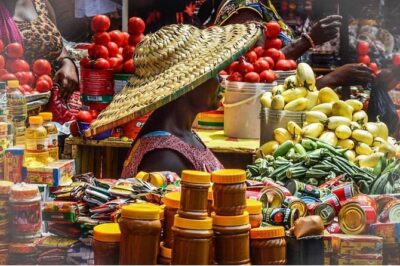
The range of goods is unusually broad. You may find items from car parts to land snails, along with many other products sold through the market’s stalls and streets. That variety matters because it shows Accra as a place of work and trade, not only a capital of monuments and official ceremonies.
Makola is likely to be the most sensory stop, but the supplied information does not promise a particular stall, tasting, or shopping activity. Go ready to observe, listen, and stay close to the guide. The market is best understood as a functioning commercial district, not a staged cultural display.
An hour can give you a useful introduction, though it is not enough to cover every lane. If shopping is your priority, you may want to return on your own later, subject to your own plans and transport. On this tour, the main benefit is having the market placed within Accra’s wider story.
How the five-hour schedule feels

The six listed stops add up to five hours exactly: one hour at Independence Square, 30 minutes at Asomdwe Park, 30 minutes at Kwame Nkrumah Memorial Park, one hour at the Arts Center, one hour at James Town Lighthouse, and one hour at Makola Market.
That leaves little room for delays, long purchases, or extra time at a favorite site. The schedule is efficient, but it is not leisurely. You will get a broad sample of Accra rather than a slow study of two or three places.
The tour is offered in time blocks of 9:00 AM to 12:00 PM, 12:30 PM to 3:30 PM, and 4:00 PM to 6:30 PM from Monday through Sunday during the stated operating period. The advertised duration is approximately five hours, so the exact rhythm may vary.
The meeting point is Accra Sports Stadium at 1272 Starlets 91 Road. The activity ends back there, which makes planning simpler if you have another appointment afterward. A mobile ticket is provided, confirmation arrives at booking, and bottled water is included.
The maximum group size is 30 people. That is small enough for a planned group outing, but you should not assume the close attention of a private tour. The guide quality matters even more in a group of this size, and the named guides have been praised for being informative, pleasant, and punctual.
The guide can make or break the value
The route itself is useful, but the guide is the part you are paying for beyond entrance fees and water. Historical monuments can feel flat if you only receive names and dates. The strongest comments about this tour focus on guides who explain the meaning behind the places.
Charles was singled out for making a family outing informative and fun. Christ was praised for adding historical detail at the museum, and Noble and Charles were both described as on time and helpful during the Accra visit. Those names give you a useful point of reference, although the specific guide for your booking is not stated.
I would ask questions as you go. Independence Square and the Nkrumah memorial are especially suited to questions about Ghana’s independence and Pan-African connections. At the Arts Center and Makola Market, ask about the role each place plays in Accra today.
This approach helps you get more from a compact route. You are not just collecting six locations. You are asking the guide to connect public memory, political change, art, commerce, and city life.
Who will get the most from this tour
I would recommend this outing to a first-time visitor who wants a broad introduction without spending days arranging separate visits. It also suits families and anyone who prefers a guide to handle the route while they concentrate on the sights.
History-minded visitors will appreciate the attention to Ghana’s independence, Kwame Nkrumah, W.E.B. Du Bois, and Pan-Africanism. People interested in shopping or local life will value the Arts Center and Makola Market, even if they later choose to return for more time.
The tour is less suitable if you want a slow photography walk, a private guide, or long stretches at one museum. The six-stop schedule asks you to keep moving. It is also not the best fit for someone who wants a carefully themed tour focused only on architecture, food, or contemporary art.
Most people can participate, service animals are allowed, and the meeting point is near public transportation. The supplied details do not describe specific mobility arrangements at every stop, so anyone with particular access needs should confirm those details before booking.
Price, group size, and the cancellation risk
At $100 per person, the price buys a planned five-hour route, a guide, listed admission fees, bottled water, and the convenience of returning to the starting point. For a visitor who would otherwise need to arrange transport and research six separate places, that can be fair value.
The price is harder to defend if you plan to visit only Independence Square, the memorial park, and Makola Market on your own. The tour’s real value is its range and the guide’s interpretation, not simply the number of stops.
The booking is non-refundable and cannot be changed for any reason. That is a serious consideration. Do not book until your date and schedule are firm, since cancellation or an amendment request will not result in a refund.
Should you book the Afro Nyanka Accra tour?
Book it if you want a compact, guided introduction to Accra’s history and daily life. The mix of independence sites, memorials, crafts, James Town, and Makola Market is unusually broad for half a day, and the named guides have earned praise for clear explanations, good timing, and a friendly approach.
Skip it if you prefer to move slowly, shop for hours, or choose every stop yourself. The $100 cost and strict no-refund rule also call for a firm plan. For a first visit with limited time, though, this is a sensible way to get your bearings and learn why Accra matters before exploring further on your own.
FAQ
How long is the Accra city tour?
The tour lasts approximately five hours.
How much does the tour cost?
The listed price is $100 per person.
Where does the tour begin?
It begins at Accra Sports Stadium, 1272 Starlets 91 Road, Accra, Ghana.
Where does the tour end?
The activity ends back at the meeting point.
Which locations are included?
The route includes Independence Square, Asomdwe Park, Kwame Nkrumah Memorial Park, the Center for National Culture, James Town Lighthouse, and Makola Market.
Are admission fees included?
Yes. All listed fees and taxes are included.
Is bottled water provided?
Yes, bottled water is included.
How many people can join the tour?
The maximum group size is 30 people.
When is the tour available?
It is listed as available Monday through Sunday, with time blocks from 9:00 AM to 12:00 PM, 12:30 PM to 3:30 PM, and 4:00 PM to 6:30 PM.
Can I cancel or change my booking?
No. The experience is non-refundable and cannot be changed for any reason.
Just added around Accra
- Experience Aburi Botanical Gardens And Boti Water Falls In A Day.★ 5.0 · 3 reviews
- Experience Cape Coast Castle and Kakum National Park★ 4.5 · 3 reviews
- Accra city tour★ 4.5 · 3 reviews
- 7days/6nights Eco Tourism★ 5.0 · 3 reviews
- 3 Days Accra City Tour & Cape Coast Tour★ 4.5 · 3 reviews
- Local Ghanaian Food Tasting Tours★ 5.0 · 3 reviews
- Accra Zoo, Canopy Walk and Botanical Gardens Private Tour★ 5.0 · 3 reviews
- Historical tour in Cape Coast Ghana★ 5.0 · 3 reviews
Accra Tours, compared.
Experience the Beauty, History and the Culture Of Accra in a Day
Read our review →
Cape Coast, Elmina Castle & Kakum Park Day Tour
Read our review →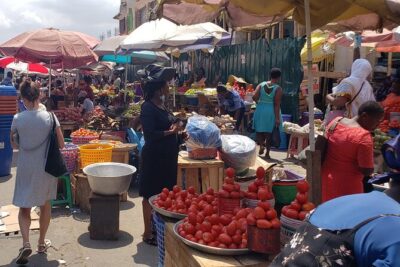
Boti Falls, Umbrella Rock, Aburi Gardens & Cocoa Farm Tour
Read our review →
Browse the lists this tour appears in