
Reviewed · CAPE COAST & ELMINA CASTLE TOURS
Assin Manso Slave River and Cape Coast Castle Private Day Tour
The most powerful part of this day is its clear physical route through Ghana’s slave-trade history. At Assin Manso’s Slave River, you see the place remembered as the Last Bath, then continue to the dungeons of Cape Coast Castle and Elmina Castle, where captured Africans were held before shipment overseas. I like that the tour connects these sites instead of treating each one as a separate museum visit.
I also like the private format, which gives your group room to ask questions and set the pace within a long day. Guides such as Frank, Bright, and Foster have been praised for being punctual, patient, respectful, and willing to answer questions beyond the main subject. The drawback is the early 5:30 am start and the long road day, which can stretch to 13 hours from Accra.
Key points to know before booking
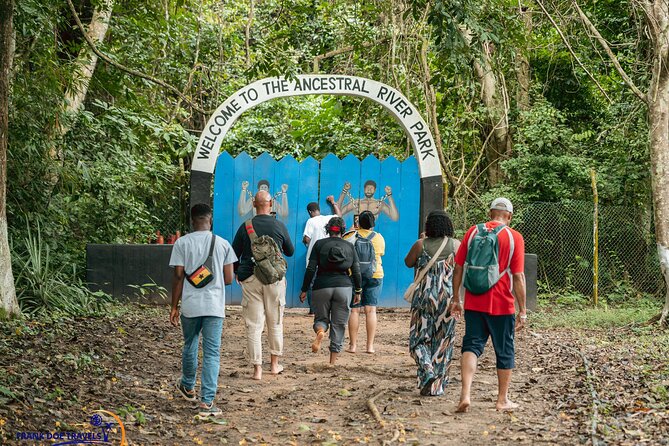
- Assin Manso comes first: Visit the Slave River, where captured Africans were washed before confinement in the coastal castles.
- Three major sites in one day: The route includes Assin Manso, Cape Coast Castle, and Elmina Castle.
- A private vehicle and guide: Only your group participates, making it easier to ask personal or detailed questions.
- Lunch and water are included: Admission fees, taxes, lunch, and water are covered in the $200 price.
- Plan for a very early start: Pickup begins at Accra Mall at 5:30 am, and the full day lasts about 11 to 13 hours.
- The subject is painful but important: This is an educational memorial experience, not a light sightseeing outing.
Why the Last Bath gives this tour its emotional center
Many Ghana heritage tours begin at one of the coastal castles. This one starts inland at Assin Manso, which gives the day a more human and direct opening.
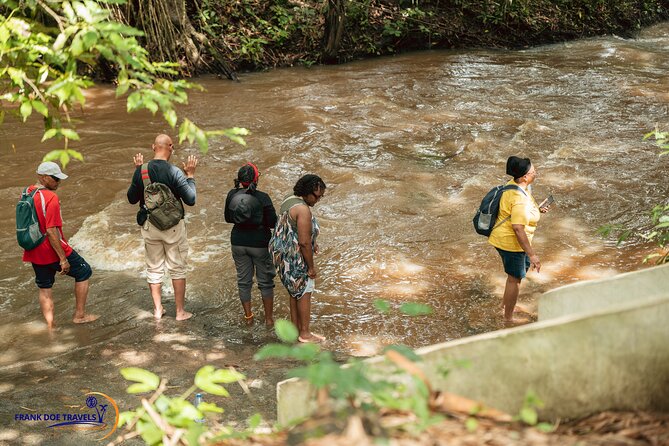
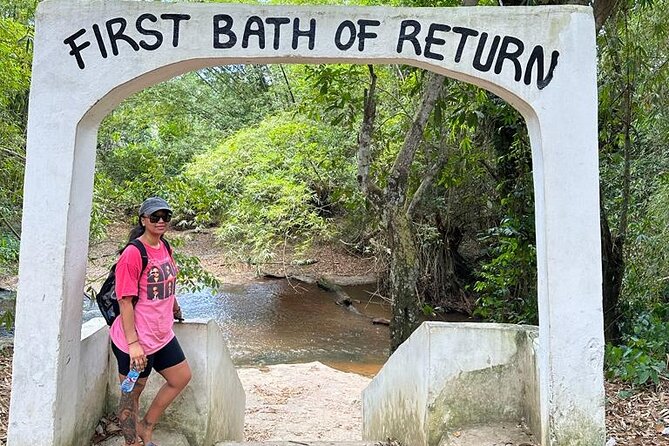
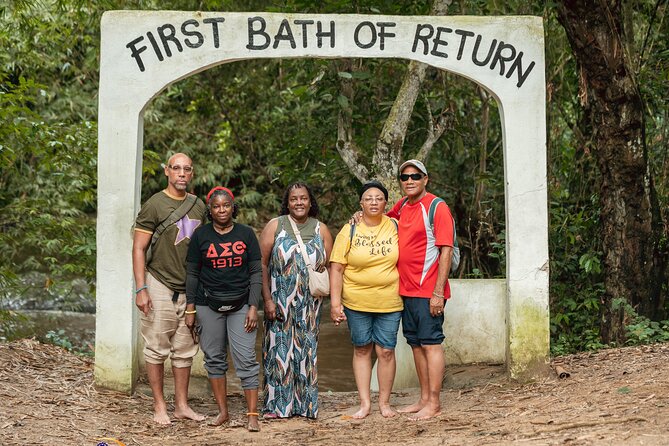
At the Ancestral Slave River Park, also called Donkor Nsuo, you see the waterway associated with the washing of captured Africans before they were taken to the castles. It is remembered as their Last Bath. That detail changes the way you approach the later stops, because you have already considered the people before seeing the buildings that confined them.
The site also includes the burial place of two former slaves from the United States and Jamaica. Their remains were re-interred in August 1998 during Ghana’s first Emancipation Day Celebration. That connection links the Ghanaian sites to the wider Atlantic world and gives the visit a memorial purpose, not just an architectural one.
Your visit here lasts about an hour, with admission included. I would treat this as a quiet and serious beginning. The value is not in a long list of displays. It is in standing at a place tied to one of the last stages before imprisonment and forced shipment.
Other visits to the Cape Coast and Elmina castles:
- The Cape Coast Day Tour
★ 5.0 · 525 reviews - The Cape Coast Tour
★ 5.0 · 177 reviews - From Accra: Cape Coast, Elmina Castle & Kakum Park Day Tour
★ 4.6 · 144 reviews
Cape Coast Castle and the scale of confinement
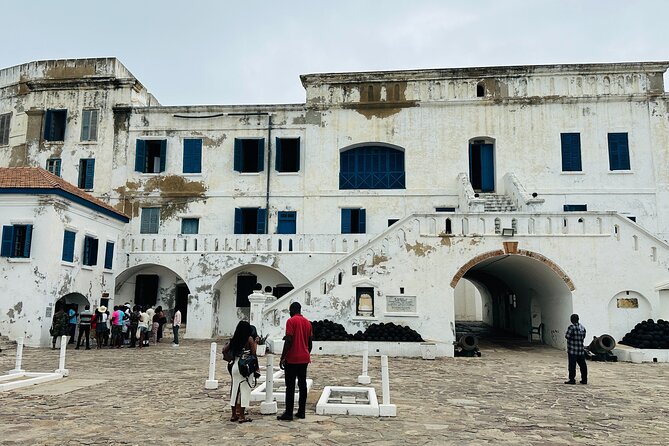
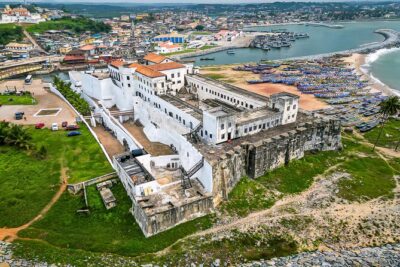
Cape Coast Castle is the day’s best-known stop, and it can be difficult to take in all at once. The castle served as a slave castle and later as an administrative center for British rule in West Africa. You visit the museum and the dungeons where enslaved people were kept while awaiting transport to the New World.
The tour allows about one hour here. That is enough for a guided introduction, but it is not a slow museum day. You will need to listen closely and keep moving with the group. A private guide helps because you can ask for clarification instead of simply following a large crowd.
The dungeons are the reason this stop carries such weight. The stone rooms make the system of captivity physical. You are not only hearing about a trade conducted across an ocean. You are seeing the spaces where people were confined before being forced onto ships.
The museum adds a wider frame, including the castle’s role in British administration. That matters because Cape Coast Castle was not only a holding site. It also formed part of the machinery of colonial power. Your guide can help connect the building’s military and government functions with the human cost of the slave trade.
The emotional tone is serious. The tour is suitable for anyone who wants to learn and reflect, but it is not a casual stop to fit between beach visits. Several people who booked the experience described it as heartbreaking, eye-opening, and necessary. That is a fair expectation.
Elmina Castle, built in 1482
The final major stop is Elmina Castle, a UNESCO World Heritage Monument built by the Portuguese in 1482. It was the first trading post built on the Gulf of Guinea and is described as the oldest European building in existence below the Sahara.
The castle gives you another view of the same trade system. Its Portuguese origins and later role in the slave trade show that European involvement on Ghana’s coast changed over time and involved more than one colonial power. You hear stories of the slave trade while touring the building, including its confinement areas and trade-related spaces.
The visit lasts about an hour, so expect a focused tour rather than an all-day exploration. The contrast between Elmina and Cape Coast is useful. Seeing both prevents you from reducing the subject to one famous building. Each place has its own architectural story, while together they show the reach and organization of the trade.
Elmina is also a strong final stop because you have already visited Assin Manso and Cape Coast Castle. By then, the route has moved from the inland river to the coastal fortifications. The sequence helps you understand the process as a chain of places rather than an isolated event.
What a 5:30 am departure means in practice
The tour begins at Accra Mall, at Plot C11 near the Tetteh Quarshie Interchange on Spintex Road. Pickup is offered, but the stated meeting point is the Accra Mall area, so you should confirm the exact pickup arrangement when booking.
The early start is not a minor detail. Assin Manso and the two castles are in Ghana’s Central Region, outside Accra, and the day takes about 11 to 13 hours. The pre-dawn departure makes it possible to cover all three places and return to Accra the same day.
I like the early timing for one practical reason: it gives you the best chance of completing the route without turning the return into an even later night. Still, you need to be comfortable spending much of the day on the road. If you prefer slow mornings or short excursions, this will feel demanding.
The experience ends back at the meeting point. It is best suited to a full day set aside for this subject, not to a morning before another appointment or an evening flight.
A few more Accra days to weigh up
- Experience the Beauty, History and the Culture Of Accra in a Day
★ 5.0 · 323 reviews - Accra Detailed City Tour
★ 4.5 · 118 reviews - Accra Guided City Tour Experience
★ 4.7 · 88 reviews - Accra Guided City Tour Experience
★ 5.0 · 76 reviews
The value of a private tour at $200
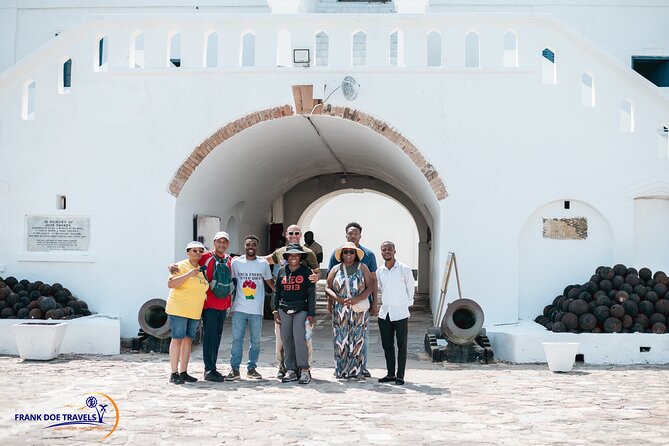
At $200 per person, this is not the cheapest way to see Ghana’s Central Region. The price makes more sense if you value a private vehicle, a guide focused only on your group, and a single organized day from Accra.
The package includes all fees and taxes, lunch, water, and admission to the three listed sites. Those inclusions reduce the need to sort out separate entrance payments and food during a long day. The private format also gives you a better chance to pause for questions, ask for explanations, and request photographs.
Guides associated with this experience include Frank Doe, Bright, and Foster. Frank has been praised for arriving on time, driving safely through traffic, taking photos, and answering questions even when they moved beyond the scheduled subject. Foster has been described as helping make a difficult experience feel easier to process while adding useful detail. These points matter because the quality of the guide is central here. The buildings are important, but the explanations and tone shape how you understand them.
The price is strongest for a small family group, partners, or friends who want a private day. Group discounts are offered, which may improve the value if several people book together. For one person on a tight budget, a shared option could be worth comparing, but this particular experience is built around privacy.
A serious subject handled with care
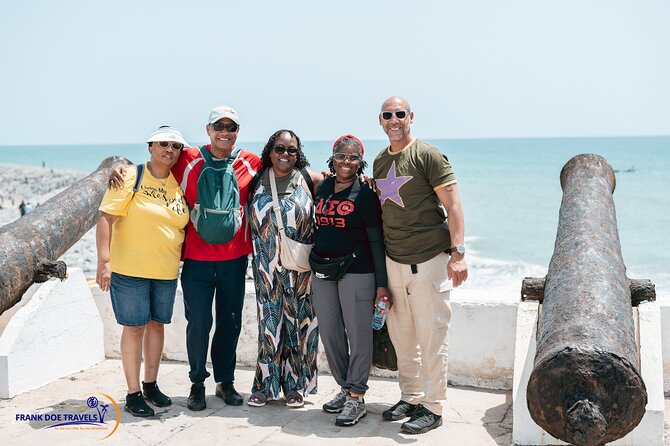
You should expect the tour to be emotionally difficult. Assin Manso, Cape Coast Castle, and Elmina Castle are places connected to forced removal, confinement, and the sale of human beings. The experience asks you to look directly at that past.
The guides have been praised for respectful treatment of enslaved people and for explaining the subject without turning it into entertainment. That is especially important at the dungeons, where a careless presentation would miss the point. The best approach is to listen, ask thoughtful questions, and allow yourself time to process what you see.
I would not book this as a simple photo tour. Photography may be part of the day, and Frank has taken photos for groups, but the main purpose is learning and remembrance. The castles are striking buildings, yet their beauty cannot be separated from what happened inside them.
The tour can suit people with a moderate level of physical fitness. The supplied information does not describe the number of stairs, surfaces, or walking distances at each site, so anyone with mobility concerns should ask the operator for current details before booking. Service animals are allowed, and the meeting point is near public transportation.
Who will get the most from this day
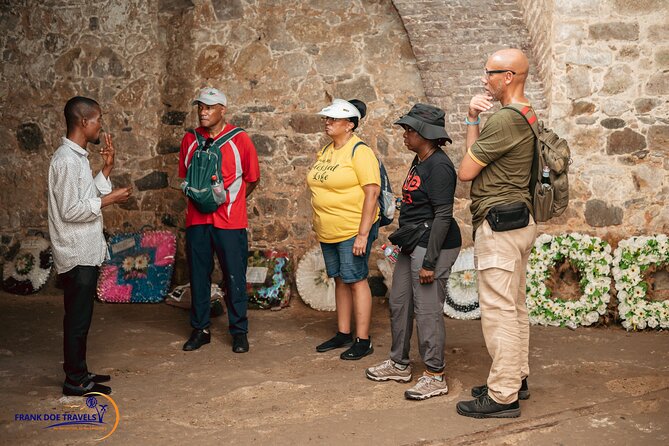
This tour is a strong fit if you are staying in Accra and want to understand Ghana’s role in the Atlantic slave trade through important sites rather than only reading about it. It also suits people tracing family history or seeking a meaningful connection with African and African American heritage.
Families can benefit from the private setting, since adults may want to ask questions while younger members need explanations suited to their age. The guide can focus on your group rather than delivering a fixed talk to a large crowd.
It is also useful for first-time visitors who want several major heritage sites handled in one day. The trade-off is pace. You will not have unlimited time at any one stop, and the road time is considerable.
I would think twice if you want a relaxed coastal outing, a late start, or a tour centered on food and scenery. This is a demanding heritage day. Its reward is a stronger understanding of the people, places, and institutions connected to Ghana’s slave-trade era.
Small practical details that make a difference
Wear clothing and shoes suitable for a full day of touring, since a moderate level of physical fitness is expected. Water is included, and lunch is included, but you may still want to begin the morning prepared for an early departure.
Keep your schedule clear after the tour. The stated duration is approximately 11 to 13 hours, and traffic or delays can affect when you return to Accra. The return point is the original meeting point at Accra Mall.
Confirmation is provided at booking. Free cancellation is available up to 24 hours before the start time for a full refund. Changes or cancellations made less than 24 hours before the 5:30 am start are not accepted for a refund, so check your plans carefully.
The tour is private, but group discounts are available. That combination can make it a practical choice for a family or group of friends who want to share both the cost and the experience.
Should you book the Assin Manso and castle tour?
Book it if you want a serious, well-organized day focused on Ghana’s slave-trade history and you are willing to start early. The strongest reasons are the three-site route, included admissions and lunch, and a private guide who can explain difficult material with care.
The early departure, long drive, and emotional subject are real drawbacks. You should not expect a leisurely sightseeing day. But if you want to visit the Last Bath at Assin Manso, enter Cape Coast Castle’s dungeons, and see Elmina Castle in one trip from Accra, this tour offers a direct and meaningful way to do it.
FAQ
Where does the tour begin?
The tour begins at Accra Mall, Plot C11 near the Tetteh Quarshie Interchange on Spintex Road in Accra, Ghana.
What time does the tour start?
The stated start time is 5:30 am.
How long does the experience last?
The tour lasts approximately 11 to 13 hours and ends back at the meeting point in Accra.
Which places are included?
The experience includes Assin Manso Ancestral Slave River Park, Cape Coast Castle, and Elmina Castle.
Are admission fees included?
Yes. Admission tickets for the listed stops, along with all fees and taxes, are included.
Is lunch provided?
Yes. Lunch and water are included in the tour price.
Is this a private activity?
Yes. Only your group participates in the activity. Group discounts are also offered.
What is the cancellation policy?
You can cancel at least 24 hours before the experience begins for a full refund. Cancellations or changes made less than 24 hours before the start time are not accepted for a refund.
Just added around Accra
- Accra: Tafi Kente Village, Monkey Sanctuary &Wli Waterfalls★ 4.5 · 4 reviews
- 2 Days (1 night) Elephants Safari at Mole Park with Round – trip flights★ 5.0 · 4 reviews
- Full-Day Wli water Falls and Monkey Sanctuary Private Tour★ 5.0 · 4 reviews
- 9 Day Ghana Wildlife and Culture Tour★ 5.0 · 5 reviews
- A Taste of West Africa – Ghana Togo & Benin★ 5.0 · 5 reviews
- Quad Biking and Waterfalls Adventure★ 5.0 · 5 reviews
- Accra Architectural Tour★ 3.9 · 5 reviews
- Cape Coast: Kakum National Park, Castles, & Hans Cottage★ 4.8 · 5 reviews
Cape Coast & Elmina Castle Tours, compared.

Cape Coast, Elmina Castle & Kakum Park Day Tour
Read our review →

10 Days Trip to Cape Coast and Elmina Castles from Accra
Read our review →
The Homecoming Experience To Cape-coast And Elmina.
Read our review →
Cape Coast/Elmina Slave Dungeon and Canopy Walkway Private Tour
Read our review →
Assin Manso Slaves River and Cape Coast Castle Tour
Read our review →Browse the lists this tour appears in