
Reviewed · ACCRA TOURS
7 Day Artisanal Tour
Ghana’s handmade traditions are the heart of this seven-day trip. You shape clay, mix traditional black soap, and create wax-and-dye batik fabric, then set those workshops beside Accra’s galleries, Kakum’s canopy walkway, and Cape Coast Castle. I especially like the hands-on format and the way the tour connects modern city art with older craft skills.
I also like having a private air-conditioned vehicle, airport transfers, and a full free day in the middle of the week. The main consideration is the $2,610 price, which is a serious investment for seven days, and some long sightseeing days may feel full, especially the drive to Cape Coast and back.
Key points to know before booking
- Three genuine craft workshops: Make and paint pottery, produce traditional black soap, and create two yards of batik fabric.
- Private touring: Your group travels in an air-conditioned vehicle rather than joining a large shared departure.
- Accra’s cultural mix: See Independence and Black Star Square, the W.E.B. Du Bois Center, the Arts Center, and several galleries.
- Nature and history in one day: Visit Kakum National Park and Cape Coast Castle on a long Cape Coast outing.
- A useful rest day: Day four is left open for relaxing at the hotel or making your own plans.
- Strong service focus: The tour includes airport pickup, and the guide named in the guest feedback, Mohammad, was singled out for making requests happen.
Why this Ghana itinerary feels different
Many Ghana tours focus on monuments and photo stops. This one gives you time to make things with your own hands. That changes the rhythm of the trip. You are not only looking at a pot, a bar of soap, or a length of cloth. You are learning how each item is produced and taking part in the process.
The workshop days are also practical souvenirs. Your pottery becomes a personal keepsake, the soap can be customized with essential oils and botanicals, and the batik class includes two yards of fabric to take home. You will still need to have the batik sewn into a finished garment or household item later, but the fabric itself is part of the experience.
The private format is important here. Since only your group participates, the day can be handled at a more personal pace. You can ask questions during a craft lesson, spend more time at a gallery, or raise a request with your guide. The available feedback gives special credit to Mohammad for responding to requests and keeping communication clear.
The trade-off is cost. At $2,610 per person, this is not a budget introduction to Ghana. The value comes from the private transport, airport transfers, organized admission, five breakfasts, several guided cultural visits, and three workshops. If you would otherwise pay separately for a private driver, craft classes, and day trips, the package becomes easier to justify. If you mainly want a hotel and a few sightseeing outings, it may feel expensive.
A few more Accra days to weigh up
- 7-Day Private Cultural and Heritage Tour in Ghana
★ 5.0 · 17 reviews - Private Multi-Day Ghana Tour about Culture History and Wildlife – 7 Days
★ 5.0 · 8 reviews - 7days/6nights Eco Tourism
★ 5.0 · 3 reviews
Day one: a simple arrival in Accra
The first day is intentionally light. You arrive in Accra, meet your transfer, and go to your hotel. The listed transfer takes about an hour, although the actual timing will depend on your arrival and road conditions.
That simplicity is welcome after an international flight. There is no forced sightseeing, no rushed museum visit, and no craft lesson on arrival day. Use the evening to rest, adjust to the local time, and prepare for an early breakfast and the first full touring day.
Airport pickup is included, but airport or departure taxes and landing or facility fees are not. Keep that distinction in mind when you calculate your total trip cost.
Day two: clay, independence, and Accra’s central sights
The first workshop introduces you to traditional pottery making at Happy Art Academy. The class lasts about three hours and is designed as a practical session with skilled artisans. You shape clay into a functional or decorative piece, then paint it with your own colors.
I like this as the opening activity because it gives you an immediate connection to Ghanaian craft. Pottery rewards patience, and the finished object carries the marks of your own hands. Do not expect a quick demonstration followed by a few minutes of participation. The stated format is hands-on, so you should be prepared to spend real time working with the material.
After the class, the tour turns to Accra. The city orientation covers administrative and economic districts and includes views of the Artiste Alliance Gallery, the W.E.B. Du Bois Center for Pan African Culture, and Independence or Black Star Square. The outing helps you get your bearings in Ghana’s capital rather than treating the city as a mere arrival point.
The Kwame Nkrumah Memorial Park gives the day its historical focus. The site honors Ghana’s first president and his role in the country’s independence. You can see his mausoleum, a museum about his life, his personal residence, the Eternal Flame of African Liberation, and landscaped gardens.
This is useful context before the later visit to Cape Coast Castle. Nkrumah’s political career and Pan-African vision help place Ghana within the wider story of African independence. The visit is listed at about two hours, so you should have time for both the museum material and the outdoor areas.
The day finishes at the Arts Center, where you can practice bargaining while shopping for Ghanaian goods. This is one place where your guide can make a real difference. The center is a chance to buy crafts, but it is also a lesson in negotiating. Set a spending limit before you start, compare several items, and remember that the first asking price is part of the process.
With three major stops after the pottery class, day two is full. You will see a lot, but this is not the day to schedule an unrelated evening activity.
Day three: black soap and Accra’s art scene
At ALL PURE NATURE Skin & Hair Care Products, you learn how traditional African black soap is made. The three-hour workshop covers the natural ingredients and indigenous methods used to produce the soap. You mix and mold it, then customize your batch with aromatic essential oils and botanicals.
This class adds a useful everyday angle to the craft theme. Soap is not simply an ornament or display object. The lesson connects local materials, beauty practices, and small-scale production. You also leave with something made during the session, although the supplied details do not specify the exact quantity or packaging.
The afternoon shifts from traditional craft to contemporary art. Gallery 1957 presents contemporary African art, while Artists Alliance Gallery focuses on paintings, sculptures, and textiles from across the continent. The itinerary also includes dot.ateliers in South Labadi.
These visits give the day some variety. Gallery 1957 can help you see current artistic work, while Artists Alliance offers a wider selection of forms and materials. Dot.ateliers adds another stop to the local creative circuit. Admission is included at each listed gallery.
The schedule allows about one hour at each gallery. That is enough for a purposeful visit, but not enough for a slow study of every work. If you have a strong interest in contemporary art, ask your guide how the stops will be ordered and how much flexibility you have. The private setting may make it possible to adjust the pace, but the available details do not promise a special exhibition or a particular artist.
Same departure point, a completely different day out:
- The Cape Coast Day Tour
★ 5.0 · 525 reviews - Experience the Beauty, History and the Culture Of Accra in a Day
★ 5.0 · 323 reviews - The Cape Coast Tour
★ 5.0 · 177 reviews - From Accra: Cape Coast, Elmina Castle & Kakum Park Day Tour
★ 4.6 · 144 reviews
Day four: a rare open day
Day four is at leisure. You can rest at the hotel, recover from the first three active days, or arrange your own time in Accra.
I consider this a real strength. Craft workshops require concentration, and day two includes several sightseeing stops. A free day prevents the itinerary from becoming a nonstop checklist. It also gives you room to shop, revisit an area, or simply do nothing.
The drawback is that the tour does not specify optional activities for this day. If you prefer a tightly programmed trip, the open schedule may feel underused. If you enjoy setting your own pace, it is a welcome pause.
Day five: Kakum’s forest and Cape Coast Castle
Day five is the longest and most emotionally weighty outing. You travel toward Cape Coast through the historic Denkyira Kingdom, stopping first at Kakum National Park.
Kakum is one of West Africa’s surviving tropical rain forests. You have a choice between a two-kilometer forest walk and the canopy walkway, which hangs 40 meters above the forest floor. The walk focuses on tropical plants, animals, and the medicinal uses of local flora. The canopy route offers a high view through the trees.
The choice matters. The forest walk is better for you if you want ground-level interpretation and a closer look at plant life. The canopy walkway is the more memorable option for height and views, though anyone uneasy with suspended paths should choose carefully. The provided information does not state whether the canopy walkway is suitable for every mobility level, so ask before committing if that is a concern.
The Kakum visit lasts about four hours, making it more than a brief roadside stop. Wear practical clothing and shoes suitable for walking. The tour information does not specify meals for this day, so confirm how lunch is handled before departure.
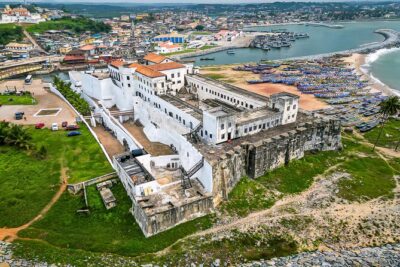
Cape Coast Castle follows. Built by the Swedes in 1653 and later taken over by the British, the castle presents the history of the trans-Atlantic slave trade. You visit the dark, confined dungeons and the West African Historical Museum while learning about the relationships among European traders and African groups involved in the trade.
This is difficult material, and it should be approached with attention rather than treated as a quick photo stop. Standing in the dungeons gives physical weight to a history that can otherwise feel distant. The visit lasts about three hours, followed by the return drive to Accra.
Kakum and the castle make a powerful pair: one shows Ghana’s natural setting, and the other confronts a painful period whose effects reach far beyond the country. Still, the combined day is demanding. Expect several hours on the road, time outdoors, and a serious historical visit. If you prefer slow travel, this is the day most likely to test your energy.
Day six: making batik, then heading into the hills
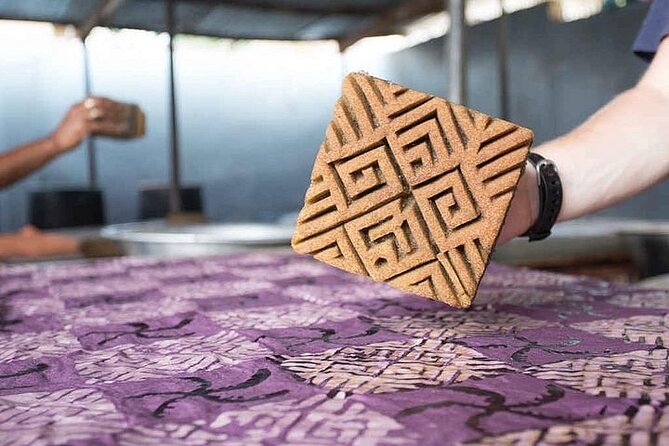
The final workshop takes place in Accra and lasts about three hours. You work alongside local batikers, using wax and dye to create patterns on fabric. The class teaches traditional batik techniques and includes two yards of your finished handiwork to take home.
This is perhaps the most useful souvenir of the three workshops. A finished piece of fabric can become part of your home or wardrobe, though you will need to arrange the sewing yourself. Since the description does not name a specific garment or tailor, consider the fabric the completed product supplied by the tour.
Batik also makes the creative process visible. Wax controls where the dye reaches the cloth, so each pattern develops through a series of deliberate steps. The class gives you a better appreciation for the time and skill behind patterned textiles sold in markets and galleries.
After lunch or a break, the tour goes to Aburi Botanical Gardens. Created in 1890 for pleasure and scientific research, the gardens contain plants and butterflies from around the world. They are in the town of Aburi, which is also described as a place with its own history and a friendly local community.
The gardens provide a gentler finish to the active workshop schedule. You can walk among the plant collections and enjoy a change from central Accra. Rental bicycles have been added for tours on the mountain, but the itinerary does not state that a bicycle is included, so ask about availability and cost if you want to ride.
The batik class and Aburi visit each take about three hours. That creates another full day, but the pace is different from day five. The class is focused and social, while the garden visit offers open space and a slower outdoor setting.
Day seven: shopping, packing, and departure
The final morning is set aside for shopping and last-minute packing. Hotel checkout is at noon, followed by the airport transfer for your flight home.
This plan works best if your departure is later in the day. You have time to organize your handmade pottery, soap, and batik before leaving. If your flight schedule is earlier, the final morning may be much shorter than the itinerary suggests, so confirm the timing of your airport transfer against your departure time.
What the $2,610 price includes
The price is $2,610 per person. Included services are private transportation, an air-conditioned vehicle, airport pickup, and five breakfasts. Admission is included for the listed paid sites and workshops, although the pottery and batik entries are marked differently in the supplied details, so confirm exactly what is covered at booking.
The strongest value comes from the private structure. You are not only paying for transport between Accra, Aburi, Kakum, and Cape Coast. You are also paying for a driver and guide arrangement, organized entries, airport transfers, and three classes that would be harder to coordinate independently.
The package does not include airport or departure tax, or landing and facility fees. It also does not list every meal, drinks, personal shopping, tailoring, bicycle rental, or any optional activity on the free day. Budget for those separately.
The available rating is 5 out of 5 from four ratings. The strongest service themes are comfortable transport, good hotels, strong food, clear communication, and a guide who responds to requests. One family described each day as enjoyable, while another praised the cold drinks kept available during touring. Those details suggest a practical, service-oriented operation, but they do not tell you the exact hotel names or restaurant schedule, so ask for those before paying if they matter to you.
Who will get the most from this tour
I would choose this trip if you want a first Ghana visit built around making, seeing, and learning. It suits couples, families, small private groups, and school or educational groups that want structured cultural activities rather than only monument visits.
It is especially good for you if:
- You enjoy practical workshops more than passive demonstrations.
- You want both Accra and a Cape Coast day trip.
- You value private transport and direct communication with a guide.
- You are interested in African art, textiles, beauty products, and traditional production.
- You can handle a long day combining Kakum National Park and Cape Coast Castle.
I would hesitate if your main goal is a slow beach holiday, nightlife, or a low-cost independent trip. The itinerary is active on several days, and the Cape Coast outing involves substantial travel. The $2,610 cost also makes this a better fit for someone who values convenience and personal attention.
Should you book the 7 Day Artisanal Tour?
Book it if Ghana’s creative traditions are your main reason for going. The pottery, black soap, and batik sessions give the journey a clear purpose, and the finished items make better souvenirs than another stack of photographs. The Accra galleries and Arts Center add a modern and commercial side, while Kakum and Cape Coast broaden the trip beyond the capital.
Before booking, ask for the hotel names, the exact meal plan, the handling of airport and facility fees, and the timing of the Cape Coast day. Confirm what happens to your pottery after painting and whether the batik fabric is ready to collect that day. With those details settled, this is a well-balanced private introduction to Ghana, provided you are comfortable paying for a guided, craft-centered experience.
FAQ
How long is the tour?
The tour lasts approximately seven days, from airport arrival in Accra through the airport transfer on the final day.
Is airport pickup included?
Yes. Airport pickup on arrival and a transfer to the airport for departure are included in the planned schedule.
Is this a private tour?
Yes. Only your group participates in the private tour or activity.
What transportation is provided?
Private transportation in an air-conditioned vehicle is included.
How many breakfasts are included?
Five breakfasts are included.
What craft workshops are part of the tour?
You take part in traditional pottery making, black-soap making, and batik making. The pottery class includes painting your creation, the soap class includes mixing and molding, and the batik class includes two yards of fabric to take home.
Is there a free day?
Yes. Day four is at leisure, with time to relax at the hotel or make your own plans.
What is the cancellation policy?
You receive a full refund if you cancel at least six full days before the experience start time. Cancellation two to six full days in advance receives a 50 percent refund. Cancellations less than two full days before the start time are not refunded, and the cut-off is based on local time.
Just added around Accra
- Experience Aburi Botanical Gardens And Boti Water Falls In A Day.★ 5.0 · 3 reviews
- Experience Cape Coast Castle and Kakum National Park★ 4.5 · 3 reviews
- Accra city tour★ 4.5 · 3 reviews
- Half-Day City Tour of Accra★ 5.0 · 3 reviews
- 7days/6nights Eco Tourism★ 5.0 · 3 reviews
- 3 Days Accra City Tour & Cape Coast Tour★ 4.5 · 3 reviews
- Local Ghanaian Food Tasting Tours★ 5.0 · 3 reviews
- Accra Zoo, Canopy Walk and Botanical Gardens Private Tour★ 5.0 · 3 reviews
Accra Tours, compared.
Experience the Beauty, History and the Culture Of Accra in a Day
Read our review →
Cape Coast, Elmina Castle & Kakum Park Day Tour
Read our review →
Boti Falls, Umbrella Rock, Aburi Gardens & Cocoa Farm Tour
Read our review →
Browse the lists this tour appears in