
Reviewed · ACCRA CITY TOURS
Accra City Tour
Accra’s story comes into focus through its memorials, forts, markets, and very unusual caskets. This private city tour takes you from the Kwame Nkrumah Mausoleum to Independence Square, Old Accra, and the Center for National Culture, with a guide explaining Ghana’s past and helping you bargain for crafts.
I like the private format, since your group can explore without being tied to strangers or a large coach schedule. I also like the mix of major national sights and local places, especially the fantasy casket workshop and the craft market. The main consideration is the $150 per-person price, which may feel high for a short two-hour outing, though it makes more sense if you use the full half or full day and share the cost with a group.
Key points to know before booking
- Kwame Nkrumah’s final resting place: Spend about 45 minutes at the mausoleum and memorial park dedicated to Ghana’s first president.
- Old Dutch and British Accra: See James Fort, Ussher Fort, Old Accra Square, and the old Post Office from the vehicle and during brief stops.
- Fantasy caskets with a story: Visit a workshop where coffins can be shaped like buses, books, syringes, and other objects linked to a person’s profession.
- A private ride through the city: Travel in an air-conditioned vehicle with only your own group, plus an English or French-speaking guide.
- Market bargaining included: End at the Center for National Culture, where you can shop for Ghanaian arts, crafts, and souvenirs.
- Family-friendly guiding: The available feedback praises the warm, child-friendly manner of the guide, which is useful if you are visiting with children.
Getting your first look at Accra at 9 a.m.
The tour begins at 9 a.m. at the Mövenpick Ambassador Hotel Accra in Ridge, on Independence Avenue. Pickup is offered, but the stated meeting point is the hotel, so confirm the exact pickup arrangement when you book.
Your transport is an air-conditioned vehicle, a useful feature in Accra’s heat and traffic. Since this is a private tour, you are not sharing the experience with a larger group. That gives you more room to ask questions, spend extra time at a stop, or keep the pace moving if a particular sight is not your priority.
The advertised duration ranges from about two to six hours. That is a wide spread, so you should treat the length as flexible rather than fixed. The shorter version may suit you if you need a quick orientation between other plans. The longer version gives the city’s historical stops and market visit more breathing room.
The tour ends back at the meeting point. Lunch, soft drinks, coffee, tea, dinner, and alcoholic drinks are not included, so plan your meals separately.
More ways to see Accra on foot:
- Know Ghana in 4 hrs – Accra City Tour
★ 4.5 · 47 reviews - Escape Accra City to Aburi Gardens and Tetteh Quarshie Cocoa Farms
★ 4.5 · 32 reviews - Accra City Tour
★ 5.0 · 21 reviews
Remembering Kwame Nkrumah at the memorial park
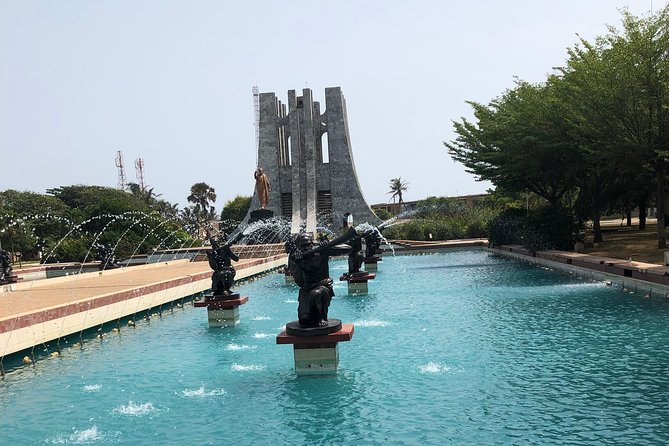
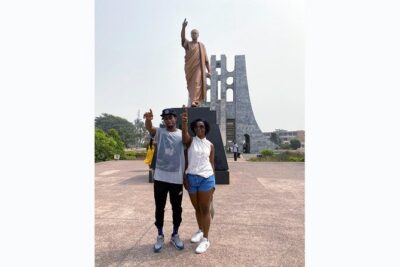
The first major stop is the Kwame Nkrumah Memorial Park, including the mausoleum where Dr. Kwame Nkrumah is buried. Nkrumah was Ghana’s first president, and the site gives the tour a clear starting point in the country’s modern political story.
You have about 45 minutes here, and admission is included. That is enough time for a focused visit rather than a rushed photo stop. Your guide can place the memorial in the wider story of Ghana’s independence and explain why the site matters to the country.
This is likely the most formal stop of the day. You will see a national memorial rather than a market or working neighborhood, so the experience changes pace here. I would use this first visit to ask your guide about Nkrumah, Ghana’s independence, and the national celebrations you will see referenced later at Independence Square.
The park is also a practical first stop because it gives you historical context before the tour moves into old colonial districts and commercial areas. If you know little about Ghana before arriving, this is where the rest of the day begins to make more sense.
Photographing Independence Square
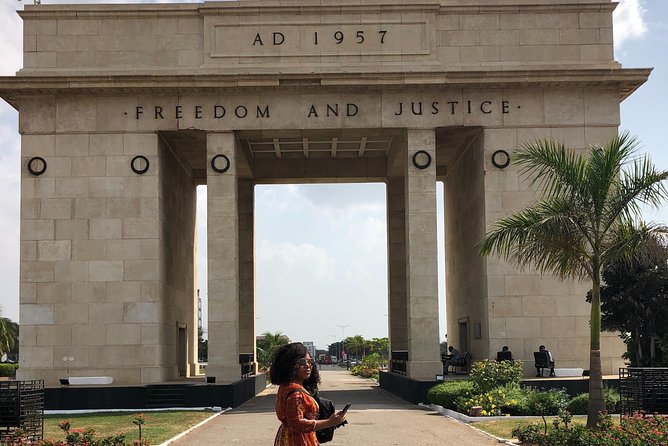
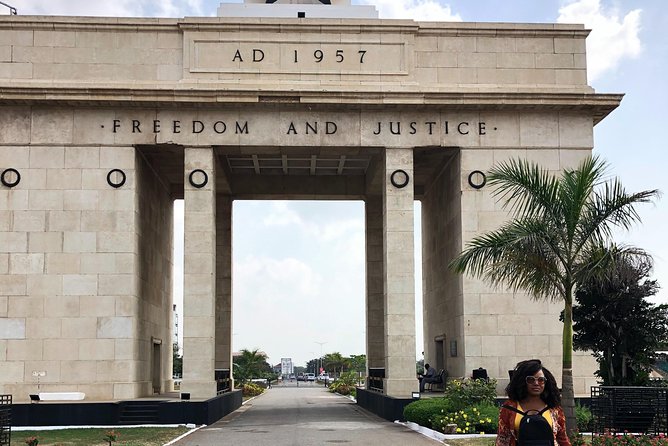
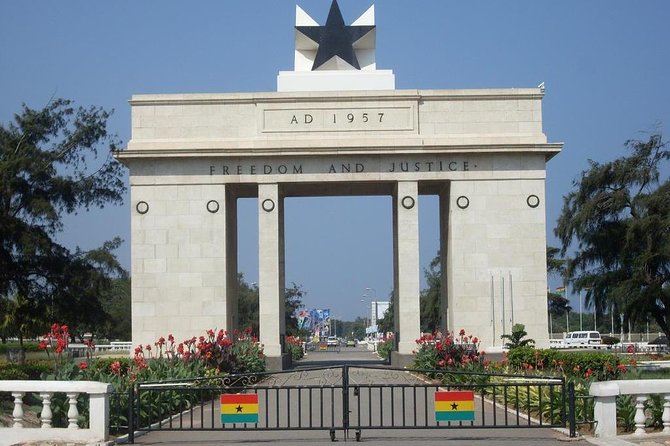
The tour then stops at Independence Square, Accra’s open-air ceremonial grounds. National celebrations are held here, and the visit is planned mainly as a photo opportunity.
You have about 20 minutes, with admission included. That is brief, but appropriate for a large public space that you are seeing from a sightseeing perspective rather than through a long museum visit. Your guide can explain the square’s role in Ghana’s public life and point out the details worth noticing.
Keep your expectations in check. This is not a lengthy attraction with a long indoor program. It is a symbolic stop, a place to pause, take photographs, and connect the city’s present-day identity with its independence story.
The square also helps break up the day. After the memorial park, you move from a commemorative site to a public ceremonial setting, then into older sections of Accra where European trading and colonial activity left a visible mark.
Seeing the old Dutch and British quarters
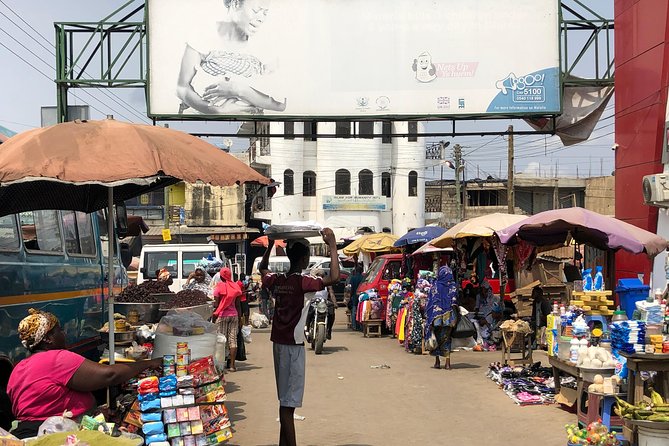
One of the more useful parts of the tour is the drive through Old Accra. The area was divided into Dutch and British sections because the two European powers operated from different locations within a township of less than one square kilometer.
That compact geography makes this part of the tour especially interesting. You are not simply hearing that European powers once controlled parts of the coast. You are seeing how their separate bases occupied the same small urban area.
The route passes James Fort, built by the British in 1662, as well as Old Accra Square and the Post Office. You also see Ussher Fort, one of three European forts in Accra that have survived.
The supplied schedule does not give this section a precise duration, and much of it is described as a drive-by. That matters if you want long interior visits to the forts. This experience is better understood as a guided city orientation, where your guide points out important structures and explains their place in Accra’s past.
The surviving forts are a reminder that Accra’s history is tied to trade, European power, and the coastal movement of people and goods. Your guide’s explanation will add more value than a quick look from the vehicle, so use this stretch to ask questions instead of treating it as background scenery.
A few more Accra days to weigh up
- The Cape Coast Day Tour
★ 5.0 · 525 reviews - Experience the Beauty, History and the Culture Of Accra in a Day
★ 5.0 · 323 reviews - The Cape Coast Tour
★ 5.0 · 177 reviews - From Accra: Cape Coast, Elmina Castle & Kakum Park Day Tour
★ 4.6 · 144 reviews
Meeting the makers of fantasy caskets
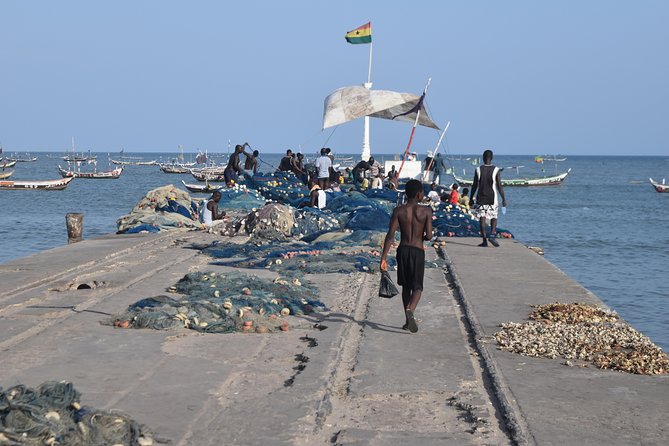
The most unusual stop is a visit to a shop where custom caskets are produced. These coffins reflect the belief that life continues after death, with the design linked to the person’s earthly profession or interests.
A bus driver might be buried in a bus-shaped casket. A teacher might have one shaped like a book, while a doctor could have a coffin designed as a syringe. The point is not novelty for its own sake. The casket reflects the person’s identity and the idea that they may continue their work in another world.
You have about 30 minutes here, and there is no admission charge. This is a small but memorable stop because it introduces a form of Ghanaian artistic expression that you are unlikely to encounter on a standard monument tour.
Approach it with respect. The designs may look playful, but they relate to funerary beliefs and personal memory. Your guide can help explain the cultural meaning and keep the visit from becoming just a quick photo opportunity.
This stop also gives the day some balance. The memorial park and forts present national and colonial history through formal places. The casket workshop shows how belief, craft, family, and profession can meet in everyday cultural practice.
Bargaining at the Center for National Culture
The final scheduled stop is the Center for National Culture, home to an arts and crafts market. You can shop for local products and souvenirs, and your guide can help you practice bargaining with vendors.
You have about 45 minutes, with admission included. That is long enough to browse rather than simply walk through. The market is also a practical place to buy something connected to Ghana, instead of leaving with only generic airport souvenirs.
Bargaining is part of the experience here, but it helps to keep your approach friendly and measured. Ask your guide for help if you are unsure how to begin or how far to negotiate. A private guide can be useful in this setting because you have someone beside you who can explain the process and help you avoid confusion.
The shopping stop may be the most commercial part of the day. If you do not want souvenirs, you may find 45 minutes more than you need. If you enjoy crafts, textiles, carvings, or other local products, the time gives you a chance to compare items instead of buying the first thing you see.
The market also provides a livelier finish than a final monument would. You end the tour with something hands-on and personal, and you can take home an object that reminds you of Accra.
What the private format really adds
The private setup is more than a label. Only your group participates, so you do not have to adjust every stop to a coachload of people. That is helpful at the memorial park, where you may want historical explanation, and at the casket workshop, where questions can make the visit more meaningful.
It is also useful for families. The available feedback specifically praises the guide’s child-friendly manner and describes the outing as comfortable, informative, and family-oriented. No guide name is provided, so you should not book expecting a particular individual, but the tone described suggests that children are welcomed rather than treated as an inconvenience.
The guide speaks English or French. That gives you a choice of working language, though you should select the needed language when arranging the tour.
A private vehicle also makes the city tour easier on a hot day. You can move between the memorial park, square, old quarters, casket shop, and market without having to arrange separate transport. All fees and taxes are included, along with the vehicle and guide.
Is $150 per person a fair price?
At $150 per person, this is not a budget walk through Accra. The price needs to be judged against what is included: a private air-conditioned vehicle, an English or French-speaking guide, included attraction fees, and a route covering several very different parts of the city.
For one person or a very small group, the cost may be difficult to justify if the tour lasts only two hours. The stated two-to-six-hour range makes the final value depend heavily on the time you receive and the number of people sharing the booking.
For a family or group, the price may work better, especially if a group discount applies. You are paying for privacy, transport, and a guide who can connect the formal sights with the market and cultural stops. Those are harder to combine smoothly on your own, particularly if you are new to Accra.
The best value comes if you want an overview rather than a single museum visit. You get national history, colonial architecture, local craft, shopping, and cultural explanation in one outing. If you prefer slow, specialist visits to each fort or museum, this may feel too broad.
Who will enjoy this Accra city tour?
I would recommend this tour to you if you want a first look at Accra and prefer having transport and explanation arranged in advance. It is particularly suitable for families, first-time visitors, and small private groups that want a comfortable route through several parts of the city.
It also suits you if shopping is part of your plan. The Center for National Culture is not an afterthought. The guide’s help with bargaining gives the market visit a practical purpose.
You may want something else if your main aim is nightlife, food, or a long museum day. None of those is included. Meals and drinks are separate, and the schedule focuses on landmarks, history, crafts, and shopping.
The tour requires a moderate level of physical fitness. The information provided also says service animals are allowed and that the route is near public transportation, though the experience itself includes private vehicle transport.
Booking, weather, and timing details
Confirmation is received at booking. Free cancellation is available if you cancel at least 24 hours before the 9 a.m. start time. Changes or cancellations made within 24 hours are not accepted for a refund.
The tour requires good weather. If poor weather cancels it, you are offered another date or a full refund. A minimum number of participants is also required, and if that condition is not met, you are offered another date or experience, or a full refund.
Because the end time can vary from two to six hours, avoid scheduling an important activity too close afterward. If you have a flight, appointment, or fixed lunch booking, allow plenty of room.
Should you book this Accra tour?
Book it if you want a private Accra overview with a useful mix of national landmarks, old colonial sites, local craft, and shopping. The casket workshop is the most distinctive stop, while the private vehicle and child-friendly guiding make the route easier for families and small groups.
Think twice if $150 per person feels high for a flexible two-hour tour or if you want long interior visits at the forts. To get the best value, use the longer format, travel with your own group, and arrive ready to ask questions at the memorial park and old quarters.
FAQ
Where does the Accra City Tour start?
The tour starts at the Mövenpick Ambassador Hotel Accra in Ridge, on Independence Avenue. Pickup is offered, so confirm the exact arrangement when booking.
What time does the tour begin?
The stated start time is 9 a.m.
How long does the tour last?
The approximate duration is two to six hours. The exact length can vary, so allow flexibility in your schedule.
Is this a private tour?
Yes. Only your group participates in the activity.
Which attractions are included?
The route includes Kwame Nkrumah Memorial Park and Mausoleum, Independence Square, Old Accra, James Fort, Ussher Fort, a custom casket shop, and the Center for National Culture.
Is food included?
No. Lunch, dinner, alcoholic drinks, soda, coffee, and tea are not included.
What happens if the weather is poor?
If the tour is canceled because of poor weather, you are offered a different date or a full refund.
Just added around Accra
- Experience Aburi Botanical Gardens And Boti Water Falls In A Day.★ 5.0 · 3 reviews
- Experience Cape Coast Castle and Kakum National Park★ 4.5 · 3 reviews
- Accra city tour★ 4.5 · 3 reviews
- 7days/6nights Eco Tourism★ 5.0 · 3 reviews
- Half-Day City Tour of Accra★ 5.0 · 3 reviews
- 3 Days Accra City Tour & Cape Coast Tour★ 4.5 · 3 reviews
- Local Ghanaian Food Tasting Tours★ 5.0 · 3 reviews
- Accra Zoo, Canopy Walk and Botanical Gardens Private Tour★ 5.0 · 3 reviews
Accra City Tours, compared.
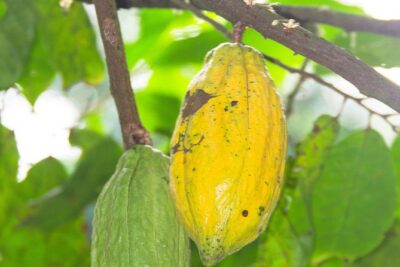
Escape Accra City to Aburi Gardens and Tetteh Quarshie Cocoa Farms
Read our review →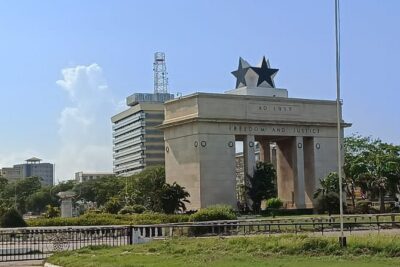
Experience Authentic Ghana in a Personalized Accra City Tour
Read our review →

Accra City Tour, explore the history, and local flavours.
Read our review →

Browse the lists this tour appears in