
Reviewed · ACCRA CITY TOURS
Accra City Tour, explore the history, and local flavours.
Accra’s story comes into focus through five very different stops, from W.E.B. DuBois’s quiet former home to the crowded trading lanes of Makola Market and the memorial to Ghana’s first president. I like the way this tour connects pan-African thought, colonial-era commerce, independence, and daily city life in one outing. I also like that it is private, so your group can move at a pace that suits you.
The main consideration is time. With five stops spread across 5 to 9 hours, some visits may feel brief, while traffic and museum pacing can affect the day. The description promises local flavours, but no specific restaurant or meal is listed, so ask the operator what food is included before booking.
Key points to know before booking
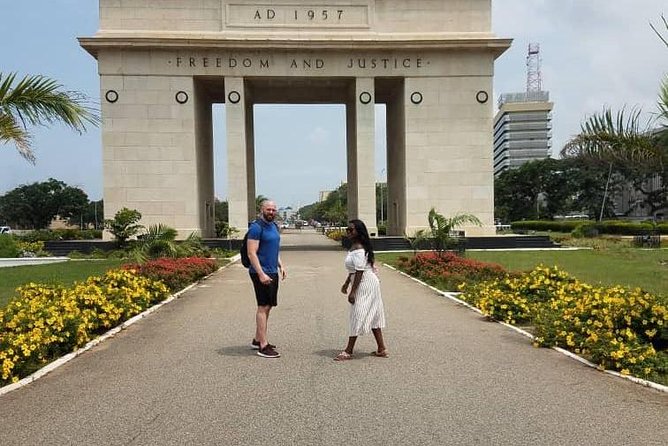
- Five major Accra sights in one private outing: Visit the W.E.B. DuBois Center, Makola Market, James Town Lighthouse, National Museum of Ghana, and Kwame Nkrumah Memorial Park.
- A personal guide and driver: Guides named Makafui and Biney have been praised for friendly, attentive service, while George has driven multi-country trips.
- A strong independence focus: The National Museum and Nkrumah Memorial Park explain Ghana’s road from Gold Coast colony to independence on 6 March 1957.
- Makola adds everyday Accra: This is the place to see trading, shopping, and conversation rather than polished museum displays.
- A private format: Only your group participates, with pickup offered and group discounts available.
- Plan for a long half-day: The advertised duration is about 5 to 9 hours, depending on the day’s pace and traffic.
Why this Accra tour works as a first look
I like this outing because it gives you several ways to read Accra. The W.E.B. DuBois Center deals with international Black identity and pan-African thought. Makola Market shows the city as a working commercial centre. James Town provides a broad view over one of Accra’s historic communities. The National Museum and Kwame Nkrumah Memorial Park then give you the national story.
That range matters. A city tour can easily become a string of photo stops, but this route has a clear historical thread. You begin with ideas about African unity and the wider Atlantic world, move through the old commercial centre, look over the city from James Town, and finish with the independence era.
You should also know what this is not. It is not presented as a food tour with a fixed tasting menu. The title refers to local flavours, but the supplied schedule names no meal, cooking demonstration, or food market tasting. If eating Ghanaian food is important to you, contact Blemawe Xpo Ghana before you pay and ask exactly what is included.
Because this is a private activity, your day should feel more personal than a large coach tour. You can ask questions, request help, and get support with photographs. One guide, Biney, has also been praised as an impressive photographer, which could be useful at the lighthouse and memorial park.
More ways to see Accra on foot:
- Know Ghana in 4 hrs – Accra City Tour
★ 4.5 · 47 reviews - Escape Accra City to Aburi Gardens and Tetteh Quarshie Cocoa Farms
★ 4.5 · 32 reviews - Accra City Tour
★ 5.0 · 21 reviews
W.E.B. DuBois Center: a quiet start with global connections
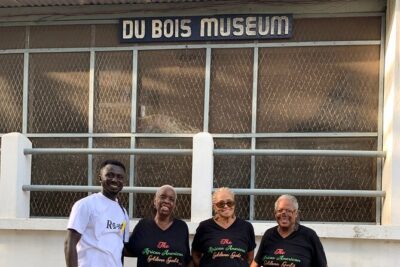
The W.E.B. DuBois Center offers a thoughtful beginning. It was the home of W.E.B. DuBois during the final period of his life, and the site links his work to the history of the Gold Coast, African American connections, pan-Africanism, and the transatlantic slave trade.
You will have about one hour here, with admission included. The setting includes an open-air theatre behind the house, placed in a pastoral area. That calm setting helps explain why DuBois valued the site as his final home. This is not simply a house museum. The surroundings are part of the experience.
The museum library and seminar room contain DuBois’s personal library and a collection of his work. For you, the value is the chance to see the intellectual side of Ghana’s modern story. Independence is not presented only as a political event. It is also connected to ideas about African identity, international solidarity, and the relationship between Africa and its diaspora.
I would give this stop your full attention, especially if you have an interest in civil rights, African American history, or pan-African movements. It may feel less immediately dramatic than the lighthouse or market, but it supplies the background that makes later stops more meaningful.
Makola Market: Accra’s commercial heart
Makola Market brings you from quiet reflection into central Accra’s daily trade. The market and shopping district dates to 1924, making it part of the city’s long commercial story rather than a temporary tourist attraction.
You have about 30 minutes here, and there is no admission charge. The plan is to walk and talk with traders. That short visit gives you a useful glimpse, but it is not enough time to explore every corner or shop at length. If you want to buy something, decide in advance what matters most and keep your group together.
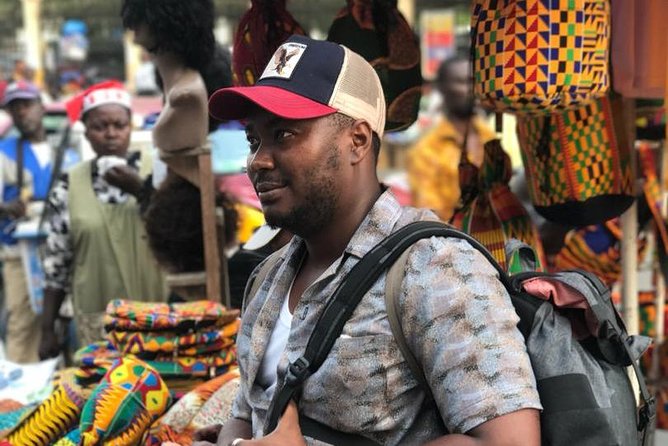
This is one of the tour’s most authentic contrasts. At the DuBois Center, you learn through documents, rooms, and a carefully kept site. At Makola, you see people earning a living, negotiating, selling, and moving goods through the centre of the city. The market makes Accra feel immediate and practical.
Your guide matters here. A local person can help explain what you are seeing and make conversation with traders easier. Still, this is a working market, not a stage set for visitors. Be polite when taking photographs, listen to your guide, and remember that a short visit may be more about observation than serious shopping.
James Town Lighthouse: a high view over Accra
The James Town Lighthouse is a 28-metre structure, about 92 feet tall, originally built in the 1930s. The stop lasts about an hour and includes admission.
The main appeal is the general view over the James Town community and the wider city. After the close quarters of Makola Market, the lighthouse gives you room to look outward and understand Accra’s position as a coastal capital. You can also place the older community within the larger city you are visiting.
This stop works best when you pay attention to both the structure and the view. The lighthouse is not only a lookout. Its age points to Accra’s colonial-era port connections and the importance of the coast to trade and administration.
The practical issue is that the tour description does not explain climbing conditions, weather, or how much time is spent at the top. If access to the upper level matters to you, ask before booking. The 28-metre height may also be a concern for anyone uncomfortable with stairs or heights, though the tour information says most people can participate.
More history visits around Accra:
- Experience the Beauty, History and the Culture Of Accra in a Day
★ 5.0 · 323 reviews - Ghana Heritage Tours – Beyond The Return
★ 5.0 · 36 reviews - 10 Days Ghana Cultural and Heritage Trip
★ 5.0 · 31 reviews - Cape Coast Historical Day Tour
★ 5.0 · 24 reviews
National Museum of Ghana: the broadest historical stop
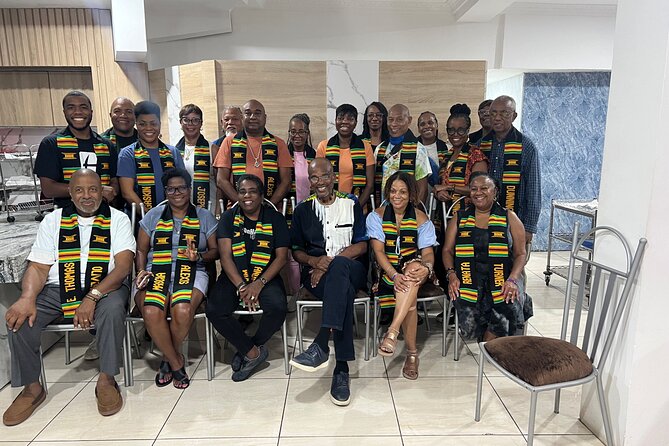
The National Museum is likely to be the most useful stop for building a timeline of Ghana. Its collections cover archaeology, ethnography, and fine art. The material ranges from the Stone Age period to the more recent past.
You have about an hour here, with admission included. That is enough for an introduction, but not for every gallery and object. I would ask your guide to help you focus on the sections that connect with the rest of the day, especially material related to Ghana’s early societies, cultural traditions, colonial period, and independence.
The museum’s greatest strength is its range. Instead of seeing Ghana’s past through one political figure or one memorial, you get objects from different parts of society and different periods. That gives you a wider frame for understanding the country.
The possible drawback is the short visit. Museums reward slow looking, and an hour can pass quickly. You will get more from this stop if you arrive with a few questions. How did colonial rule affect Ghana? Which objects show daily life? How does the museum present the move from the Gold Coast to the Republic of Ghana? A local guide can help connect the displays to the other places on the route.
Kwame Nkrumah Memorial Park: ending with independence
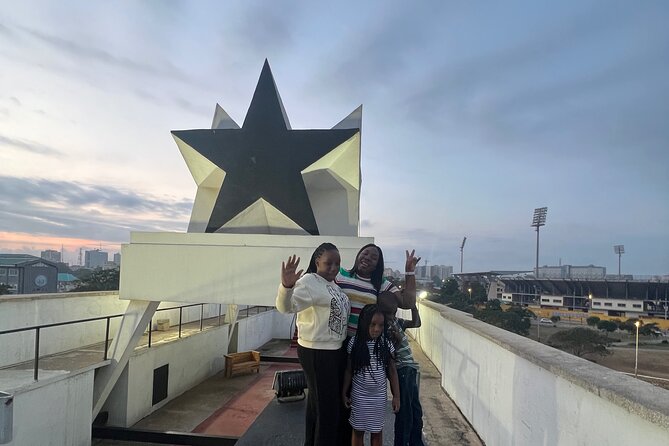
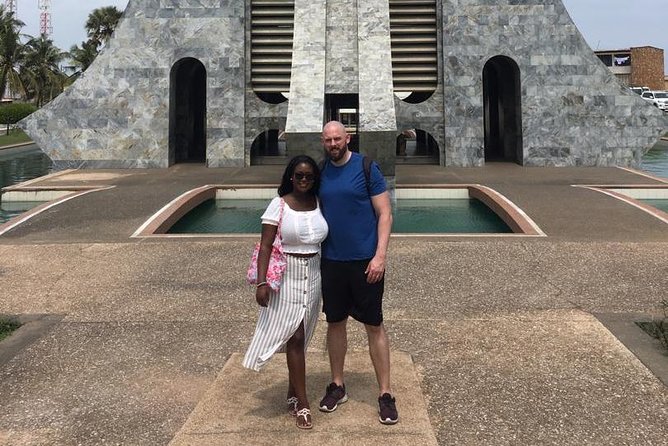
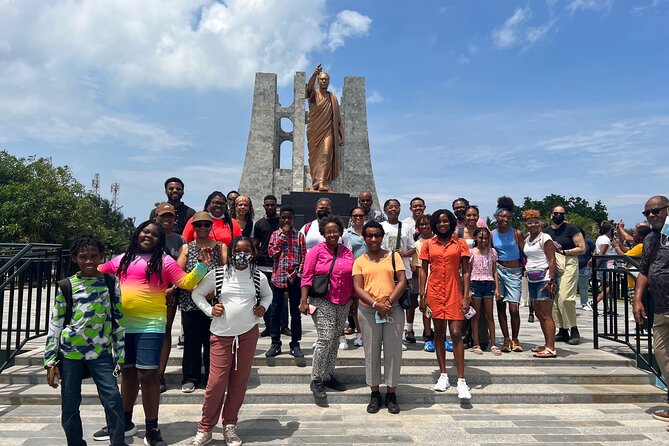
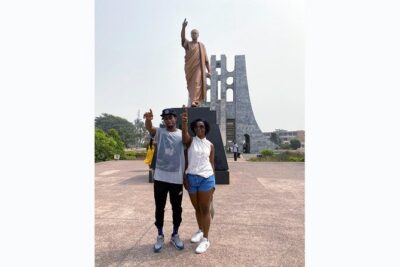
The final listed stop is the Kwame Nkrumah Memorial Park, the resting place of Osagyefo Dr. Kwame Nkrumah, Ghana’s first president. The memorial honours his campaign to free the Gold Coast from colonial rule, leading to independence on 6 March 1957.
This is the longest stop, at about two hours, and admission is included. That extra time makes sense. The site includes the mausoleum, a statue of Nkrumah, and a museum below ground. The museum contains personal effects and publications connected to him.
The design uses the mausoleum as the main front, while the museum sits below ground rather than competing with it. The stated design principles are rhythm, contrast, and harmony. You do not need an architecture background to notice the deliberate arrangement. The memorial is meant to direct attention toward the figure and the meaning of independence.
I like ending here because the day’s earlier themes meet in one place. DuBois represents pan-African thought. The National Museum supplies a long cultural timeline. Nkrumah represents the political break from colonial rule. The park gives you a place to consider how Ghana presents that turning point today.
Two hours is useful if you want to visit both the outdoor memorial and the museum. If your group has mixed interests, the guide can help keep the final visit from feeling rushed. This is also one of the better places for photographs, though the importance of the site calls for a respectful approach.
The guides can shape the day
The operator is Blemawe Xpo Ghana. The information supplied identifies Ghanaian local guides and highlights Makafui and Biney, with George serving as a driver on some trips.
The most useful description of the guide service is personal attention. Makafui, Biney, and George have been praised for professional conduct, courtesy, and care with group movement. Biney has also handled both guiding and driving and has helped with photographs. These details matter because this tour covers museums, streets, a market, and a viewpoint. You are not only being taken from one entrance to another. You need someone who can explain the connections.
A private group also gives you a better chance to ask direct questions. If you want more time with Nkrumah’s story, less shopping time at Makola, or help taking pictures, say so early. The exact flexibility is not specified, so do not assume every change is possible, but the private format gives you a stronger basis for making requests.
Is $80 good value for this route?
The price is $80 per person. Value depends on your group size and what the pickup arrangement covers, since the supplied information does not spell out every transport or meal detail.
For that price, you receive a private tour lasting about 5 to 9 hours, a local guide, access to five named sites, and included admission at the W.E.B. DuBois Center, James Town Lighthouse, National Museum, and Kwame Nkrumah Memorial Park. Makola Market has no admission fee.
I see the strongest value in the private format and the guide’s role. If you are new to Accra, having one person connect the museums, market, and memorial can save you from treating each site as an isolated stop. A private vehicle or pickup, if included as arranged, also makes a multi-stop day simpler.
The price is less compelling if you mainly want to shop or eat. Makola receives only about 30 minutes, and no specific meal is listed. You are paying for a guided history and city overview, not a full market expedition or a guaranteed food tasting.
Group discounts may improve the cost for families or friends travelling together. Ask for the current group rate and confirm what pickup includes before booking.
Timing, comfort, and practical details
The advertised operating hours are 7:00 AM to 5:00 PM, Monday through Sunday, for the stated booking period. The activity itself is about 5 to 9 hours, so an early start may be useful if you want to complete every stop without pressure.
Pickup is offered, but the exact pickup area is not provided. Confirm the meeting arrangement with the operator. The tour is near public transportation, though its private format means you are not required to organize the route yourself if pickup is arranged.
Service animals are allowed, and most people can participate. The itinerary includes walking at Makola Market and a lighthouse visit, so comfortable shoes and a practical approach will help. The description does not provide specific information about step-free access, restroom locations, or the exact climb at James Town Lighthouse. If you have mobility needs, ask Blemawe Xpo Ghana for current details.
You receive confirmation when booking. Free cancellation is available if you cancel at least 24 hours before the start time. A cancellation made less than 24 hours ahead is not refundable, and changes inside that period are not accepted.
Who will get the most from this experience?
I would recommend this tour to a first-time Accra visitor who wants a guided introduction rather than a single museum visit. It also suits anyone interested in Ghana’s independence, pan-African history, or the connection between national history and ordinary city life.
Families and small private groups may appreciate the personal format. The guide can explain difficult subjects at a suitable level, and the private setup avoids being tied to strangers. People who care about photography may also value Biney’s ability to help with pictures, if he is assigned to your booking.
This tour is less suitable if you prefer long, quiet museum visits. The National Museum receives about an hour, and Makola only 30 minutes. It is also not the clearest choice for someone booking mainly for food, since no fixed tasting or restaurant is identified.
Should you book the Accra City Tour?
Book it if you want a compact but serious introduction to Accra, with history, public memorials, a market, and a city view in one private day. The route has a useful progression, and the named guides have experience providing personal, careful service.
Before paying, confirm three points: the exact pickup arrangement, which guide and driver will handle your group, and what local food experience is included, if any. If those details fit your plans, $80 can be fair value for a private tour with several admission fees covered.
If your priority is relaxed museum study or a dedicated food adventure, choose something more focused. If you want the broad story of Accra and Ghana’s independence, this tour gives you a practical place to begin.
FAQ
How long does the Accra City Tour last?
The tour lasts approximately 5 to 9 hours. The total time can vary according to the pace of the group and the day’s arrangements.
What places are included?
The tour includes the W.E.B. DuBois Center, Makola Market, James Town Lighthouse, the National Museum of Ghana, and Kwame Nkrumah Memorial Park.
Is this a private tour?
Yes. Only your group participates in the private tour or activity.
Is pickup available?
Pickup is offered. The supplied information does not state the exact pickup locations, so confirm your arrangement with Blemawe Xpo Ghana.
Are admission tickets included?
Admission is included at the W.E.B. DuBois Center, James Town Lighthouse, the National Museum of Ghana, and Kwame Nkrumah Memorial Park. Makola Market has no admission charge.
What is the price?
The listed price is $80 per person. Group discounts are available.
Who may guide the tour?
The named guides include Makafui and Biney. George has also served as a driver on trips involving Ghana, Benin, and Togo. Your assigned guide and driver should be confirmed with the provider.
Does the tour include food?
The experience refers to local flavours, but no specific meal, restaurant, or tasting is listed in the supplied details. Ask the provider what food, if any, is included.
Can I cancel for a full refund?
Yes, if you cancel at least 24 hours before the experience start time. Cancellations made less than 24 hours before the start time are not refundable, and changes during that period are not accepted.
Just added around Accra
- Experience Aburi Botanical Gardens And Boti Water Falls In A Day.★ 5.0 · 3 reviews
- Experience Cape Coast Castle and Kakum National Park★ 4.5 · 3 reviews
- Accra city tour★ 4.5 · 3 reviews
- 7days/6nights Eco Tourism★ 5.0 · 3 reviews
- Half-Day City Tour of Accra★ 5.0 · 3 reviews
- 3 Days Accra City Tour & Cape Coast Tour★ 4.5 · 3 reviews
- Local Ghanaian Food Tasting Tours★ 5.0 · 3 reviews
- Accra Zoo, Canopy Walk and Botanical Gardens Private Tour★ 5.0 · 3 reviews
Accra City Tours, compared.
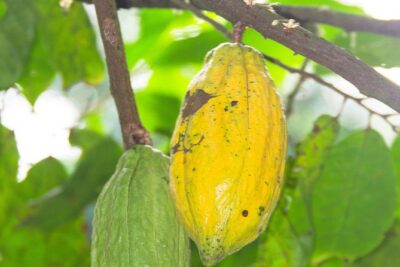
Escape Accra City to Aburi Gardens and Tetteh Quarshie Cocoa Farms
Read our review →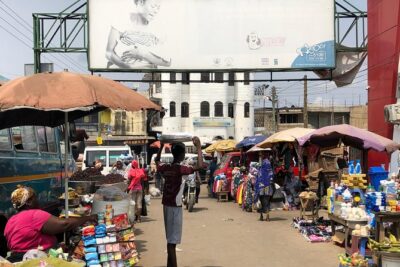
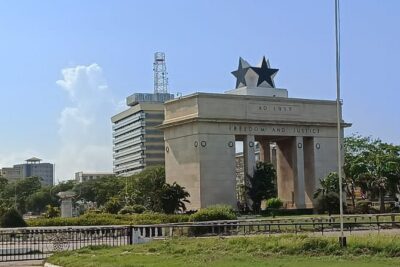
Experience Authentic Ghana in a Personalized Accra City Tour
Read our review →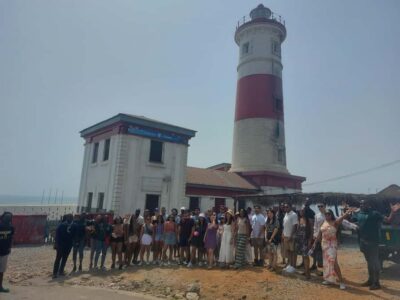

Browse the lists this tour appears in