
Reviewed · CAPE COAST & ELMINA CASTLE TOURS
4 Days Trip in Accra, Cape Coast,Kumasi culture & heritage tours
The most powerful part of this four-day Ghana tour is the contrast between ancestral welcome and painful history. You may receive a Ghanaian name and certificate in Adanwomase, then stand at the Door of No Return in Cape Coast, where enslaved Africans were held before crossing the Atlantic. Those moments give the trip weight beyond sightseeing.
I like the hands-on craft work, especially weaving kente on a traditional loom and stamping Adinkra symbols onto cloth. I also like the private format, with pickup offered and the same tour team handling the long road days. The main consideration is pace: Accra, Cape Coast, Kakum, and Kumasi-area villages cover a lot of ground in four days.
Key points to know
- A personal naming ceremony: Adanwomase is the emotional center for many people of African and Caribbean heritage.
- Two major slave castles: Elmina Castle and Cape Coast Castle provide different settings for learning about the Atlantic slave trade.
- Real craft activities: Weave kente, stamp Adinkra cloth, carve symbols, and learn how each design carries meaning.
- A private tour format: Your group travels together, with transportation, guide service, entrance fees, bottled water, snacks, and meals included.
- Accra in one full day: The National Museum, Makola Market, Independence Square, and the W.E.B. DuBois Center offer a useful first look at the capital.
- A demanding but varied schedule: Expect history, markets, forest paths, workshops, beaches, and long transfers rather than a slow resort holiday.
Why the naming ceremony gives this trip its heart

Many Ghana tours focus on monuments and photos. This one adds a personal ritual. At Adanwomase, the program is designed mainly for people of African American and Caribbean heritage, who receive a Ghanaian name and certificate, wear Ghanaian cloth, and take part in a traditional-style naming experience.
That ceremony can feel meaningful because it connects you with Ghana in a direct way. It is not just a lecture about ancestry. You are given a name tailored to you, dressed for the occasion, and recognized in a local cultural setting. If you are booking with family, this is also the kind of moment that can give everyone a shared memory.
You should know what this is and what it is not. The available details do not explain the exact naming process, the name used, or the ceremony length beyond the planned two-hour visit. Ask Bilson Tours Gh how the ceremony is arranged before you pay if this is the main reason you are coming.
The same day includes visits to kente and Adinkra villages, so Adanwomase is part of a larger Ashanti culture program rather than a stand-alone ceremony.
Other visits to the Cape Coast and Elmina castles:
- The Cape Coast Day Tour
★ 5.0 · 525 reviews - The Cape Coast Tour
★ 5.0 · 177 reviews - From Accra: Cape Coast, Elmina Castle & Kakum Park Day Tour
★ 4.6 · 144 reviews
Accra begins with museums, markets, and independence
Day one starts at 9:00 a.m. and gives you a broad introduction to Accra. The National Museum of Ghana is the sensible first stop. Its displays cover Ghanaian and African history, local crafts, and material culture. The planned visit lasts one hour, enough for an overview but not a slow examination of every display.
I like starting here because the museum gives context for the objects, fabrics, and symbols you see later in the trip. You will also have a better frame of reference when local traditions appear in workshops and markets.
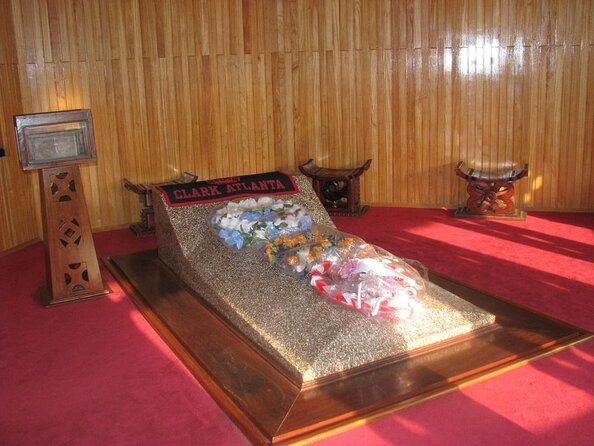
Next comes the W.E.B. DuBois Center, another one-hour stop. DuBois was an African American historian and Pan-African thinker who became a citizen of Ghana. The center includes part of his personal library, examples of his work, research facilities, and a shrine containing his grave and the ashes of his wife, Shirley Graham DuBois.
This is a quieter stop than Makola Market, and that contrast works well. The center connects Ghana to the wider Pan-African story, while the market shows the daily commercial life of Accra.
At Makola Market, you get an hour of noise, movement, scents, and trade. It is the country’s major commercial center and a place where shopping is closely tied to social life. You may see clothing, household goods, food, and many other forms of local trade packed into a busy open-air setting.
Keep your expectations practical. Makola is not a polished shopping mall, and the crowded setting can be tiring. Stay close to your guide, keep an eye on your belongings, and treat the visit as a chance to observe how Accra works rather than simply a place to buy souvenirs.
Independence Square and Accra’s craft center
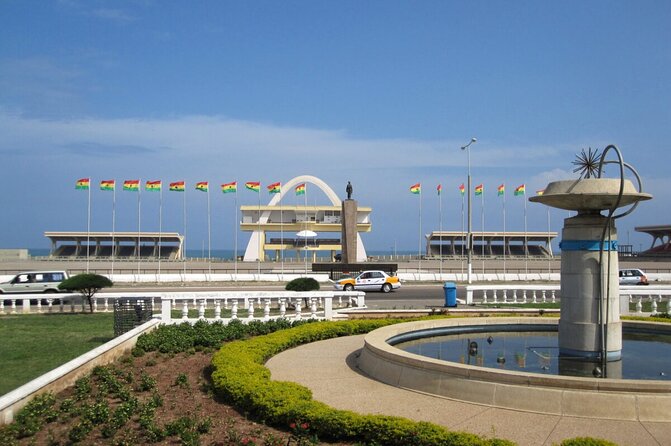
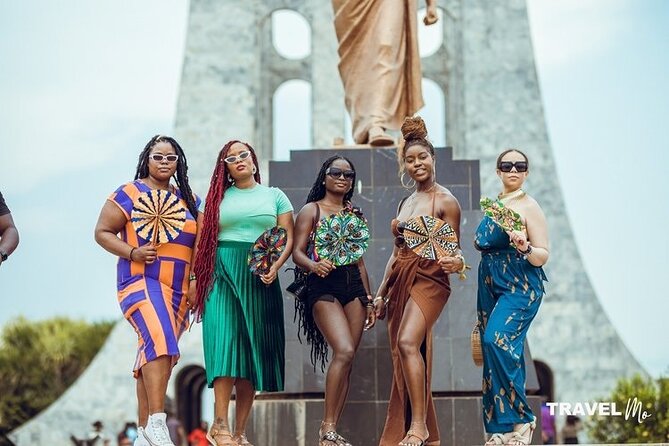
Independence Square, also called Black Star Square, provides the national-symbol stop on day one. The site includes the Independence Arch, Black Star Gate, and monuments connected with Ghana’s independence struggle. It is used for Independence Day parades on March 6 and for major public gatherings.
The square’s scale is part of the point. With room for about 30,000 people, it helps you understand how Ghana presents its national identity in public space. The visit is scheduled for one hour, so you will have time for photographs and a look at the monuments without turning it into a long formal tour.
The day ends at the Centre for National Culture in Accra. This is the place to browse kente, wood carvings, beads, leather bags, earrings, clothing, and other crafts from across Ghana. There are indoor and outdoor stalls, with souvenirs made from clay, wood, leather, and metal.
I like putting this stop at the end of the Accra day because you have already seen some of the country’s history and public culture. You can shop with more understanding of what you are looking at. Bargaining may be part of the experience, though the tour details do not state how prices are handled, so ask your guide for advice before making a purchase.
Kakum’s canopy walk comes before the castles
Day two shifts from city touring to forest and coastal history. At Kakum National Park, the main attraction is the canopy walk, suspended about 40 meters above the ground. The walk crosses the treetops and offers a very different view from a normal forest path.
The route to the canopy walk is steep, and the program directly warns that it can test less-fit participants. The bridge section is also not ideal for anyone uneasy with heights. If you want to take part, wear practical shoes and be honest with yourself about the climb. The planned visit lasts two hours, including the approach and the canopy experience.
Kakum is not just a quick photo platform. The park also has plant and animal life, though the supplied details do not promise specific sightings. Think of this stop as a short nature visit with an adventurous centerpiece, not a full wildlife safari.
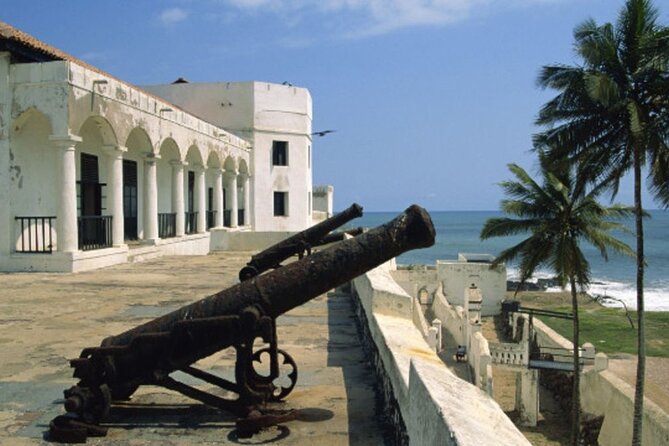
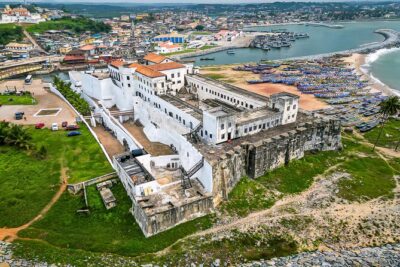
After Kakum, the tour turns to Elmina Castle. The whitewashed coastal fortress was used for centuries as a trading center and later became one of the places where enslaved Africans were held before shipment across the Atlantic. You will see the castle grounds and dungeons and learn about the suffering that took place inside its walls.
This is difficult material. Give yourself time to listen rather than treating the castle as just a photogenic old building. The setting is beautiful, but the subject is painful, and the two facts should be held together.
More history visits around Accra:
- Experience the Beauty, History and the Culture Of Accra in a Day
★ 5.0 · 323 reviews - Ghana Heritage Tours – Beyond The Return
★ 5.0 · 36 reviews - 10 Days Ghana Cultural and Heritage Trip
★ 5.0 · 31 reviews - Cape Coast Historical Day Tour
★ 5.0 · 24 reviews
Elmina Castle and Cape Coast Castle tell a hard story
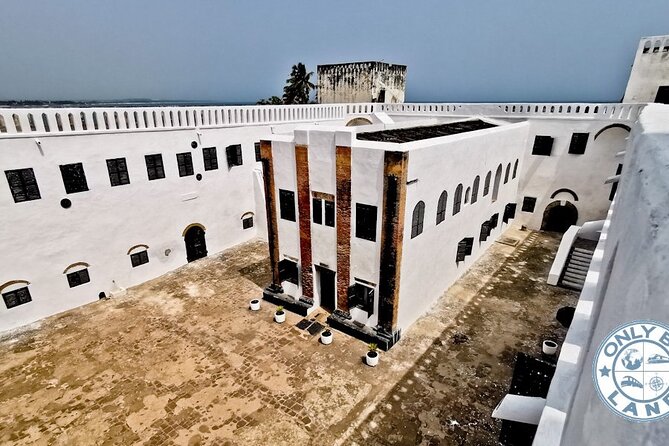
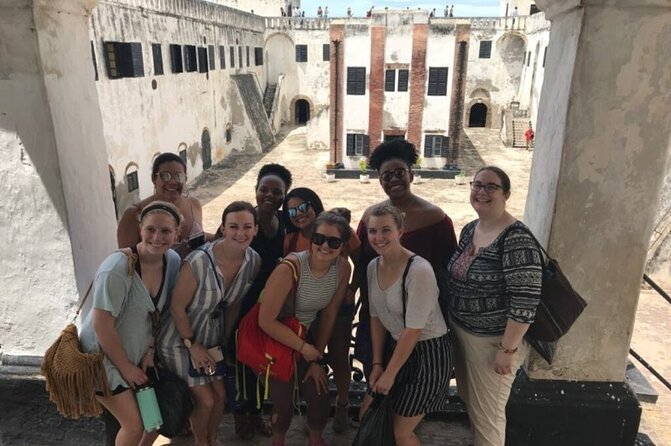
The visit to Cape Coast Castle follows Elmina and adds another major site connected with the Atlantic slave trade. The castle began as a Portuguese trading post in 1555 and later became a place where enslaved people were confined before being transported, including to the Caribbean.
You will visit the dungeons, museum displays, and fort areas. The schedule allows one hour, which is enough for a guided overview but may feel short if you want to read every exhibit or spend quiet time at the site.
Seeing both castles in one day has value because each visit reinforces the scale of the system. It can also feel emotionally heavy. I would not plan a demanding evening activity after this day, especially if you are traveling with children or family members for whom the subject is personal.
The tour’s emphasis on paying homage to ancestors may be especially important to people of African American and Caribbean background. Still, anyone interested in Ghana’s past can find the visits meaningful. You do not need to share a particular heritage to approach the sites with respect.
Kente weaving in Bonwire turns cloth into a lesson
Day three moves inland toward the Ashanti cultural area and begins at the Bonwire Kente Weaving Centre. Bonwire is presented as the birthplace of popular kente weaving, and the visit explains why kente is far more than colorful fabric.
You learn that kente patterns have names and meanings tied to history, culture, and social practice. You also get a practical lesson using traditional hand-operated looms. The planned two-hour visit gives enough room for demonstration and participation.
I like this activity because it changes the way you see kente afterward. In a shop, it is easy to notice only the colors and price. At the loom, you can see the labor, skill, and design decisions behind the finished cloth.
The tour describes kente as fabric worn mainly for important occasions and celebrations. That makes the workshop useful for anyone considering a purchase. Ask about the symbolism and construction of a piece before buying it, and remember that a handmade textile may be priced very differently from a mass-produced souvenir.
Ntonso Adinkra work lets you stamp like a local

At Ntonso, the focus shifts from woven strips to Adinkra symbols. These symbols carry messages and wisdom, and the workshop explains their place in Ghanaian custom.
The activity is hands-on. You use dye made from the bark of the buddy tree, draw lines on cloth to divide it into squares, carve symbols into calabash gourds, press the gourd into the dye, and stamp the cloth. The program calls this stamp like a local, but the real value is learning how the visual language is made.
This is one of the strongest stops for children and creative adults because you leave with an understanding of process, not just a photograph of a finished product. The two-hour allocation also suggests a more relaxed pace than a brief demonstration.
The exact finished item you take home is not specified. If that matters to you, confirm whether your stamped cloth is included or whether materials and finished work cost extra.
The Ashanti craft day includes a cocoa farm
The day also includes a cocoa farm visit, described as an introduction to how cocoa is nursed and harvested. This adds an agricultural side to the craft program and shows another part of Ghana’s cultural and working life.
The itinerary places Bonwire, Ntonso, Adanwomase, and the cocoa farm into a full day, with the first three stops listed at about two hours each. That is a lot for one day, and transfer times are not provided. Expect the day to feel active and structured rather than leisurely.
If your main goal is the naming ceremony, make sure you understand how much time is reserved for it. If you are more interested in crafts, the three village visits give you several ways to learn by doing.
Labadi Pleasure Beach closes the trip

Day four is deliberately lighter, with two hours at Labadi Pleasure Beach, also known as La Pleasure Beach. It is one of Accra’s best-known beaches and is maintained locally. The program presents it as a place for sea views, relaxation, horseback riding, and quad activities.
This is a useful change after three days of museums, castles, workshops, and road travel. You can spend time by the shore or choose an activity, though the supplied details do not say whether horse and quad rides are included in the $750 price.
Do not assume the beach visit is a fully planned water-sports session. It is better understood as open leisure time with optional activities available. Ask which charges apply before accepting a ride.
What the $750 price covers
The price is $750 per person for about four days. Included items are transportation, entrance fees, taxes, bottled water, snacks, tour guide service, and lunch. The information lists three lunches in one place and also refers to four lunches, so confirm the exact meal count before booking.
That price can be reasonable if you value a private vehicle, a dedicated guide, several admission fees, and the craft activities. It also saves you from arranging separate transport between Accra, the Cape Coast area, Kakum, and the Ashanti villages.
The value depends on your style. If you want a slow trip with long breaks, four days may feel packed. If you want to cover major heritage sites and take part in local arts without managing every transfer yourself, the bundled format is more useful.
Shopping and personal purchases are not included. Bring a separate budget for cloth, carvings, beads, clothing, and any beach activities that carry an extra charge.
Who should book this four-day Ghana tour?
I would recommend it most strongly to first-time visitors who want a broad introduction to Accra and Ghanaian culture in a short period. It also fits families and private groups who prefer to move together rather than join a large coach tour.
People of African American and Caribbean heritage may find the naming ceremony and castle visits especially significant. The program directly frames Adanwomase for that audience, while the castles connect personal ancestry with the history of the Atlantic slave trade.
You should think twice if you dislike heights, steep walks, long touring days, or emotionally difficult historical sites. Kakum’s canopy route is not for everyone, and the castle visits require more than a casual sightseeing mood.
The tour is operated by Bilson Tours Gh. Isaac Clouds Bilson is identified as the owner and operator, with Mr. Bismark named as partner and driver. The available comments describe Bilson as punctual, respectful, and familiar with the places along the route, though your own experience can depend on timing and group needs.
This is a private activity, so only your group participates. Pickup is offered, the activity ends back at the meeting point, and confirmation is received when you book. It is often reserved well ahead, with an average booking lead time of 43 days, so do not leave it until the last week if your dates are fixed.
Free cancellation is available up to 24 hours before the 9:00 a.m. start time. Bad weather can lead to a different date or a full refund. Changes made within 24 hours are not accepted.
Should you book it?
Book this tour if you want Ghana’s major themes in one carefully packed program: Accra’s public life, Pan-African thought, slave castles, forest scenery, kente, Adinkra, cocoa, and a personal naming ceremony.
The strongest reasons are the hands-on craft lessons and the chance to connect the castle visits with an ancestral welcome in Adanwomase. The main caution is pace, since the route covers several regions and the details do not spell out every transfer time.
Before paying, confirm the pickup point, the exact lunch count, the schedule for the naming ceremony, and whether beach rides or finished craft items cost extra. With those points clear, this is a strong choice for a private group that wants substance, cultural participation, and a full look at Ghana in four days.
FAQ
How long is the tour?
The tour lasts approximately four days.
What time does the tour start?
The stated start time is 9:00 a.m.
Is pickup offered?
Yes, pickup is offered. The specific pickup location is not stated in the provided information.
Is this a private tour?
Yes. Only your group participates in the activity.
What is included in the price?
Transportation, entrance fees, taxes, bottled water, snacks, tour guide service, and lunch are included. The information gives conflicting lunch counts, so confirm the exact number before booking.
Does the tour include a Ghanaian naming ceremony?
Yes. At Adanwomase, the program includes a Ghanaian name and certificate, Ghanaian cloth, and a naming experience designed mainly for African American and Caribbean participants.
Are the Kakum canopy walk and castle admissions included?
Yes. Entrance fees for the listed attractions are included, including Kakum National Park, Elmina Castle, and Cape Coast Castle.
Can I cancel for a full refund?
Yes, if you cancel at least 24 hours before the experience start time. Cancellations made less than 24 hours in advance are not refunded, and poor weather may result in a new date or full refund.
More Four-Day Trips from Accra
- 4 Days Safari to Mole park and Wechiau Hippos
★ 5.0 · 19 reviews
Just added around Accra
- Day Trip Near Accra – Visit Aburi Gardens, Waterfall & Cocoa Farm★ 5.0 · 4 reviews
- Aburi Botanic Gardens and Boti Falls Full-Day Private Tour★ 5.0 · 4 reviews
- Accra City Tour, explore the history, and local flavours.★ 5.0 · 4 reviews
- Cape Coast Tour (Slave market & river site)★ 5.0 · 4 reviews
- 7 Day Artisanal Tour★ 5.0 · 4 reviews
- SEEGhana: Accra City Tour and Local Culture★ 4.0 · 4 reviews
- Accra City Tour★ 5.0 · 5 reviews
- Assin Manso Slave River, Cape Coast & Elmina Castle History Tour★ 5.0 · 5 reviews
Cape Coast & Elmina Castle Tours, compared.

Cape Coast, Elmina Castle & Kakum Park Day Tour
Read our review →

10 Days Trip to Cape Coast and Elmina Castles from Accra
Read our review →
The Homecoming Experience To Cape-coast And Elmina.
Read our review →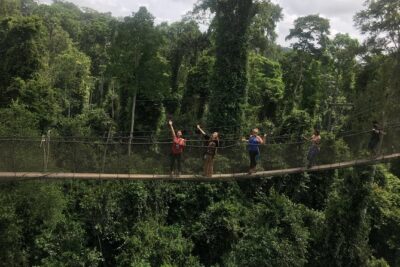
Cape Coast/Elmina Slave Dungeon and Canopy Walkway Private Tour
Read our review →
Assin Manso Slaves River and Cape Coast Castle Tour
Read our review →Browse the lists this tour appears in