
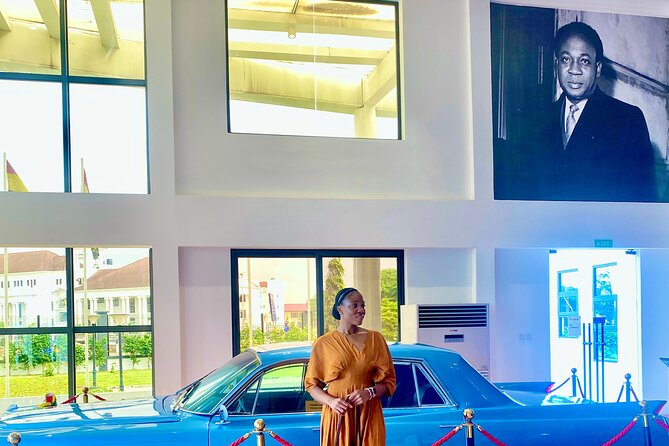
Reviewed · ACCRA CITY TOURS
6-Hour Private Guided Accra City Tour
Accra’s story comes into focus across museums, markets, colonial forts, and national monuments, and this private tour fits all of them into one long city outing. You move from the National Museum to Makola Market, Independence Square, Jamestown, the W.E.B. DuBois Center, and Kwame Nkrumah Memorial Park before ending at Labadi Beach.
I like the private format, since you can ask questions, adjust the pace, and get help navigating the city without being tied to a large group. I also like the mix of serious history and everyday Accra, especially the chance to see market life and hear local context from guides such as Enoch, Clinton, or Daniel.
The main drawback is the packed schedule. Traffic can be heavy, and seven listed stops leave little room for lingering. For groups of fewer than three, the company may use Uber, Bolt, Yango, or a local taxi instead of its own vehicle, although transport remains air-conditioned.
Key points to know before booking

- Seven major Accra stops: The route covers the National Museum, Makola Market, Black Star Square, the Centre for National Culture, Jamestown, the DuBois Center, Kwame Nkrumah Memorial Park, and Labadi Beach.
- Private attention: Only your group takes part, making it easier to ask about customs, food, art, daily life, and Ghanaian history.
- A useful first-day orientation: The tour gives you a broad look at central Accra and helps you decide where you might want to return.
- Beach time is built in: Labadi Beach provides about an hour to rest after the city portion.
- Traffic can alter the rhythm: The advertised duration is four to six hours, but road conditions may affect how long you spend at each stop.
- Good value for small groups: At $100 per person, the cost makes most sense if you value private transport, entry fees, and a dedicated guide.
Why this route works for a first look at Accra
This is not simply a drive past famous buildings. The route connects Ghana’s independence story with older colonial quarters, African diaspora history, local trade, and present-day city life.
You begin at Accra Mall, near the Tetteh Quarshie Interchange on Spintex Road, and return there at the end. That fixed meeting point is useful if you want a clear start and finish, though you should allow time to reach it from wherever you are staying.
The tour includes bottled water, WiFi on board, and an air-conditioned vehicle. Those details matter in Accra’s heat, particularly on a day that includes outdoor monuments, a market walk, and a beach stop.
Since the tour is private, you can ask your guide to explain details that interest you. If you care most about independence history, you can focus on Nkrumah and Black Star Square. If you prefer daily life, the market and Jamestown provide more street-level context.
More ways to see Accra on foot:
- Know Ghana in 4 hrs – Accra City Tour
★ 4.5 · 47 reviews - Escape Accra City to Aburi Gardens and Tetteh Quarshie Cocoa Farms
★ 4.5 · 32 reviews - Accra City Tour
★ 5.0 · 21 reviews
Ghana’s past inside the National Museum
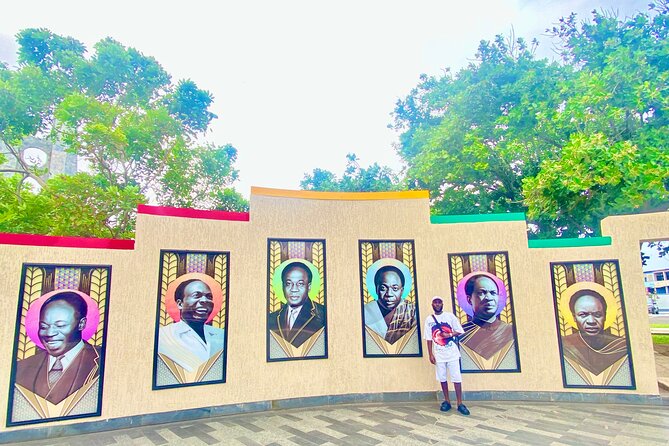
The National Museum receives about an hour, with admission included. It is the best place on this route to begin building a basic understanding of Ghana’s culture and past.
The archaeology collection reaches from the Stone Age to the recent past. In the ethnography gallery, you can see chief’s regalia, traditional textiles, stools, pottery, beads, musical instruments, and gold weights.
The displays also connect Ghana with the wider continent. Objects obtained through trade include Senufo masks from Ivory Coast, wooden Zulu figures, and beaded pieces from Southern Africa.
I would pay close attention to the gold weights. They are small objects, but they help show how trade and measurement worked in the region before modern currency systems. Traditional stools and chief’s regalia also offer a useful introduction to leadership and ceremony.
An hour is enough for an introduction, not a full museum study. If you enjoy reading every label, you may wish for more time. Still, this stop gives the rest of the day a stronger frame.
Makola Market brings Accra down to street level
The 45-minute visit to Makola Market changes the tone completely. This is the city’s major outdoor market, with indoor and outdoor sections in central Accra.
You can expect a busy shopping area where women vendors sell goods and daily commerce carries on around you. The purpose is not only to buy souvenirs. It is also to see how Accra works as a trading city.
Your guide can help you move through the market and answer questions about local customs and products. You are encouraged to take photographs, but ask before photographing people. That simple courtesy is useful anywhere, and especially in a working market.
Forty-five minutes passes quickly here. You will have time to look, interact, and perhaps shop, but not to explore every section. If shopping matters to you, tell your guide early so you can use the stop well.
The market may be the most useful part of the day for understanding ordinary city life. Monuments explain national events. Makola shows you people buying, selling, negotiating, and getting on with the day.
Independence Square and the Black Star symbols
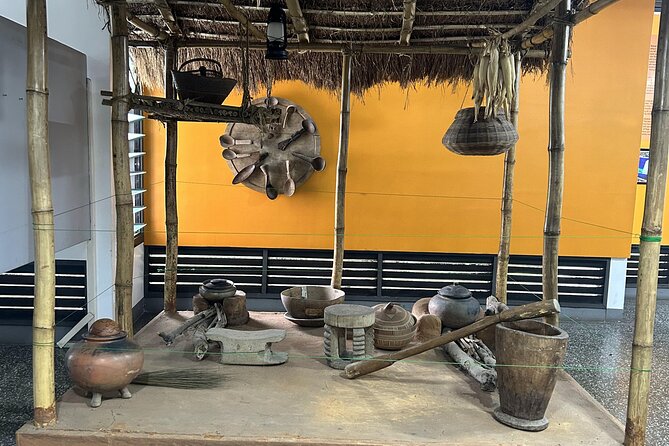
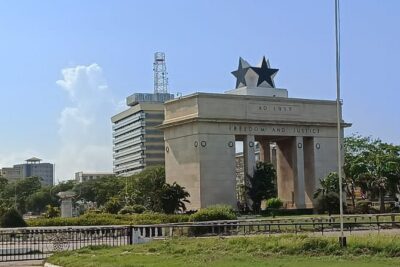
Independence Square receives about 30 minutes. It commemorates Ghana’s independence from British rule in 1957 and was built under Kwame Nkrumah. The area was completed in 1961 and became known as Black Star Square.
The Independence Arch, Black Star Gate, and Liberation Day Monument mark Ghana’s independence struggle. Black Star Square also hosts the country’s Independence Day parade.
This is an outdoor stop, so your guide’s explanation adds much of the value. You can look at the monuments on your own, but the dates, symbols, and political background make more sense when someone connects them.
The short visit is suitable for photographs and a clear introduction. It is not enough for a long walk or detailed study of every monument. Wear comfortable shoes and be ready for sun.
A few more Accra days to weigh up
- The Cape Coast Day Tour
★ 5.0 · 525 reviews - Experience the Beauty, History and the Culture Of Accra in a Day
★ 5.0 · 323 reviews - The Cape Coast Tour
★ 5.0 · 177 reviews - From Accra: Cape Coast, Elmina Castle & Kakum Park Day Tour
★ 4.6 · 144 reviews
Shopping and craft at the Centre for National Culture
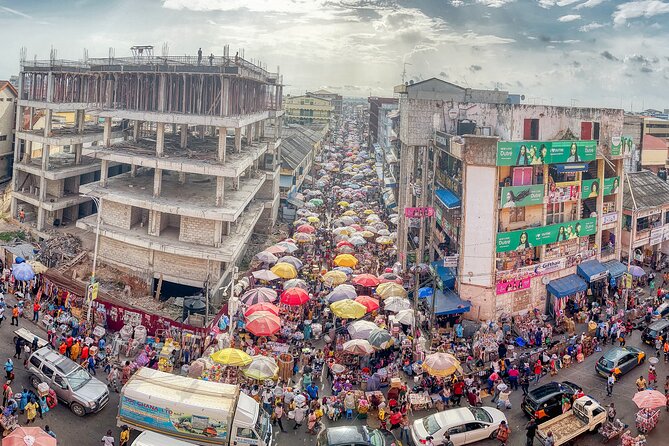
The Centre for National Culture is another 45-minute stop, this time focused on crafts and souvenirs. It is described as the largest craft market in Ghana, so this is the point in the tour where you can look for gifts and handmade items.
Bargaining is part of the shopping experience. Your guide can help you understand how to approach prices and can introduce you to local instruments. You may also get the chance to try an extra drum and other instruments with local people.
I like having this stop after Makola Market because the two places serve different purposes. Makola is a working market. The Centre for National Culture is more useful for browsing crafts and buying something to take home.
Do not treat the 45 minutes as unlimited shopping time. If you find an item you want, make your decision without letting the purchase consume the rest of the route. The private format helps, since your guide can explain the schedule and keep the outing moving.
Walking through historic Jamestown
The Jamestown portion is a walking tour through one of Accra’s oldest neighborhoods. The route includes James Fort and Usher Fort, two important colonial-era forts in historic Accra.
This is one of the places where walking matters. From a vehicle, Jamestown can seem like another city district. On foot, you have more chance to notice its streets, buildings, and relationship to the coast.
The information provided does not give a fixed duration or confirm entry inside both forts. I would therefore think of this as a neighborhood walk with exterior views and historical explanation unless your guide tells you otherwise.
Jamestown is also the part of the tour most likely to feel less polished than formal monuments and museum galleries. That is not a reason to skip it. It is precisely why a local guide is useful. You can ask questions, stay aware of your surroundings, and understand the area beyond a quick photograph.
W.E.B. DuBois Center and the wider African story

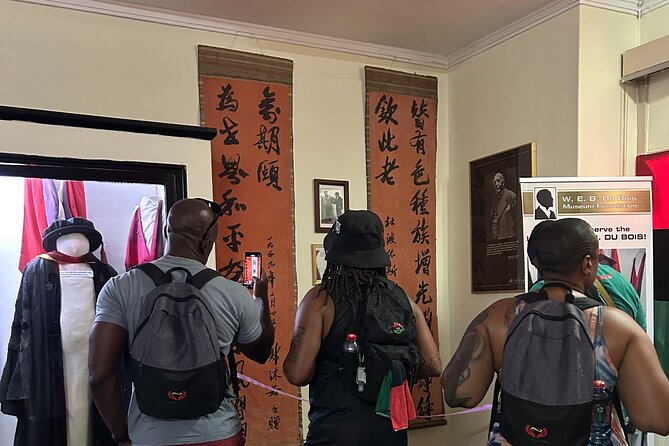
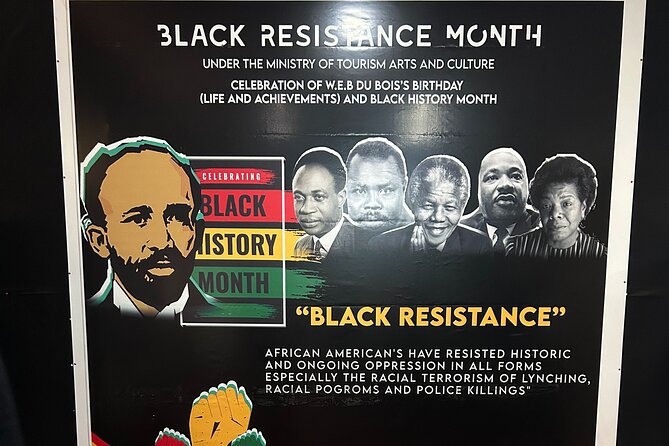
The W.E.B. DuBois Center receives about 45 minutes, with admission included. It is the home, library, and final resting place of William Edward Burghardt DuBois, the American-born campaigner for social justice.
The center includes a museum with personal artifacts and his library. There is also an open-air theater used for seminars, lectures, workshops, and cultural events.
This stop broadens the tour beyond Ghana’s national story. DuBois’s connection to Accra places the city within a larger African and diaspora discussion. If you have an interest in civil rights, Pan-African ideas, or the movement of people and ideas across the Atlantic, this visit deserves your attention.
Forty-five minutes allows for a focused visit, but you will not have time for every book, object, and display. Ask your guide to explain why the center matters to Ghana and how it connects with the country’s independence-era thinking.
Kwame Nkrumah Memorial Park closes the history lesson
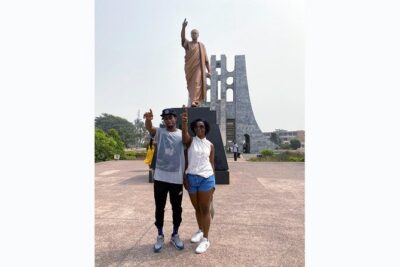
The Kwame Nkrumah Memorial Park sits in downtown Accra and honors Ghana’s first Pan-African prime minister and president. Admission is included, and the scheduled visit lasts about 45 minutes.
Nkrumah was born on September 21, 1909, and died on April 27, 1972. His memorial gives the earlier Independence Square visit more depth, since you can connect the national symbols with the person who led Ghana at independence.
The park includes the Kwame Nkrumah Mausoleum and memorial grounds. This is another stop where a guide can help you sort out the dates, political ideas, and meaning behind the site.
By this point, you will already have seen the National Museum, Independence Square, and the DuBois Center. The advantage is a growing sense of connection between culture, independence, and Pan-African identity. The disadvantage is fatigue. If your group wants to pause, the private setup gives you a better chance to manage the pace.
Labadi Beach provides a welcome final hour
Labadi Beach, also called La Pleasure Beach, is the final stop and lasts about an hour. It is one of Accra’s busiest beaches and offers a place to sit, cool off, and recover from the city route.
Food and drinks are available, including local, continental, and international choices. Lunch is not included, so this may be a practical time to buy something, although you should confirm the details and timing with your guide.
The beach is not just a decorative ending. After hours of museums, traffic, walking, and monuments, you need a slower hour. You can use it to rest, take in the coast, and talk with your guide about what you have seen.
Conditions at a busy public beach can differ from a quiet resort setting. If you want a calm beach day, this tour gives you only a short visit. If you want a refreshing break within a city tour, the stop makes good sense.
Guides, vehicles, and the effect of Accra traffic
The guide is central to the quality of this experience. Enoch, Clinton, and Daniel are names associated with particularly strong service on past outings. They have been described as personable, informative, energetic, and attentive to logistics.
Guide assignments can vary, so you should not book on the assumption that one specific person will lead your group. What you can reasonably expect is a local driver-guide who can answer questions about food, customs, art, daily life, and Ghanaian history.
Traffic is the practical issue to keep in mind. Accra roads can slow the route, and the tour is designed to last about four to six hours. For parties smaller than three, the company may arrange an air-conditioned Uber, Bolt, Yango, or local taxi instead of using its own vehicle.
That choice is meant to help the group move quickly and stay within the time limit. Some people will prefer a company vehicle. Others will appreciate the flexibility of a ride-hailing service. Either way, confirm the pickup plan if vehicle type matters to you.
Is $100 per person a fair price?
At $100 per person, this is not the cheapest way to see Accra. It can be good value if you want a private outing with transport, a local guide, WiFi, bottled water, and admission to the National Museum, W.E.B. DuBois Center, Kwame Nkrumah Memorial Park, and Labadi Beach.
The price is easier to justify for a small private group that wants convenience and guidance. You are paying for more than entry tickets. You are also paying for the time needed to connect seven places across a traffic-heavy capital.
Lunch, breakfast, and dinner are not included. Plan to buy your own food and drinks, with Labadi Beach a logical place to stop for refreshments.
The tour is booked, on average, about 20 days in advance. That suggests you should reserve ahead if your Accra dates are fixed, especially if you want a private schedule.
Who should book this Accra tour?
I would recommend it to a first-time visitor who wants a broad introduction in one day. It suits couples, families, solo visitors, and small groups who prefer direct access to a guide rather than a large scheduled party.
It is also a strong choice if you want both major landmarks and ordinary city scenes. The combination of Makola Market and Jamestown with museums and memorials gives you more range than a route focused only on monuments.
You may want a different plan if you prefer slow museum visits, extended shopping, or a full beach afternoon. The schedule is full, and traffic can make it feel even tighter.
The experience is designed for most participants, and it is a private activity for your group only. Free cancellation is available up to 24 hours before the start time. Changes or cancellations made later are not accepted for a refund.
Should you book the 6-Hour Private Guided Accra City Tour?
Book this tour if you want to understand Accra quickly, with a local guide handling the transport and connections between major sites. The strongest reasons are the private format, the wide range of stops, and the mix of national history, market life, African diaspora history, and coastal rest.
I would book it early, confirm the meeting point at Accra Mall, and ask how much time is expected for Jamestown. Keep your schedule flexible because traffic may change the order or length of stops.
Skip it if you want a slow, single-subject day. Choose it if you want a well-filled first look at Accra and value having Enoch, Clinton, Daniel, or another local guide explain what you are seeing.
FAQ
How long does the Accra city tour last?
The tour lasts approximately four to six hours. Traffic in Accra can affect the timing.
Where does the tour begin?
The meeting point is Accra Mall, Plot C11, Tetteh Quarshie Interchange, Spintex Road, Accra, Ghana.
Where does the tour end?
The activity ends back at the meeting point at Accra Mall.
Is this a private tour?
Yes. Only your group participates in the activity.
What is included in the tour price?
The tour includes bottled water, an air-conditioned vehicle, WiFi on board, and admission tickets for the National Museum of Ghana, W.E.B. DuBois Center, Kwame Nkrumah Memorial Park, and Labadi Beach.
Are meals included?
No. Breakfast, lunch, and dinner are not included.
What happens if traffic is heavy?
For parties of fewer than three, the company may use Uber, Bolt, Yango, or a local taxi instead of its own vehicle. These options are air-conditioned and are intended to help the group stay within the tour’s time limit.
Can most people participate?
Yes. The tour information states that most participants can take part.
What is the cancellation policy?
You can cancel at least 24 hours before the local start time for a full refund. Cancellations or changes made less than 24 hours before the start time are not accepted for a refund.
Just added around Accra
- Experience Aburi Botanical Gardens And Boti Water Falls In A Day.★ 5.0 · 3 reviews
- Experience Cape Coast Castle and Kakum National Park★ 4.5 · 3 reviews
- Accra city tour★ 4.5 · 3 reviews
- Half-Day City Tour of Accra★ 5.0 · 3 reviews
- 7days/6nights Eco Tourism★ 5.0 · 3 reviews
- 3 Days Accra City Tour & Cape Coast Tour★ 4.5 · 3 reviews
- Local Ghanaian Food Tasting Tours★ 5.0 · 3 reviews
- Accra Zoo, Canopy Walk and Botanical Gardens Private Tour★ 5.0 · 3 reviews
Accra City Tours, compared.
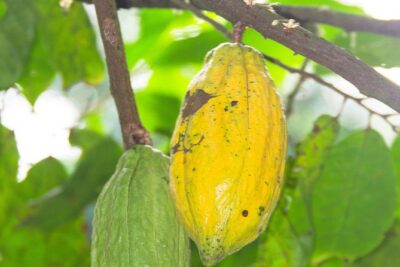
Escape Accra City to Aburi Gardens and Tetteh Quarshie Cocoa Farms
Read our review →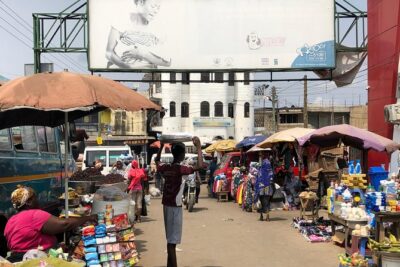
Experience Authentic Ghana in a Personalized Accra City Tour
Read our review →

Accra City Tour, explore the history, and local flavours.
Read our review →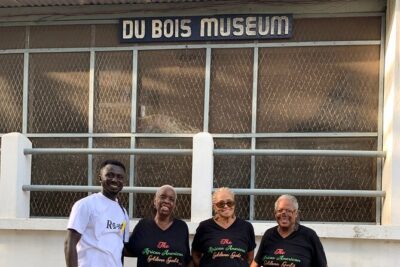
Browse the lists this tour appears in