
Reviewed · ACCRA CITY TOURS
Half-Day Accra City Tour Experience
Accra’s story comes at you quickly on this half-day outing: museum objects, market noise, independence landmarks, old Jamestown streets and handmade goods all fit into one city circuit. Guide Prince is the name to request if available. He is praised for clear explanations, cheerful service and the ability to adjust the route when you need lunch or a particular purchase.
I like the hotel pickup and air-conditioned car, which matter in Accra’s heat and traffic. I also like the mix of formal sights and everyday city life, especially Makola Market and the Arts Centre. The main consideration is time: this is a fast introduction, not a slow, detailed visit to every stop, and heavy traffic or a long lunch can stretch the outing beyond its planned half-day shape.
Key points at a glance
- A practical first look at Accra: Cover major sights without arranging several separate taxis, tickets and guides.
- Prince brings strong local context: His route explanations focus on Ghana’s independence, culture and national figures.
- Makola Market adds real street life: Shop for textiles, beads, shea butter and black soap while seeing how Accra trades.
- The museum visits are included: Entry tickets and guiding services are part of the $120 price.
- The schedule can bend: Prince has accommodated lunch and shopping requests without dropping planned stops.
- Expect a full four hours or more: One recent outing continued well past four hours, though exact timing depends on traffic and your choices.
Why this Accra tour works for a short stay
Accra is not a city you understand from one monument. Its character comes from the contrast between national memorials, busy shopping streets, coastal neighborhoods and ordinary daily commerce. This tour gives you a useful first orientation by moving through all of those settings in one outing.
You start at your hotel, ride in an air-conditioned vehicle and follow a route that links the National Museum, Makola Market, Jamestown, Kwame Nkrumah Park, the Arts and Cultural Centre, Black Star Square and the Osu Castle area. That is a lot for a half-day, so think of it as a guided introduction. You will see the main points, hear the larger story and get clues about where you may want to return.
The $120 per-person price includes transportation, fuel, a driver, water, hotel pickup and drop-off, guiding services and entry tickets to the museums. Food and drinks are extra. For a solo visitor or couple, that can be fair value because you avoid piecing together local transport and paying admission separately. For a larger group, compare the per-person price with the cost of arranging a private car and guide on your own.
The tour is offered in English. You can reserve now and pay later, and cancellation is allowed up to 24 hours before the tour for a full refund. Those terms are useful if your Ghana plans are still shifting.
More ways to see Accra on foot:
- Know Ghana in 4 hrs – Accra City Tour
★ 4.5 · 47 reviews - Escape Accra City to Aburi Gardens and Tetteh Quarshie Cocoa Farms
★ 4.5 · 32 reviews - Accra City Tour
★ 5.0 · 21 reviews
Starting with Ghana at the National Museum
The National Museum is the right opening stop because it gives names and meaning to what you will see later in the streets. Its collections cover Ghana’s culture, ethnic groups, archaeology, medicine and other parts of daily life. In practical terms, it helps you place Accra within the wider story of Ghana rather than treating the capital as a collection of disconnected sights.
A museum guide gives the tour inside, while Prince has waited outside during at least one visit. That arrangement may mean you receive specialist attention in the galleries and then return to Prince for questions about the wider route. Ask him to connect the objects to the places you will see next.
The museum is also a useful pause before Makola Market. You begin with displays and explanations, then move into the sounds, smells and movement of modern Accra. I like that change of pace. It gives the rest of the day more meaning than simply driving from landmark to landmark.
The tradeoff is time. A short tour cannot allow every gallery the attention it deserves. If the museum is your main reason for booking, tell the guide early and ask how much time is planned there. If you want a broad city overview, accept a quicker visit and save your questions for the drive.
Walking through Makola Market
Makola Market is where the tour becomes most immediate. It is described as Accra’s largest open market, and the point is not simply to look at stalls from a vehicle. You take a walking tour through a working place where people buy and sell everyday goods.
You might find textiles, beads, shea butter and black soap for sale, making this a practical stop as well as a cultural one. If you want souvenirs, this is a good moment to tell Prince what you are looking for. He can help you fit shopping into the route, though you should still make your own decisions about price and quality.
Wear comfortable shoes and keep your belongings secure. That is sensible advice for any crowded market, and it helps you focus on the experience rather than your bag. Bring a little patience too. Markets are not display rooms. The paths can be busy, purchases take time and the pace is shaped by the sellers and shoppers around you.
I like Makola because it shows Accra as a place where people work, bargain and shop, not just a capital designed for official ceremonies. The drawback is that a market visit can easily consume the schedule. If you spend a long time choosing fabric or gifts, another stop may receive less time.
Seeing Jamestown between old Accra and the coast
The route continues through Jamestown, one of the city areas that helps explain Accra’s older character. The supplied details do not promise a long guided walk here, so treat this part as a look at the neighborhood during the drive and route rather than a separate, extended attraction.
Jamestown matters because it adds local texture between the museum and the formal memorials. You get a sense of how the city’s older quarters fit into modern Accra. Prince can provide context as you pass through, and this is a good place to ask questions about the city’s development and Ghana’s road to independence.
This is also where expectations matter. If you want a long, focused exploration of Jamestown, confirm the plan before departure. The experience is built to cover several parts of Accra, so some areas will be viewed more briefly than others.
A few more Accra days to weigh up
- Half-Day Private History Tour in Nkyinkyim Museum
★ 5.0 · 9 reviews - Half-day Accra Guided Tour
★ 4.5 · 8 reviews - Half-day Accra Safari Tour
★ 4.5 · 6 reviews - Half-Day City Tour of Accra
★ 5.0 · 3 reviews
Understanding Kwame Nkrumah at his memorial park
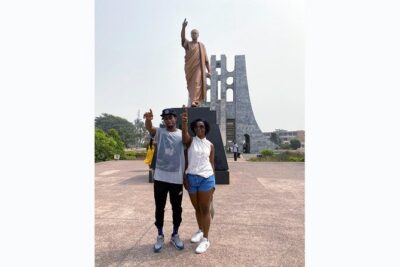
Kwame Nkrumah Park is one of the tour’s key history stops. It is a memorial to Ghana’s first president and presents his role in the country’s independence and wider African liberation. The site includes a museum, park and tomb, so you are not limited to a single statue or photo opportunity.
This is where a good guide makes a real difference. Prince has been praised for explaining Ghana’s path to independence in detail and for showing how Nkrumah influenced liberation movements across the continent. I would use this stop to ask about the timeline, the political choices and the meaning of the memorial itself.
The reference to Nkrumah as the African of the last millennium reflects the scale of his reputation, but the park is more useful when it gives you specific context. Listen for the connection between national independence and the wider end of colonial rule in Africa. That is the thread that makes this stop more than a quick monument visit.
Allow enough time for both the museum and the grounds if possible. A rushed stop can reduce the site to a photograph. At the same time, the tour still has several major locations ahead, so you may need to choose between reading every display and keeping the route moving.
Shopping at the Arts and Cultural Centre
The Arts and Cultural Centre is the tour’s main place for arts, crafts and curious objects. It gives you another kind of shopping experience after Makola Market. Makola is a broad working market, while the Arts Centre is better suited to browsing handmade items and looking for something specific to take home.
One useful detail comes from the way Prince handled a shopping request. He drove a couple to the Arts Centre because they were searching for a particular item, then allowed time for them to find it. That tells you this is not a rigid, stopwatch-only outing. Share your shopping goal early, especially if you are looking for textiles, beads or a certain type of craft.
You should still shop thoughtfully. Ask about materials, compare items and agree on prices before buying. The point is not to purchase something at every stop. A careful choice is usually better than filling your bag simply because the market is there.
The Arts Centre can also be a welcome change after the National Museum and memorial park. You have spent time with national history, then get to handle objects connected with Ghanaian art and craft traditions. Just remember that every extra shopping minute affects the rest of the circuit.
Black Star Square and the Osu Castle area
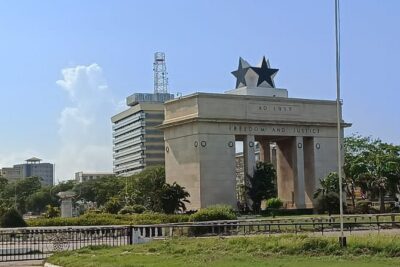
Black Star Square brings the tour back to Ghana’s national identity. It is one of Accra’s major civic spaces and a natural place to think about the symbols of independence after visiting Kwame Nkrumah Park.
The visit is likely to be more about seeing the square, hearing its meaning and taking in the setting than spending a long time inside a museum. That makes it a useful closing chapter to the independence portion of the tour. Ask Prince how the square fits into Ghana’s public ceremonies and national story.
The route also includes the Osu Castle area. The description does not promise entry into the castle, so do not book expecting a full interior tour. You should regard this as a look at the area and its place in Accra’s historical route.
Together, Black Star Square and Osu provide a final contrast with Makola. The market shows commerce and daily routines. These civic and historic areas show how Ghana presents its national story. Seeing both in one morning or afternoon gives you a broader understanding of the capital.
The guide makes the difference
The strongest feature here is the guiding. Prince is repeatedly praised for his warmth, clear explanations, professionalism and willingness to respond to requests. One outing began with a punctual pickup at Accra City Hotel, and the guide adjusted the day when the visitors had not arranged lunch.
That lunch stop is worth noting. Prince took them to Frankie’s Hotel, which has a broad menu, a bakery and an ice cream shop. He allowed the time needed for the meal and continued with the planned sightseeing, staying with the group well beyond four hours. That flexibility is valuable, but it should not be treated as a guarantee that every tour will run long or include the same restaurant.
The guide’s role matters most during the drive. Accra’s attractions are separated by city traffic, and a good explanation turns those transfers into useful orientation time. You can ask about Ghanaian culture, the independence movement, local shopping or the next stop instead of simply watching the streets pass.
If Prince is not available, confirm who will guide you and what language will be used. English is the stated tour language. The consistently positive comments about Prince suggest that the human side of the experience is a major part of its value.
What the $120 price really buys you
At $120 per person, this is not the cheapest way to see Accra. Its value comes from combining several services: private hotel pickup and drop-off, an air-conditioned vehicle, driver, fuel, water, entry tickets to the museums and a guide.
That bundle is useful if you have limited time or do not want to negotiate transport between widely separated stops. You also gain a planned route and someone who can explain what you are seeing. For a first day in Accra, those conveniences can be worth more than saving a little money on individual rides.
The price is less compelling if you already have a car, a local contact and plenty of time. You may prefer to choose two or three sights and spend longer at each. This tour is designed for coverage and orientation, not for a slow study of one neighborhood.
Food and drinks are not included. Plan to pay separately if you need lunch or refreshments. The day can be extended by a meal, as happened at Frankie’s Hotel, but that depends on your schedule and guide.
Timing, comfort and practical expectations
Hotel pickup and drop-off simplify the day, especially if you are staying in Accra and want to avoid finding a meeting point. The air-conditioned vehicle is another practical advantage. You will move between outdoor sites, streets and museums, so having a cool ride between stops makes the pace easier.
The tour is sold as half-day, but the timing is not fixed in the information provided. One recent outing lasted well past four hours after including lunch and shopping. Traffic, museum time, market purchases and your own questions can all affect the finish.
I would not schedule a flight, important meeting or fixed evening booking immediately afterward. Give yourself breathing room. If you have a hard cutoff, tell Prince at pickup and ask which stops should receive priority.
Water is included, but food is not. Wear comfortable walking shoes for Makola Market and bring a way to protect yourself from the sun. These are simple precautions, but they make a busy city route more pleasant.
Who should book this experience
I would recommend it most strongly to first-time visitors, people on a short stop in Accra and anyone who wants historical context without arranging a private itinerary from scratch. It also suits visitors who want both major monuments and a working market rather than a string of formal buildings.
It is a good match for shoppers who want time at Makola and the Arts Centre, provided they tell the guide what they hope to find. It also suits history-minded visitors who want the National Museum and Kwame Nkrumah Park explained in relation to Ghana’s independence.
You may want something else if you prefer a slow walking tour, a specialist museum visit or a fixed schedule with no shopping. The route covers many sights, so some stops are necessarily brief. Confirm the emphasis before you go.
FAQ
What is included in the $120 price?
The price includes hotel pickup and drop-off, museum entry tickets, guiding services, an air-conditioned vehicle, a driver, fuel and water.
Is food included?
No. Food and drinks are not included. A lunch stop may be possible, but you should pay for your own meal.
Which places does the tour visit?
The route includes the National Museum, Makola Market, Jamestown, Kwame Nkrumah Park, the Arts and Cultural Centre, Black Star Square and the Osu Castle area.
Is the tour offered in English?
Yes. English is the listed tour language.
Can I pay later and cancel if my plans change?
You can reserve and pay later. Cancellation up to 24 hours in advance qualifies for a full refund.
How long does the tour last?
It is described as a half-day tour, but the exact length can vary. One outing continued beyond four hours because of lunch and shopping, so allow extra time if your schedule is flexible.
Should you book the Accra City Tour?
Book it if you want a well-organized first look at Accra and value a local guide who can connect museums, markets and independence landmarks. Prince’s flexibility, clear historical explanations and willingness to accommodate lunch or shopping requests add real value to the fixed price.
Skip it if your priority is spending a long time in one place or exploring entirely on your own. For most short-stay visitors, though, the combination of transport, entry tickets, market time and national history makes this a sensible way to get your bearings in Accra.
Just added around Accra
- Experience Aburi Botanical Gardens And Boti Water Falls In A Day.★ 5.0 · 3 reviews
- Experience Cape Coast Castle and Kakum National Park★ 4.5 · 3 reviews
- Accra city tour★ 4.5 · 3 reviews
- 7days/6nights Eco Tourism★ 5.0 · 3 reviews
- Half-Day City Tour of Accra★ 5.0 · 3 reviews
- 3 Days Accra City Tour & Cape Coast Tour★ 4.5 · 3 reviews
- Local Ghanaian Food Tasting Tours★ 5.0 · 3 reviews
- Accra Zoo, Canopy Walk and Botanical Gardens Private Tour★ 5.0 · 3 reviews
Accra City Tours, compared.
Escape Accra City to Aburi Gardens and Tetteh Quarshie Cocoa Farms
Read our review →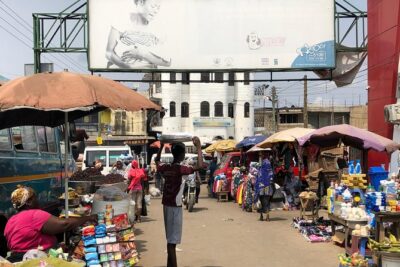
Experience Authentic Ghana in a Personalized Accra City Tour
Read our review →

Accra City Tour, explore the history, and local flavours.
Read our review →

Browse the lists this tour appears in