
Reviewed · GHANA COCOA FARM TOURS
1 Day cocoa farm tour
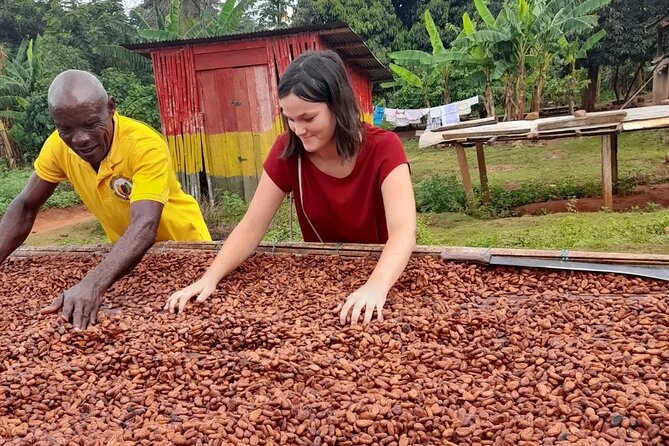
Cocoa does not begin life in a chocolate bar. It grows in pods beneath a leafy canopy, and this private outing from Accra lets you see that first step at an active farm in Asamankese. You’ll learn how the crop is cared for, harvested, dried, and prepared for sale, while also getting a look at rural life in Ghana.
I like the private format, which gives your group room to ask questions and set a comfortable pace. I also like the simple, sensory side of the visit: the shade of the cocoa trees, the crunch of dried leaves underfoot, and the chance to taste cocoa rather than just hear about it.
The main drawback is the long price for a six-and-a-half-hour outing: $349.94 per person is a serious spend, especially for solo visitors. The value depends on how much you want a private, arranged day with transport, food, and a guide instead of a cheaper general farm visit.
Key points at a glance
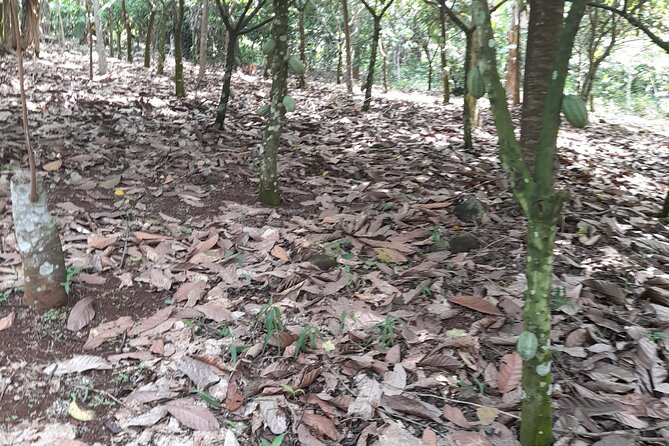
- Walk under mature cocoa trees: The farm setting gives you a clear picture of where cocoa grows, away from a factory or shop.
- See the work behind chocolate: You’ll learn about farm care, harvesting, drying, and preparation before cocoa reaches the products you know.
- Visit Asamankese: The town provides local context, not just a quick stop at the farm.
- Private guide and private group: Your party participates on its own, with a more personal chance to ask questions.
- Lunch and snacks are included: The food helps turn a short farm visit into a longer day out.
- Early start from Accra: The 7:30 a.m. departure leaves room for the farm visit within the six-and-a-half-hour schedule.
Why this cocoa farm visit is worth your time
Ghana’s cocoa industry is important to the country’s economy, but it can be easy to think of cocoa only as an export or a sweet treat. This visit brings the subject down to human scale. You see the trees, the farm work, and the steps that come before cocoa becomes something sold in a shop.
That matters because cocoa farming is not a quick process. The experience focuses on day-to-day practice and the rural way of life around the crop. You are not simply looking at rows of plants and taking a photograph. The point is to understand how the farm functions and why the crop matters.
I especially like that the setting is not limited to a tasting table. The farm itself is the main attraction. Walking beneath the trees gives you a sense of the shade, sounds, and working conditions that are easy to miss in a city-based chocolate experience.
The visit is also a good fit if you want a Ghana experience that reaches beyond Accra’s urban sights. Asamankese offers a change of pace and a look at a town connected to agriculture. The information supplied for the tour gives you about three hours at the stop, which is enough time for more than a rushed walk-through.
More cocoa farm visits around Accra:
- Boti Falls, Umbrella Rock, Aburi Gardens & Cocoa Farm Tour
★ 4.6 · 72 reviews - Experience Boti Waterfalls, Aburi Botanical Gardens & Tetteh Quarshie Cocoa Farm
★ 5.0 · 38 reviews - Boti Falls, Umbrella Rock, Aburi Gardens & Cocoa Farm Day Tour
★ 5.0 · 32 reviews
Leaving Accra at 7:30 a.m.
The day begins at 7:30 a.m. at Fantail Street in Accra, with pickup offered. An early start is useful here. It gives you most of the morning and part of the afternoon for the drive and farm visit, instead of trying to squeeze the experience into a late-day window.
Because this is a private activity, only your group takes part. That makes a difference on a farm tour. You can ask why a particular task is done, pause when something catches your eye, or spend more time on cocoa products if that is what interests you.
The schedule is listed at about six hours and thirty minutes. Keep that figure in mind when planning the rest of your day in Accra. This is not a quick two-hour excursion that leaves you free for lunch reservations or an afternoon museum visit. It is a substantial day outing.
Pickup is offered, but confirm the exact pickup details when you book. The listed ticket redemption point is Fantail Street, so you should know whether the operator will collect you at your accommodation or wants you to meet at that point.
Arriving in Asamankese
Asamankese is where the farm is located, and the visit includes time to get to know the town and its setting. That local context gives the outing more meaning. Cocoa farming does not happen in isolation, and seeing the town helps connect the crop to ordinary life in Ghana.
The farm is described as one of Ghana’s oldest cocoa farms. That does not mean you should expect a preserved museum or a formal historical site. Instead, the interest is in seeing an established cocoa-growing place and learning how its past and present connect.
The town portion may appeal most to people who want a broader look at Ghana. If your only goal is to taste chocolate, this outing may feel longer than necessary. If you want to understand the setting around cocoa production, the stop adds useful depth.
The supplied schedule gives Asamankese three hours, with admission included. Since the exact split between town orientation, farm walking, demonstrations, and tasting is not specified, ask your guide for the day’s order at the start.
Walking beneath the cocoa canopy
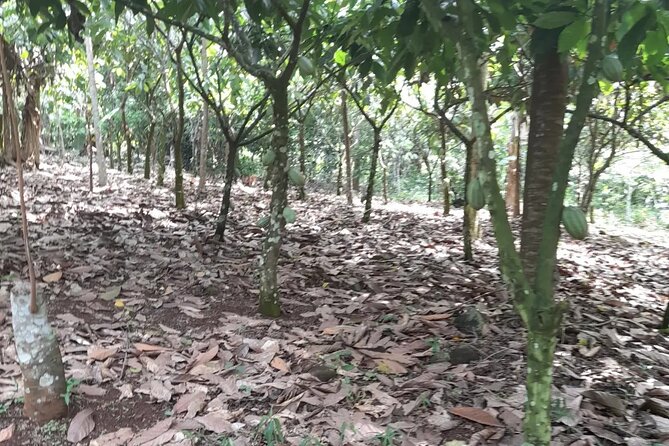
The farm walk is the heart of the experience. Expect a green, shaded setting beneath cocoa trees, with the chance to see how the crop grows in its natural farm environment. The sound of dried leaves under your feet is a small detail, but it helps make the visit feel like a real place rather than a staged exhibit.
You’ll learn about the care cocoa requires and the ways farmers protect the plants. One account of the experience points to the protection of the farm as an important part of the explanation. That is useful because it shows that cocoa production involves more than picking pods when they are ready.
The guide is a key part of the outing. Bless has led this experience and is described as friendly, patient, and well informed about the area. A private guide who explains the work clearly can make a large difference, especially if you have little knowledge of farming.
Do not expect every part of the process to happen during your visit. Farm work follows the season, and the available information does not promise that you will see every stage on the same day. The dependable feature is the explanation of the process and the farm setting itself.
Wear shoes that can handle a farm path and bring clothing suited to a warm outdoor visit. The tour details do not list a dress code or specific equipment, but a cocoa farm is not the place for delicate footwear. You may also want sun protection, even though much of the walk takes place beneath trees.
A few more Accra days to weigh up
- Aburi Botanic Gardens, Boti Falls,Umbrella Rock & Cocoa Farm Tour
★ 5.0 · 6 reviews - Ghana Eastern Explorer – Boti Falls, Aburi Gardens & Tetther Quarshie Cocoa Farm
★ 5.0 · 4 reviews - Day Trip Near Accra – Visit Aburi Gardens, Waterfall & Cocoa Farm
★ 5.0 · 4 reviews - Visit Aburi Garden, Tetteh Quarshie Cocoa Farm & Waterfall
★ 4.0 · 4 reviews
From cocoa pod to dried beans
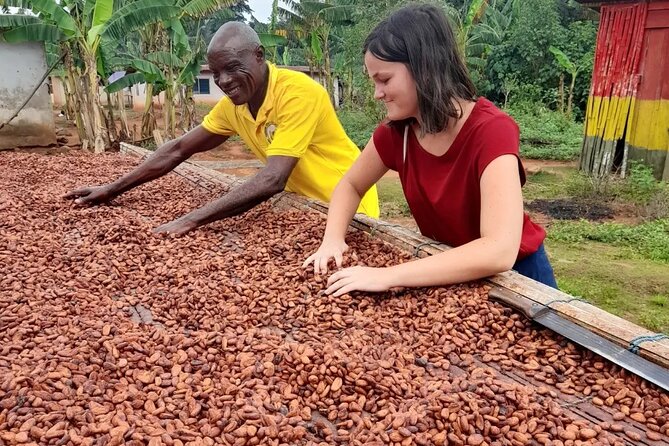
One of the most useful parts of the visit is learning what happens after cocoa is harvested. You’ll hear about the steps that turn the crop into the dried beans used in cocoa products. This can correct a common misunderstanding: the cocoa fruit does not leave the tree ready to become chocolate.
The process is practical and labor-intensive. The tour explains harvesting, drying, and preparation, giving you a clearer picture of the work behind a finished product. The emphasis is on seeing and understanding the chain from farm to market.
You may get to see or handle cocoa during the visit, and tasting cocoa is part of the experience. That tasting is a welcome touch because it gives you a direct connection to the crop before it is turned into familiar sweets.
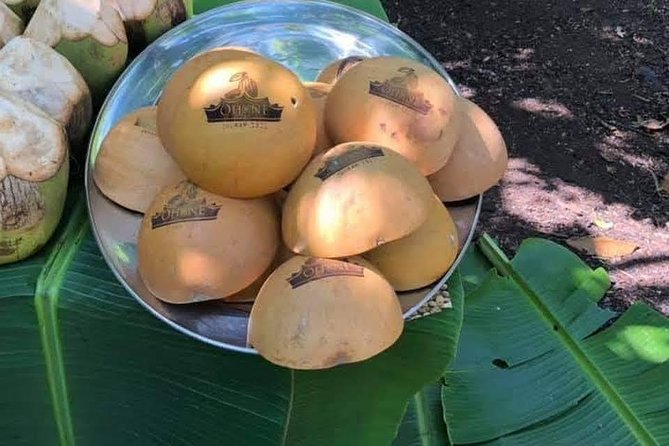
The overview also refers to cocoa products that cannot be found elsewhere in the world. Since the exact products are not listed, do not book expecting a particular item. Think of this as a chance to encounter local cocoa uses and products in their place of origin, with the guide explaining what makes them different.
Lunch, snacks, and the pace of the day
Lunch and snacks are included, which makes the price easier to assess. You are not paying only for entry to a farm. The package includes a private guide, a full arranged outing, food, and offered pickup from Accra.
The food also fits the rhythm of the day. A farm visit lasting several hours is more comfortable when you do not need to interrupt it to search for a meal. Still, the supplied details do not name the restaurant, menu, or dietary options. If you have allergies or special food needs, ask before departure.
The pace should suit you if you like learning through conversation and observation. It may not suit you if you want a tightly scripted attraction with frequent activities. The strongest part of the day is the combination of walking, listening, and asking questions.
A private format can be especially useful for couples, families, or a small group with mixed interests. Someone fascinated by agriculture can ask detailed questions, while another person can focus on the town, the food, or the tasting.
Is $349.94 a fair price?
At $349.94 per person, this is not a budget farm excursion. The price needs to be judged against what is included and how many people are in your party. A private tour can offer convenience and flexibility that a shared bus trip may not, but the per-person cost remains high.
I would see the price as easier to justify for a small group that values privacy and arranged transport. If several people book together, the experience may feel more worthwhile because the guide’s attention and vehicle arrangements are shared within your party.
For a solo visitor, the calculation is tougher. The private format may feel luxurious, but you pay the full listed rate for one person. You should compare it with other Accra outings before committing, especially if your main interest is simply seeing a cocoa tree.
The included lunch and snacks add practical value, as does the roughly three-hour farm and Asamankese visit. The 100 percent recommendation rate and 4.7 rating from 11 recorded ratings suggest strong satisfaction, though that is a small sample. I would treat those numbers as encouraging, not as a guarantee that every part will suit you.
The experience is booked about five days ahead on average. That is a useful planning clue. You do not necessarily need to reserve months out, but you should avoid leaving it until the last day if your Accra schedule is tight.
Who should book this experience?
I would recommend it to you if you want to understand Ghana through one important crop. It suits first-time visitors who want a rural contrast to Accra, families looking for an educational day, and anyone curious about how chocolate begins.
It is also a strong choice for people who prefer a personal guide. The private setup gives you more control than a large group excursion, and a patient guide can make the technical parts accessible.
You may want to skip it if you are looking for a relaxed city day, a luxury food tour, or a quick chocolate tasting. The outing involves travel from Accra and time on a working farm. Its appeal comes from learning how cocoa is grown and handled, not from polished entertainment.
The tour is open to most people, according to the provided participation details. Still, the information does not give a specific accessibility assessment for paths, transport, or farm surfaces. If you have mobility concerns, ask the provider before booking.
Weather, cancellation, and simple planning tips
The tour requires good weather. If poor weather forces a cancellation, you can take a different date or receive a full refund. That policy protects you from losing the booking because of conditions beyond your control.
You can cancel for a full refund if you do so at least 24 hours before the 7:30 a.m. start time. Changes or cancellations made less than 24 hours ahead are not accepted for a refund, and cut-off times follow local time in Ghana.
Bring a phone or camera if you want to record the farm, but do not let photographs replace the explanations. The most useful part of the visit is understanding the work that takes place between the tree and the final cocoa product.
I would also arrive ready for a long morning. Have breakfast before pickup unless you have confirmed an early snack, and tell the operator about food restrictions in advance. Lunch and snacks are included, but the exact timing is not given.
My final call on the Asamankese cocoa farm tour
Book this tour if you want a private, food-included introduction to cocoa farming and you are comfortable paying a premium for an arranged experience. The canopy walk, farm lessons, cocoa tasting, and town setting give you more than a quick photograph beside a cocoa tree.
Think carefully if your budget is limited or if you have only a few hours in Accra. At six and a half hours and $349.94 per person, this is a major part of your day. For the right visitor, though, it offers a direct look at Ghana’s cocoa economy and rural life, with a guide who can make the farming process understandable and personal.
FAQ
Where does the cocoa farm tour take place?
The farm is located in Asamankese, Ghana. The outing also includes time to learn about the town and its setting.
Where does the tour start?
The listed meeting point is Fantail Street, Fantail Street, Accra, Ghana.
What time does the tour begin?
The scheduled start time is 7:30 a.m.
How long does the experience last?
The tour lasts approximately six hours and thirty minutes.
Is pickup from Accra available?
Yes, pickup is offered. Confirm the precise pickup arrangement when booking because the listed ticket redemption point is Fantail Street.
Is this a private tour?
Yes. Only your group participates in the activity.
Is lunch included?
Yes. Lunch and snacks are included in the tour.
How much does the cocoa farm tour cost?
The listed price is $349.94 per person.
What happens if the weather is poor?
The experience requires good weather. If it is canceled because of poor weather, you can choose another date or receive a full refund. You can also cancel at least 24 hours before the start time for a full refund.
More One-Day Tours in Accra
- One Day Tour To Cape Coast, Elmina Castle, Kakum National Park
★ 5.0 · 21 reviews - From Accra: Cape Coast and Elmina Castles Day Trip
★ 5.0 · 19 reviews - Accra: Shai Hills and Volta River Cruise Day Trip with Lunch
★ 4.8 · 11 reviews - 1 Day Accra City Tour
★ 4.5 · 10 reviews
Just added around Accra
- Experience Aburi Botanical Gardens And Boti Water Falls In A Day.★ 5.0 · 3 reviews
- Experience Cape Coast Castle and Kakum National Park★ 4.5 · 3 reviews
- Accra city tour★ 4.5 · 3 reviews
- 7days/6nights Eco Tourism★ 5.0 · 3 reviews
- Half-Day City Tour of Accra★ 5.0 · 3 reviews
- 3 Days Accra City Tour & Cape Coast Tour★ 4.5 · 3 reviews
- Local Ghanaian Food Tasting Tours★ 5.0 · 3 reviews
- Accra Zoo, Canopy Walk and Botanical Gardens Private Tour★ 5.0 · 3 reviews
Ghana Cocoa Farm Tours, compared.
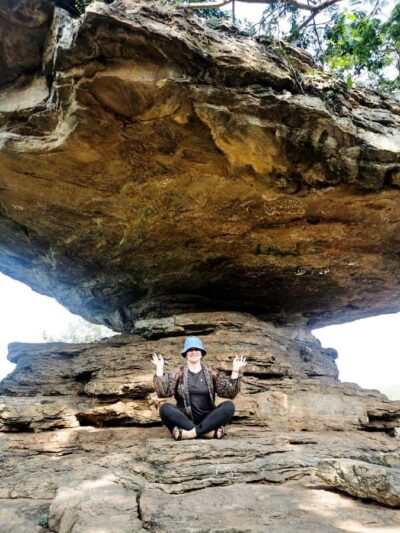
Boti Falls, Umbrella Rock, Aburi Gardens & Cocoa Farm Tour
Read our review →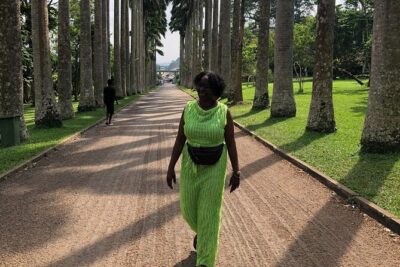
Experience Boti Waterfalls, Aburi Botanical Gardens & Tetteh Quarshie Cocoa Farm
Read our review →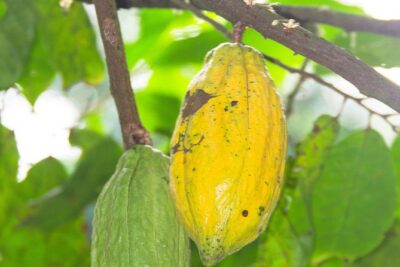
Escape Accra City to Aburi Gardens and Tetteh Quarshie Cocoa Farms
Read our review →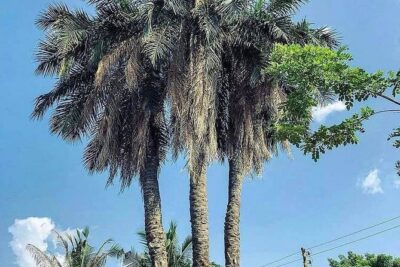
Boti Falls, Botanic Gardens, Cocoa Fam, Umbrella Rock Experience
Read our review →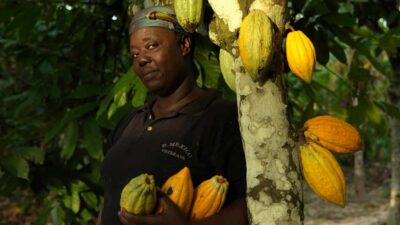
Accra Aburi Eco & Cocoa Experience: Gardens Waterfall &Lunch
Read our review →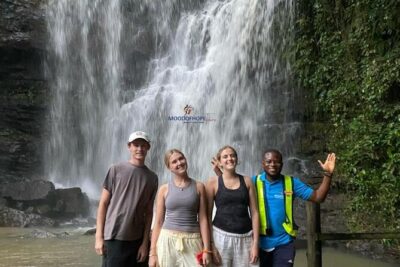
Day Trip Near Accra – Visit Aburi Gardens, Waterfall & Cocoa Farm
Read our review →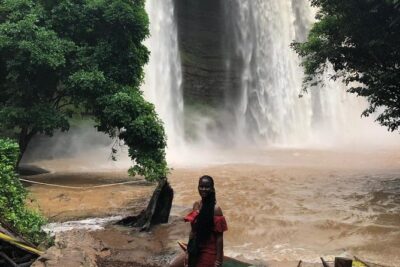
Ghana Eastern Explorer – Boti Falls, Aburi Gardens & Tetther Quarshie Cocoa Farm
Read our review →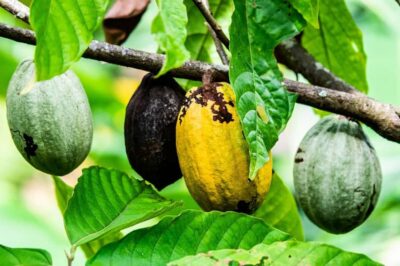
Visit Aburi Garden, Tetteh Quarshie Cocoa Farm & Waterfall
Read our review →Browse the lists this tour appears in